Animal fats: pet food or power source?
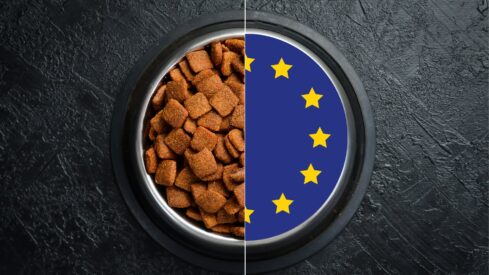
As the Category 3 debate enters a new phase, the industry looks to prevent the balance from tipping even further in favor of biofuels.
With revised climate mandates, emerging bioeconomy frameworks and a growing push toward sustainable circularity, the biofuel demand for animal fats more than doubled between 2018 and 2023.
As a result, these raw materials – which are key for pet nutrition – are under pressure. The question is not if Category 3 animal fats matter, but how we ensure they are allocated where they deliver most value.
Pet food in a circular economy
Animals rely on essential fatty acids contained in Category 3 sources – animal fats that are byproducts of human food – which are nearly impossible to substitute.
Possible alternatives like imported soy or palm oil have larger environmental footprints and a different nutrient profile. Category 3 animal fats often represent the most sustainable option.
Pet food stands as an example of resource efficiency. The use of Category 3 animal fats transforms byproducts into nutritious, palatable pet food that supports health and consumer trust.
However, the numbers illustrate a widening fault line. Pet ownership across Europe continues its upward trajectory, with more households welcoming companion animals and increasing demand for high-quality pet food.
Meanwhile, meat production – the source of Category 3 animal fats – is plateauing or declining, tightening raw material supplies.
At the same time, encouraged by increasingly generous incentives within EU directives, biofuel demand for animal fats has surged – more than doubling between 2018 and 2023.
As a result, the bioeconomy is now in direct competition with pet food production for this once-secure feedstock. But burning these nutrients for fuel squanders their value, replacing circular use with linear consumption.
Key battlegrounds
FEDIAF, the trade body representing the European pet food industry, raised the alarm about the looming diversion of Category 3 animal fats into biofuel markets back in 2023. Without targeted intervention, the imbalance between supply and high-value use will only deepen.
A key and often overlooked battleground has been national implementation of the EU’s Renewable Energy Directive (RED). FEDIAF and partners have advocated that national RED transposition laws explicitly uphold the ‘cascading use’ principles of the EU’s food waste hierarchy.
This ensures that Category 3 animal fats are first channeled into pet food before being diverted to energy recovery.
At ground level, some EU member states are heeding this call to protect the cascading use principles. These national safeguards demonstrate early progress – proof that regulatory fine-tuning can be both meaningful and politically achievable. Aligning diverse national interpretations can offer a foundation for future EU-level clarity.
Protecting Category 3
As we look ahead, the EU finds itself at a pivotal crossroads. The finalized RED III framework maintains that Category 3 animal fats are excluded from Annex IX of the directive, a clause which outlines the feedstocks eligible for use in biofuel production.
This exclusion is significant, because materials included in Annex IX are not only eligible for renewable energy incentives, but also often receive double-counting benefits toward national sustainability targets.
Inclusion of Category 3 animal fats would therefore tip the balance further in favor of biofuels and away from food and feed uses.
Nevertheless, implementation of Category 3 animal fats across the aviation and maritime sectors continues to put pressure on availability.
Twin opportunities
Meanwhile, 2025 brings dual momentum: a strategic overhaul of the EU Bioeconomy Strategy and the much-anticipated Circular Economy Act.
These legislative instruments present an opportunity to enshrine cascading-use logic into law, reduce ambiguity between what is classed as a byproduct and what is classed as waste, and foster coherence across energy, food and industrial policy.
Proper alignment could ensure that high-value uses such as pet food are adequately prioritized without undermining Europe’s decarbonization ambitions.
Smarter resource allocation
This is not a conflict between food and energy, but a question of fair distribution. The EU’s food waste hierarchy places pet food alongside higher value uses, and well ahead of energy recovery.
Protecting that ordering requires thoughtful policy design: strengthened cascading-use clauses, stricter definitions distinguishing byproducts from waste and coherence across intersecting directives.
Policymakers should recognize that the pet food industry operates as a pillar of Europe’s circular bioeconomy and deserves regulatory safeguards commensurate with its value.
The challenge ahead
Europe is entering a decisive juncture. Growing demand for pet food, constrained raw materials supplies and mounting climate commitments all converge into a high-stakes resource debate.
Thankfully, pathways have emerged – from national RED safeguards to the EU’s broader strategic recalibrations – to rebalance priorities.
Ensuring Category 3 animal fats remain accessible to pet food manufacturers will uphold circular ambitions and spare pets from becoming collateral in the race to decarbonize.
The years ahead will determine whether Europe can genuinely reconcile resource efficiency with climate leadership.
Share this story: