Interview with Chief Procurement & Supply Chain Officer of Tom&Co
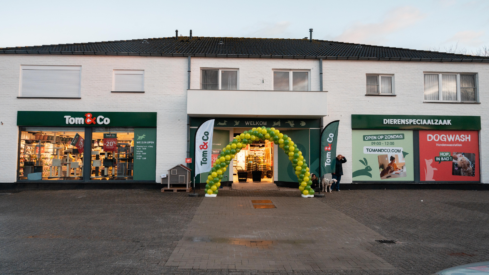
As well as expanding its range to include products for specific conditions, the pet retailer is trialing an urban store concept and completing a new warehouse.
In today’s retail environment, procurement and supply chain have become more critical than ever. Retailers face evolving consumer demands, rising costs and a need for operational resilience, making strong oversight of these areas essential.
Anna Mao, recently appointed Chief Procurement and Supply Chain Officer at Belgian pet retailer Tom&Co, brings extensive experience from retail giants Delhaize Group and Ahold Delhaize, along with hands-on expertise in franchise operations from her time at French hospitality chain Accor.
One of the major initiatives she is currently leading is the relocation and expansion of Tom&Co’s central warehouse from northern to southern Belgium by June. The retailer is also rolling out in-store programs offering specialized products and veterinary diets to respond to evolving customer needs.
Mao shares with PETS International more about these projects and how they are shaping the company’s future.
What are the biggest challenges Tom&Co is facing in logistics and supply chain?
In the macroeconomic environment, we are facing a lot of unpredictability. So we remain very alert about what is happening in Europe, but also more broadly. I think in this context, the biggest challenge is to find the right suppliers and to build strong partnerships. But we also need to be flexible and agile enough to find solutions with other suppliers when unforeseen events happen.
With the recent US tariffs making raw materials more expensive, how are you coping?
We are pretty lucky in Belgium to be surrounded by a strong ecosystem of very big and renowned pet food suppliers. Having that ecosystem of big suppliers in the surrounding 200km from us really allows us to source locally. That’s the biggest part of our business, which is luckily covered.
For the non-food part, we source abroad and we have conversations with our long-term partners to find solutions in terms of tariffs. But these are also linked to other factors. Sometimes tariffs increase but raw materials decrease or suppliers have over-capacity.
Have you made any recent changes in sourcing or assortment to manage the impact of tariffs or other disruptions in logistics and the supply chain?
We work with many local suppliers here in Belgium, but for certain products – like toys – we source from China. We have a partner there who negotiates directly with the producers and factories.
After Covid, many factories have over-capacity, so we continue to maintain discussions with our partners to ensure alignment. We’ve been able to renegotiate prices and make sure our costs reflect market developments, including production costs, raw materials, tariffs and currency fluctuations.
Changing suppliers for imported goods is a significant move, and building long-term, trustworthy relationships takes a lot of time and energy. Our focus is on optimizing the partnerships we already have, and only considering changes if absolutely necessary.
In parallel, we complement long-distance sourcing with European suppliers. Europe offers a wide range of distributors, which allows us to be more agile and adjust our assortment more quickly in response to trends and short-term needs.
Ultimately, the key is finding the right balance: a stable, reliable partner for imports combined with flexible local distributors. This approach allows us to manage lead times, maintain assortment dynamics and respond effectively to market changes.
How are you adapting your assortment in response to evolving consumer demands?
Defining the right assortment is central to our business, and it starts with observing trends. One trend we’ve noticed is a clear shift in pet ownership toward cats and smaller dogs. Another trend is what we call ‘affordable premium’. This represents around 65% of our portfolio and has been steadily growing over the past years. We keep developing this segment in our assortment with our own brands as well as with national brands.
Finally, there is a rising demand for specialized products. Many pets face issues such as weight problems, skin conditions or chronic diseases. Pets acquired during Covid are now reaching ages that require specific care.
To address this, we’ve developed the Para Corner, which focuses on products for specific needs, and we are currently rolling it out. Alongside this, we are piloting the Vet Corner in two stores, offering veterinary diet products. This is the first in-store vet assortment in Belgium, made possible through strong partnerships with international players.
By combining Para Corner and Vet Corner, we aim to create in-store spaces that meet today’s consumer expectations for both quality and specialization.
How is the rollout planned?
We are still finalizing the rollout with our partners. The first phase will run until mid-year, with up to 10 Vet Corners launched. After that, we plan to expand further in the second half of the year. This initiative requires significant effort, as it’s not just about placing products on shelves. It’s about building knowledge and trust within the veterinary community.
We collaborate closely with in-house and external veterinarians, and we also maintain discussions with universities and other professionals. It’s a comprehensive project, focused not only on the assortment but also on upgrading the concept and fostering a strong community around it.
Is Tom&Co aiming to position as a more premium retailer?
We continue to carry mainstream products because they’re important, and we also offer super-premium options. Between those, we focus on affordable premium, which allows us to address different needs. With the Para and Vet Corners, the emphasis is really on expertise and services.
We don’t want to be just a store with products on shelves; we want to provide advice and support. Pet parents visit us more frequently than their vets – maybe once a month compared to twice a year – so our stores are an important point of contact.
You opened your first urban concept in Brussels in February. How is it performing so far?
The store has delivered very encouraging early results. While we are still in a learning phase, we see a clear positive dynamic building, which confirms that customers are embracing both the assortment and the concept.
We’re also seeing strong traction in some of our service elements. For example, the dog wash is steadily gaining awareness and usage, which shows that these added-value services resonate well in an urban context. Just as importantly, customers who have received advice in-store are coming back, which reinforces our belief that expertise and personalized guidance are key drivers of loyalty in this category.
Do you have plans to expand the concept soon?
Certainly, in terms of expansion, this concept is particularly interesting because it allows us to operate on smaller footprints while maintaining a full-value proposition. It therefore opens up new opportunities for us in dense urban areas where traditional formats are less suitable.
That said, we remain in a test-and-learn phase. Our priority is to further validate the economic model and customer experience before defining the pace and scale of a broader rollout.
We’ve come through a period of significant inflation. How is this impacting your role and how are you managing product prices for customers?
Pricing is definitely an interesting and ongoing challenge. During Covid, everyone experienced significant tariff increases, and the situation was further affected by the Ukraine conflict. Those years were very impactful for retail. Now, tariffs have stabilized on the purchasing side – even though we stay alert – but market pressure on prices for consumers remains high.
At Tom&Co, we’re very attentive to this – we want to offer the right price for our customers. We operate across different segments, from mainstream products to affordable premium and super-premium options, and we make sure pricing is appropriate for each segment.
To stay on top, we regularly monitor the market both online and offline. We use online tools to scrape pricing data and conduct offline research as well. Pricing is a constantly evolving task – it requires daily attention to ensure we have the right price for each product range and stay well positioned for our customers.
How do you approach your online channel to remain competitive?
Online currently represents about 20% of our sales and continues to grow. One area where we’re performing particularly well is our subscription model. This has helped us build a loyal customer base across our banners, including Pharmapet and Vetostore in Belgium and France. The subscription model has been very successful and continues to expand, making online one of our key growth pillars for the coming years.
Do you aim to maintain that 20% or even grow it?
There’s definitely room for growth in online. Our goal is to increase that share to 25%, and potentially even higher. We want online to play an even larger role in our overall portfolio moving forward.
Nowadays, there’s a lot of focus on resilience and efficiency, particularly in logistics and procurement. How are you working to strengthen these aspects of the business?
Resilience is extremely important, especially in a world with so many unpredictable factors. On the procurement and supply chain side, having a strong network of trusted partners is fundamental. Long-term, reliable partnerships are the foundation of resilience, but you also need contingency options in case something goes wrong.
Internally, it’s about operational efficiency and ensuring we provide the right products that are relevant to consumers. Developing our own brands is part of this strategy, as it builds loyalty and strengthens our offering. So resilience isn’t just about operations – it’s about having the right partnerships, the right assortment and products that keep consumers coming back.
How is sustainability impacting your supply chain decisions?
It‘s a responsibility for every company nowadays and we‘re very proud to have released our first CSR report. It’s part of a continuous process of improvement, impacting day-to-day business across the company.
For example, in our supply chain, we’re moving our main warehouse this year to a location that’s more central to our network. Currently, we’re based in the north of Belgium, but by relocating closer to the French border, we reduce the kilometers needed to transport goods to our stores, which has a positive environmental impact.
Moving a central warehouse is a major project, and this year it’s one of our top priorities. We’re also transitioning our company car fleet to electric vehicles. In addition, we regularly remodel our stores, and over the past few years all new lighting installations have been upgraded to LED.
Packaging is another area of focus: all packaging for our own brands is now sustainable, recyclable and made from mono materials. Sustainability extends beyond operations – it also includes people. We prioritize the wellbeing of our employees and provide training in stores. It’s an ongoing process, and we track our progress year by year to ensure continuous improvement.
Can you share more about your new warehouse?
The new warehouse will fully replace our current location in the north of Belgium, which is 15,000sq m. The new facility is 20,000sq m with additional vertical storage capacity, giving us more space and flexibility for future growth.
It’s strategically positioned at the center of our store network, which improves operational efficiency, optimizes transport distances and enhances the quality of service we provide to our stores. The move is planned to be completed by mid-year, around the end of June.
There’s a lot involved, including project management, IT integration, supplier coordination, warehouse planning and operational considerations, such as ensuring service levels remain high during promotions and peak periods. It’s a complex project with many moving parts, but the goal is to achieve operational excellence and continuous improvement.
While the consumer may not see these changes, behind the scenes it’s crucial for efficiency and the smooth running of our business.
What are Tom&Co‘s top priorities in procurement, supply chain and logistics?
From a supply chain perspective, the top priority in the short term is the success of our warehouse project. It’s a major undertaking and will be crucial for operational efficiency and future growth.
In terms of procurement, we’re focused on two main areas. First, continuing to build strong partnerships with the major brands we work with. These brands are well-known to consumers, bring innovation and play an essential role in our assortment. Second, we are continuing to develop and strengthen our own brands, a key pillar in our assortment strategy.
Share this story:
One click prioritizes GlobalPETS in your search results and AI answers.