Balancing nutrition and sustainability
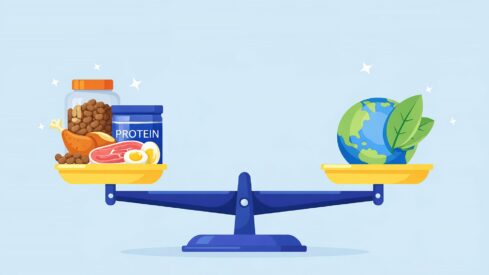
High-protein claims are often prominent on cat and dog food labels. But are formulators and buyers focusing on the right indicators of quality and environmental impact?
Pet owners increasingly demand diets made with high levels of protein, while manufacturers explore a growing diversity of protein sources to meet nutritional, economic and environmental expectations. Amid this trend, one misconception persists – that a higher protein percentage translates into better nutrition – although this is not necessarily the case.
Assessing protein quality
The nutritional value of a protein depends primarily on its amino acid profile and the animal’s ability to digest and utilize those nutrients. Hardly a single ingredient consistently delivers an ideal balance profile.
As a result, combining multiple protein sources is often necessary to achieve nutritional adequacy. Understanding these nuances is becoming essential for formulators, regulators and brands operating in an increasingly premium and sustainability-driven market.
Digestibility also plays a central role. In general, animal derived proteins exhibit higher apparent digestibility than plant-based proteins, while also offering more complete amino acid profiles and fewer anti-nutritional factors. However, even within animal proteins, quality can vary substantially depending on both the source and the processing method.
Fresh or gently processed meats tend to show higher amino acid digestibility than rendered protein meals, whose nutritional value is heavily influenced by rendering conditions such as temperature, time and moisture.
Sustainable logic of byproducts
Rendered ingredients remain the foundation of the pet food industry. From a sustainability perspective, rendering allows the efficient use of co-products from the meat industry, reducing waste and supporting circular economy principles.
Globally, livestock production accounts for an estimated 11-19% of greenhouse gas emissions. Poultry processing alone generates significant effluents per bird (18.9-37.8l), highlighting the importance of efficient byproduct utilization.
According to the Pet Food Institute & Institute for Feed Education and Research’s 2025 report, animalderived co-products in the US account for millions of tons of ingredients annually, with approximately 31% of rendered protein directed to pet food. In 2024, more than 4 million tons of upcycled ingredients were incorporated into pet food formulations, accounting for approximately 44% of total ingredient use.
However, rendering involves thermal processing that can compromise heat-sensitive amino acids such as lysine, threonine, methionine and tryptophan. Diets with high inclusion levels of rendered meals often require synthetic amino acid supplementation or blending with less processed protein sources to maintain nutritional adequacy.
Processing methods matter
Scientific evidence consistently shows that the processing method strongly influences protein utilization. Researchers from the University of Illinois published a study in the Journal of Animal Science in 2019 that compared chicken meal with raw, retorted and steamed chicken.
Although chicken meal contained higher crude protein, its amino acid digestibility was lower (78-88%) than less processed forms. Steamed chicken demonstrated the highest digestibility, with most essential amino acids exceeding 90%.
Further work from the University of Illinois, published in 2023 in the same journal, reported that chicken meal frequently scored below 100 when evaluated using Digestible Indispensable Amino Acid Score (DIAAS)like methodology, indicating potential limitations in meeting canine and feline amino acid requirements.
The lure of alternative proteins
As sustainability becomes a strategic priority, the industry is investing heavily in alternative protein sources, including insect meals and laboratory-cultivated or single-cell proteins (SCPs). These ingredients often offer a significantly lower environmental footprint than conventional livestock-based proteins, but their nutritional performance must be carefully evaluated.
How viable are insect ingredients?
Cricket meal and other insect-based ingredients have gained attention for their efficient resource use and favorable sustainability metrics. However, nutritional limitations remain.
A study published in 2025 in Veterinary World by researchers at Thailand’s Kasetsart University showed that hydrolyzed cricket protein may meet minimum requirements for certain amino acids, such as arginine, aspartic acid and glutamine, but can fall short for others, including tryptophan. When combined with byproduct poultry meal at inclusion levels of 10-15%, complete amino acid requirements can be achieved, illustrating the importance of complementary formulation strategies.
Yellow mealworm-based ingredients have shown particularly promising results in digestibility studies undertaken by the University of Illinois and published in the Journal of Animal Science in 2025. Defatted mealworm without cuticles achieved DIAAS-like scores above 100 for puppies according to National Research Council (NRC) and European pet body FEDIAF criteria.
Precision-fed cecectomized rooster assays also demonstrated favorable essential amino acid digestibility, ranging from 92.3-95.3%, thereby outperforming many traditional animal proteins.
Further reinforcement of the nutritional potential of insect-based ingredients comes from a study published in the Journal of Animal Science in 2025, again by researchers at the University of Illinois. The research evaluated the indispensable amino acid digestibility of two defatted black soldier fl y larvae meal (BSFLM) samples in comparison with conventional pet food proteins such as chicken meal and whole egg powder.
One of the BSFLM samples demonstrated high digestibility for all indispensable amino acids (>75%), with arginine digestibility comparable to whole egg powder – the ingredient with the highest overall digestibility (>91%). Notably, both BSFLM samples matched or exceeded the amino acid digestibility of chicken meal, positioning BSFLM as a highly digestible and technically viable alternative protein source for dog and cat foods.
As with other novel proteins, however, formulations using BSFLM as a primary protein source require careful amino acid balancing, particularly for methionine plus cysteine and/or phenylalanine plus tyrosine.
Lab-grown protein shows potential
Laboratory-cultivated and microbial proteins represent another rapidly emerging category. SCPs derived from microorganisms such as Methylococcus capsulatus have shown high digestibility, favorable amino acid profiles and DIAAS-like values exceeding 100.
A 2025 pilot study published in Frontiers in Veterinary Science led by a joint Indian and Australian research team evaluated fermented microbial protein produced from greenhouse gas substrates in extruded dog food. Inclusion levels of 5-10% demonstrated good palatability and digestive tolerance in adult dogs, highlighting the potential of SCPs as nutritionally viable and environmentally transformative ingredients.
Ingredient choice is key
Life Cycle Assessment (LCA) studies emphasize that ingredient selection is the dominant contributor to the environmental footprint of pet food.
A study from a Brazilian research team published in 2024 in the Journal of Cleaner Production evaluating extruded pet food production in Brazil documented average emissions of approximately 1.37kg CO₂equivalent per kilogram of food. Ingredient choice represented 70-90% of total environmental impact, surpassing manufacturing and distribution stages.
Outside greenhouse gas emissions, significant impacts were observed in terrestrial and marine eutrophication (destructive algae growth), particulate matter formation and acidification. These findings confirm that sustainability strategies must prioritize formulation decisions, most notably the responsible use of animal and plant co-products.
Managing a balancing act
As protein innovation accelerates, the pet food industry faces simultaneous challenges in delivering optimal nutrition while minimizing environmental impact. High protein claims alone are not enough. Particularly for new and alternative protein sources, a comprehensive evaluation of amino acid profiles, digestibility, safety, palatability and long-term health effects is essential.
The future of pet nutrition lies not in chasing higher protein percentages but in formulating balanced diets that align nutritional excellence with environmental responsibility.