Building the professionalization of pet grooming
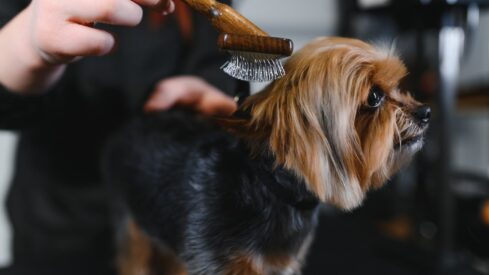
Certifications, training programs and welfare standards being implemented across the world aim to create a skilled profession that meets the rising demand for qualified practitioners.
Pet grooming is no longer seen as a luxury, with owners increasingly seeking trained specialists for this essential aspect of pet care. And that has put greater focus on compliance with standards that ensure the safety and quality of handling and equipment.
The industry at a glance
According to Grand View Research, estimates for the global pet grooming services market put its value at $6.89 billion (€5.94B) in 2024. This growing market segment is projected to reach $10.35 billion (€8.92B) by 2030, at a CAGR of 7.33%.
Online professional marketplace bark.com puts the average cost of dog grooming in 2025 in the US at $85 (€73), depending on breed and size.
For small breeds, grooming ranges from $62 (€53) to $100 (€86), and for medium breeds it costs $77 (€66) to $120 (€103).
The average cost for a large breed would be $95 (€82) to $140 (€121), and for a giant breed $120 (€103) to $180 (€155).
Germany – health, hygiene, comfort
There are around 5,000 grooming salons in Germany. The sector generates an estimated annual turnover of €80 million ($92.8M) to €100 million ($116M), putting it on a par with the country’s dog training industry in terms of revenue, according to the German Pet Trade and Industry Association (ZZF).
For Germans, grooming is less about luxury and more about health, hygiene and comfort. “Pet owners increasingly understand that proper grooming helps prevent skin conditions, matting, and mobility issues.
Matted fur can cause pain and even lead to infections, so regular grooming is viewed as part of responsible pet care,” Karin Witthohn, Head of the Dog Grooming Qualification Working Group and board member at ZZF, tells PETS International.
“There’s growing appreciation for the practical benefits. Trimmed paws reduce dirt indoors, for example. Older pet owners may struggle to groom their dogs at home, so rely on salons,” she adds.
But despite demand and a growing dog population, Germany still lacks grooming salons. In 2025, ZZF partnered with the Potsdam Chamber of Industry and Commerce to launch a one-year certificate course in dog grooming and services, aiming to standardize the profession.
“Professionalization is essential – not just to support business growth, but to ensure that groomers are properly trained in handling animals, identifying health issues and providing services safely and humanely,” says Witthohn.
ZZF believes this new certificate is a step forward in making grooming a recognized and respected profession and building customer trust in grooming salons.
UK – new sector guideline
In June 2025, the Canine and Feline Sector Group, in partnership with the Pet Industry Federation and the British Isles Grooming Association, launched a comprehensive pet grooming guideline to address the lack of formal regulation in the sector.
The aim is to provide both groomers and pet owners with clear expectations around professional standards, safety protocols and animal welfare requirements.
It also covers qualifications and insurance requirements for specific handling techniques for anxious pets, emergency procedures and hygiene protocols.
“These guidelines will help fill that gap consumers are crying out for, in setting out the steps to ensure any grooming business is operated professionally. It seeks to avoid any problems arising with pets,” says David Bowles, Head of Public Affairs at the Royal Society for the Prevention of Cruelty to Animals (RSPCA).
The Welsh government announced in June 2025 that it was to begin developing regulation proposals for establishments such as rescues, sanctuaries, and rehabilitation and rehoming centers.
In addition, the government will consider pet grooming as part of its plans, as this “skilled and specialist activity” is also currently unregulated.
Welsh colleges now offer education in pet grooming. In 2022, Coleg Cambria in north-east Wales started up a part-time course called Dog Grooming Assistants, Leadership and Management, as one of its series of courses for flexible qualifications.
Malta – license to operate
In 2024, the government of Malta introduced legislation that requires grooming establishments as well as pet boarders to obtain a license to operate. This was three years after the Animal Welfare Commission had appealed for laws to regulate the sector.
Under the law, each grooming establishment must have one individual who holds a certificate in animal first aid, a CCTV system and an action plan in case of emergency. Groomers are also required to maintain records of the pets they have treated.
US – collaborative schemes
Pet players are also joining initiatives to standardize the industry. In July 2025, personalized mobile pet care services provider Woofie’s announced a nationwide collaboration with the American Kennel Club (AKC) to provide standardized grooming safety training and certifications for its franchise teams, through the AKC S.A.F.E. (Safety, Assurance, Fundamentals, Education) Grooming Program.
This collaboration will enable Woofie’s franchises across the country to complete the AKC Safety in the Salon courses, which cover best practices in pet care, health and safety protocols, accident prevention, sanitation and handling of dogs with special needs.
“We’re providing pet parents with peace of mind. They can trust that their dogs are receiving the highest level of care and professionalism – values that are at the heart of everything Woofie’s stands for,” says Amy Addington, Woofie’s co-founder and President.
In August 2025, the South Texas College launched the Professional Dog Grooming program, led by its Continuing Education and Workforce Development department in partnership with a local business, ShowTime Pet Salon.
The hybrid course will offer 14 weeks and 180 hours of online instruction and hands-on training at ShowTime. After completing the course, students will be eligible to take the AKC’s Professional Groomer Credential certification exam.
American non-profit organizations are also pushing to regulate pet grooming products. The Environmental Working Group (EWG) now offers a verification program for products such as shampoos, conditioners, detanglers and cleansers to ensure their safety.
Jocelyn Lyle, EWG’s Executive Vice President for Mission and Partnerships, explains: “Pet grooming products often contain many of the same hazardous substances people try to avoid in products they use, but without mandatory disclosure their ingredients remain a mystery.”
Taiwan – dispute prevention
In May 2025, Taiwan’s Consumer Protection Committee (CPC) launched the Standard Contract for Dog and Cat Grooming Services, in partnership with the country’s Ministry of Agriculture.
This will ensure animal and professional safety and requires pet grooming businesses to clearly explain pricing methods. They must clarify whether pets are aggressive and charge an additional fee if the pet is left at the salon for an extended period.
The new standard aims to prevent disputes between pet owners and grooming businesses. “In 2024, the CPC received 17 complaints related to pet grooming, most commonly over unclear pricing, with owners asked to pay extra fees before being able to retrieve their pets,” says Chen Hsing-hung, Deputy Director of the committee.
Building a culture of trust
Education, regulation and standards are all setting benchmarks for improving the service quality of the grooming sector worldwide.
These are promising developments that will ensure the welfare of every pet while building the trust of pet parents.
Share this story: