Bulgaria: pet businesses welcome transition to euro

With the Eastern European nation due to join the eurozone from January 2026, how will this move affect the country’s pet industry?
The lev has been the official currency of the Republic of Bulgaria since 1881. The country in the Balkan region, directly south of the Danube river and west of the Black Sea, covers 42,855 square miles (110,994 sq km) and has a population of just under 6.5 million people.
Making economic progress
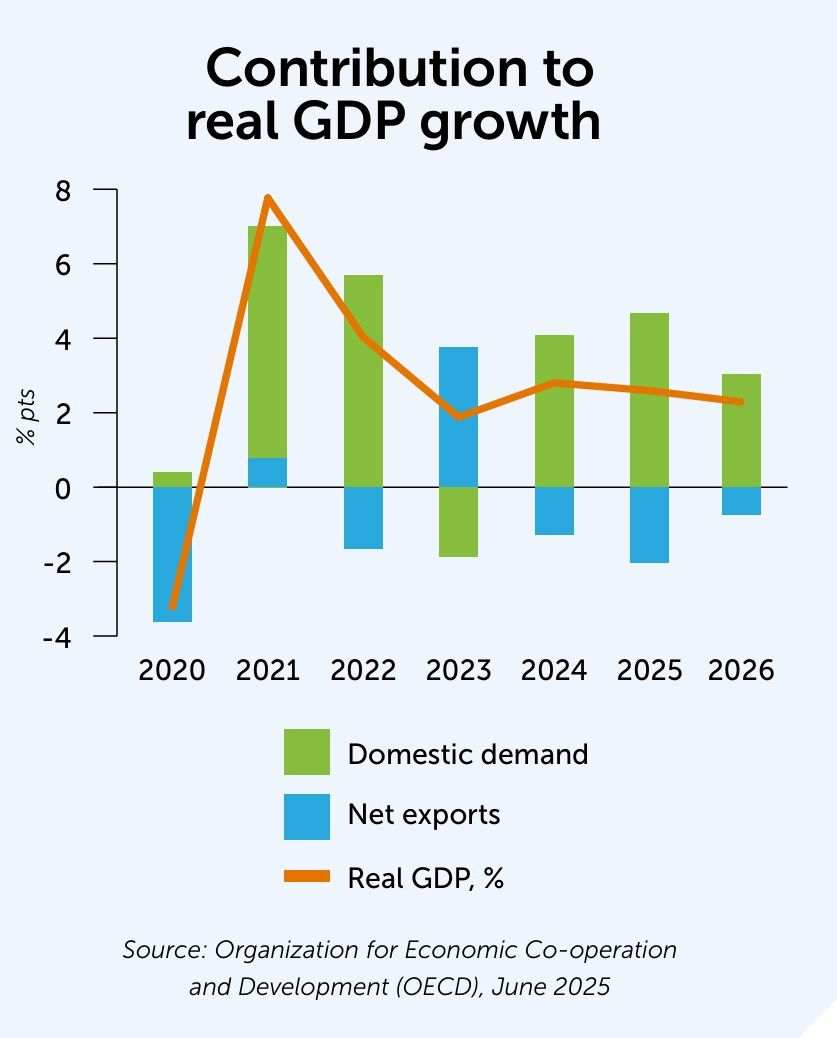
Despite the country’s rather unstable fiscal state of affairs, and a history of high inflation, corruption and labor shortages, there are many positive signs.
Bulgaria has achieved a solid score of 0.845 in the United Nations Human Development Index (HDI), landing it in the ‘very high’ tier and putting it at 55th out of 193 countries.
The nation was also designated as a ‘high-income economy’ by the World Bank, with a gross national income (GNI) per capita of $15,320 (€13,189) as of 2024.
Having been a member of the EU since 2007, on 8 July 2025 Bulgaria was finally endorsed by the European Parliament to enter the eurozone.
It will adopt the euro on 1 January next year, making it the 21st member state to do so. However, according to the latest Eurobarometer survey, only 43% of Bulgarian consumers support the new currency’s adoption, while 50% are firmly opposed.
Pet food industry reactions
So how is this move being received by businesses in Bulgaria – and particularly in the pet industry? According to Euromonitor, the Bulgarian pet food market is expected to represent €264.4 million ($307.9M) this year, which is an increase of 6.2% compared to 2024.
Will becoming part of the eurozone, where the euro is already used by 350 million people, further drive sector growth?
Agromarket International, a leading producer of pet food for birds and small animals, is optimistic. The company has been active on the Bulgarian market for over 20 years and exports to dozens of countries – not only in Europe but also the likes of Singapore, Costa Rica and Panama.
A positive move for business
In an interview with PETS International, Director Zdravko Gospodinov says that entry into the eurozone will be beneficial for business.
Agromarket’s revenues are almost entirely in foreign currencies: 65-70% in euros and the rest in US dollars. However, production costs and many raw materials are paid for in lev.
“The immediate positive change for us will be that we will not pay any more foreign exchange commissions to the banks when we convert our euro revenues into Bulgarian lev,” he states, adding: “Accepting the euro will also bring some other positives for the economic environment here, like lower inflation and lower rates for loans.”
Furthermore, the owner of Agromarket believes that the Bulgarian pet food industry will continue to grow after the official introduction of the euro because the resulting rise in disposable income will further improve the economic situation.
Enhancing scalability
Another key Bulgarian supplier to the pet industry is Nasekomo, headquartered in Lozen (18 km from the capital, Sofia). Back in 2017, the company became the first insect-rearing farm in the Southeast European region, and today it is one of the leaders in the production of insect-extracted proteins, predominantly from the black soldier fly.
According to CEO and co-founder Marc Bolard, the company already relies on the euro when it comes to funding, procurement and scalability planning.
Bulgaria’s official transition to the euro “will only enhance our ability to execute consistent, replicable bioconversion projects at scale”, he says.
“Adopting the euro removes currency conversion hurdles. We can manage genetics, robotics and manufacturing investments seamlessly across Bulgaria and within the eurozone.”
Supporting product development
“We’re already seeing interest from Bulgarian players exploring differentiated, sustainable offerings.
The next step is greater collaboration between ingredient suppliers and pet food manufacturers to accelerate product development and consumer adoption,” continues the CEO.
“I believe Bulgaria can position itself not just as a user of innovative feed solutions, but also as a producer, supplying sustainable pet food ingredients across Europe,” concludes Bolard.
Pivotal retail milestone
Nikola Ninov, Managing Partner of Bulgarian pet retailer Petmall.bg, sees the adoption of the euro as a “pivotal milestone for the region’s economic integration and business environment”.
With a retail footprint of 17 physical stores plus an e-commerce platform, the company serves both urban and rural pet communities with product lines including premium pet food, wellness items, toys, grooming products and veterinary support.
He anticipates the shift to the new currency bringing improved currency stability and predictability. “Transitioning to the euro will reduce currency exchange risks and improve pricing transparency.
This is particularly important for companies like ours that import ingredients and products or operate cross-border,” he says. “With one currency across multiple markets, we can streamline procurement, unify pricing strategies and reduce transaction and hedging costs.”
Additionally, Ninov envisages an increase in investor confidence and expansion. “Euro adoption sends a signal of economic maturity and stability. It could attract more investment into the pet sector, encourage regional expansion and allow companies to scale operations more confidently,” he comments.
This is particularly relevant in the context of the retailer’s own ambitious growth plans. Petmall has locked 9 contracts for new openings in the next 18 months alone.
Transitional challenges
Ninov is aware of the challenges associated with any currency switch, however, in terms of technical preparation, pricing recalibration, staff training and customer education. Inflation perception and price rises can also impact on consumer trust, he says.
In this context, he mentions the Euro Adoption Act that was approved by Bulgaria’s Parliament on 30 July 2025. As part of this regulation, which is aimed at preventing unjustified price increases, most Bulgarian businesses – including Petmall – have been required to display prices of goods and services in both lev and euro since 8 August 2025.
“While there is no outright ban on price increases, companies must justify them transparently. Violations could result in fines of up to 1% of annual turnover, particularly for larger firms,” explains Ninov. The dualpricing requirement will remain in place until the end of 2026.
Acknowledging these and other challenges, he emphasizes that it is crucial to manage the transition delicately.
“We hope that the Bulgarian market will adopt relatively fast and we will not have a decline in market demand in the short term,” concludes Ninov, no doubt echoing the thoughts of all businesses involved in the nation’s pet industry.
Share this story:
