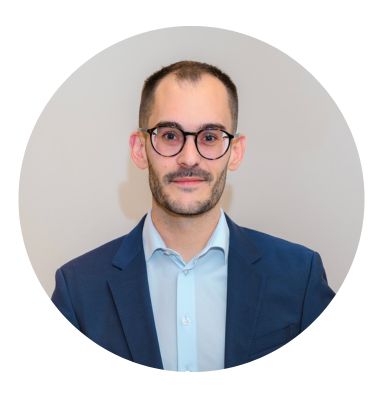
Fawaz Alenzi (Petzone): “Opening retail stores in Saudi Arabia is the logical next step”
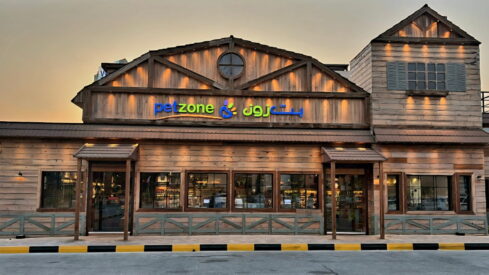
Fawaz Alenzi (Petzone): “Opening retail stores in Saudi Arabia is the logical next step”

The Kuwaiti multichannel pet business is targeting expansion in its neighboring country, while also growing in the UAE and entering the Qatari market.

A regional success story, Petzone has grown from a single retail store into a multi-country pet business, now operating across Kuwait, the UAE, Bahrain and Saudi Arabia. The company combines traditional shops with a leading e-commerce platform and a wholesale B2B distribution network serving nearly 1,000 customers.

Building on this momentum, the retailer has plans to grow even further. CEO Fawaz Alenzi shares his insights on retail expansion, telling PETS International about the need to meet the demands of increasingly knowledgeable pet owners across the Gulf region.

You founded Petzone nearly 15 years ago. How do you think the regional pet market has changed since then?

Back in 2010, the business was completely different. At the time, cultural restrictions very much dominated the consumer mind and therefore consumer behavior too. But since COVID, we are in a completely different era and pet parents care more about their pets. That’s why we are seeing more interest in super-premium and holistic products compared to before the pandemic.

Are pet parents more knowledgeable now?

In the UAE, you have a lot of expats who really care about their pets and now know more about pet products and services. In the Gulf nations, pets were not part of the family – or the general lifestyle – back in the ’80s, ’90s, or even early 2000s. But we’re now seeing a huge shift.

Looking at the consumers in Saudi Arabia, the UAE or Kuwait, they’re definitely more knowledgeable now because of the internet. They can search and find a lot of information online about any product. So things keep changing for the better, with every day different to the previous one as you see more educated consumers in the region.

How would you describe your store network?

Most of our stores are in Kuwait – more than 30 nationwide, including the ‘shop-in-shop’ concept models. We also have three megastores in Dubai, UAE and Bahrain. Our regular stores are typically between 500 and 1,500sq m. The idea is to have a few megastores while continuing to focus on small stores between 100 and 300sq m.

What would you say are the main differences between the various countries in terms of assortment?

To succeed, you need to maintain 8,000-10,000 SKUs at all times. Because we run a retail business, we must have all categories and well-known brands – whether we import them directly or buy them locally from partners. In general, the countries we operate in share a similar mindset and product offerings.

In Saudi Arabia, however, economy brands are more popular than in other markets. In countries like the UAE, I think inflation will affect businesses, and many people might become more price driven. But in the end, many people still care more about quality than price.

And the local brands?

I don’t believe they are managed well enough to have any effect on the market yet. So working with well- known imported brands will remain the driver of this business. I can see local manufacturers achieving a small market share, but the current quality of their products and business strategies would need to change. I don’t think they can survive in the long run unless they massively improve their production facilities.

In which Gulf markets do you see the most opportunity to do business?

We have more room to expand in Saudi Arabia, the UAE and Qatar. In the coming years, expanding our retail and wholesale business there will be a huge focus for us. Recently, we started working with global supply chain partners to set up a centralized warehousing hub in the region. Specifically, we already opened one in Dubai and are looking to establish another in Saudi Arabia.

From this hub, we can serve our own demand in each country and ship internally to other markets where we operate. That will enable us to optimize supply chain costs and availability, resulting in greater profitability in the long run.

How do you envision expanding your footprint in Saudi Arabia?

The market is currently flooded with pet stores, with more than 1,000 locations and intense competition. There is also a major price war that is shrinking margins there, and I believe many of those small businesses will eventually close.

Expanding into Saudi Arabia with a retail presence is in the pipeline, as we aim to complete our portfolio. We believe that the retail business will complement and further boost our distribution operations.

We’re already active in Saudi Arabia as a distributor, importing and selling to many customers with strong results. Launching traditional retail stores is a logical next step, especially given the positive performance of our online business there.

What is the downside of a competitive market such as Saudi Arabia?

It’s difficult to compete with those huge numbers of pet shops, so we need to be careful. Simply jumping in and opening stores is not a smart idea when the market is so immature. If you ask anyone in Saudi, you’ll hear stories about cashflow problems, less store traffic and businesses closing.

I think sooner or later we’ll move into a filtering out phase, with a lot of small stores closing in all markets – especially Kuwait, Bahrain, Saudi Arabia and Qatar.

This will give the main players plenty of room to dominate the scene, possibly taking a 60% share, while small players may well disappear within 10-15 years.

How many stores would you like to open there?

I believe opening around 30 stores in Saudi Arabia would be logical in a 10-year plan. But no more than that. Our specific type of megastore is very costly to open. Online competition means that brick and mortar is not like it was before. So balancing online and offline is also very logical. The plan is to start gradually, opening stores in major cities to test the market.

Is this something you’re planning for 2026?

We have serious plans to do so, specifically in the UAE, Saudi Arabia and Qatar. Currently, we’re working on big projects as part of the decentralized warehousing concept, focusing on technology and the supply chain. For example, we recently upgraded our CRM and moved to SAP ERP. This should all be in place quite soon, and then we can move forward. Opening more retail stores is likely in 2026.

How does online and offline consumer purchasing behavior compare?

The pet online channel is valued at approximately $1.2 billion (€1B) in the Gulf region and is competing aggressively with traditional offline stores. In our case, we aim to maintain the right balance. Currently, our sales are split between 65% offline and 35% online, which we believe is the ideal mix at this stage in our markets and reflects the success of our omnichannel approach.

What is the role of quick commerce in the region?

We work with q-commerce and on-demand marketplaces in all the countries we operate in. Online traffic is huge there, but we cannot list everything on the platforms because they are dedicated to quick delivery and different types of customers. It is, however, important to participate and get that market share.

Is there competition from traditional retailers such as supermarkets and grocery chains?

Consumers go to the mass market to buy home groceries – also essential pet products, mostly economy range. You’ll never find super-premium products in supermarkets. For those you have to go to a specialty shop. There is definitely a big difference between the channels, but we don’t see that as a threat because traditional retailers are targeting different types of customers. In fact, I think they complement each other.

How are new categories such as plant-based, vitamins and supplements performing?

The Middle East market still focuses on the traditional pet food concept. New approaches like plant-based and freeze-dried are still just a small part of the business, and we don’t see any demand for them. It is good to follow global trends, but I believe it is too early to introduce these categories into our markets.

All pet stores should stock vitamins and supplements. But unfortunately we are faced with a lot of local restrictions and regulations. Authorities often consider the products medicinal, so import and registration are a complicated process requiring a number of licenses. This makes it very difficult to sell multivitamins and supplements. And generally they account for only about 5% of the business.

Is there much variation between customer journeys and basket sizes per country?

In markets like Qatar and Kuwait, spending tends to be higher, while in Bahrain and the UAE it’s somewhat lower. On average, basket values range from around $60 (€51) to $70 (€60), although this can fluctuate due to economic and cultural factors.

What about frequency?

We expect to see the customer frequently, more than 10-12 times a year. Our sales team connects well with our customers, knowing them by name, and this builds trust and long-term relationships.

Whether they come to the store or buy online, they are loyal to the brand. We engage with thousands of customers, which is why we are working on upgrading our CRM software to always be able to connect with them perfectly.

Tell us more about your loyalty program…

We run different types of loyalty programs in different countries. I believe this is a must now. We are working on a centralized omnichannel loyalty program for offline and online, to support the complete customer journey. Whether they visit a physical store or order online, whether they buy products or services, they should still get the same benefits. We are expecting solid results very soon.

How is Petzone harnessing the power of Al?

In the online channel, we are already working on upgrading the system into a specific Al integration concept. This is ongoing and we expect to finalize it soon. We are already testing some types of Al on our websites in all our markets.

What is your vision for services?

We offer our customers a lot of different services, such as relocation, grooming plus mobile grooming, aquarium maintenance and events – for example birthday celebrations. We certainly believe that services like these are very important as they complete our offering for pet parents.

2/2
Free articles
read this month

Register and read all articles, for free