From film to pallet: the machines behind every bag of pet food
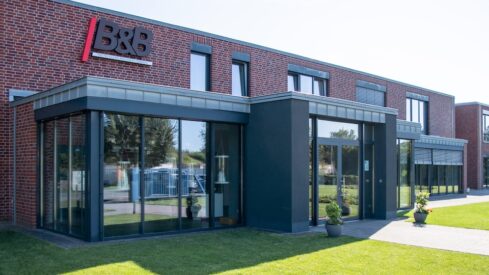
Over 5,000 machines delivered, B&B still tailors each one to the customer’s requirements.
Before dry pet food reaches the shelf, its bag must be made, filled and packed for the store. German machine builder B&B Verpackungstechnik builds equipment for the first and the last step guided by one principle: listen to the production floor first, then design the machine.
An engineering office at heart
The company’s story begins in 1977. That year, Jost Bäumer opened a mechanical engineering design office in Germany, offering design services to industrial clients while developing ideas of his own. Over time, one of those ideas grew into a specialty: machinery for producing pre-made bags.
That engineering-office mindset has never really left. B&B still approaches a new project the way a design consultant would. It looks at the customer’s product, material and plant first, and only then decides what the machine should look like. This is not a company that sells from a catalog.
Where the bag is born
B&B’s bag-making machines convert film into finished, pre-made bags. Customers range from large packaging groups to pure converters, which supply pet food producers with the bags they fill.
Today’s pet food bag has many jobs to do. It must protect the product, offer convenience features, carry the brand, run reliably on high-speed filling lines and meet growing sustainability requirements and regulations. That makes the converting step critically important.
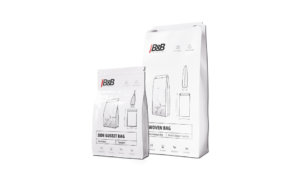
B&B has supplied converters worldwide for decades and its machines are especially strong when it comes to mono polyethylene (PE) and woven PP pinch bags and high performance. Customers can upgrade their B&B equipment throughout its lifecycle to keep pace with market trends. B&B is also the first port of call for developing new bag designs and finding ways to convert them commercially.
When the bag is filled
The second chapter of B&B’s history opened with the acquisition of MAF Verpackungstechnik, which brought end-of-line packaging into the company.
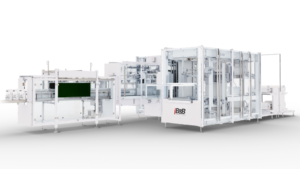
These systems take filled primary packs and package them for palletizing and shipment. B&B’s machine range contains stretch film bundling, paper wrapping and case packing as well as tray, wraparound and case packers for all kinds of primary packages in dry and wet pet food.
For pet food manufacturers, this is the stage where efficiency and gentle handling of the primary pack are key. It is also where packs that look identical on a drawing can behave very differently in practice. B&B’s Stretchpacker solved the problem of sustainable mono PE bags going through a shrink tunnel due to its stretch technology, while increasing bundle stability and reducing film consumption at the same time.
Everything under one roof
What sets B&B apart is not a single machine but the way its machines are made. The company keeps the entire value chain in-house. Machines are designed, assembled, programmed and commissioned at its headquarters in Hopsten, in north-western Germany, before delivery.
At the center of this setup is a large development department. Its engineers work on new machine concepts and adapt existing platforms to new bag formats, materials and line requirements. Development, mechanical design, software and assembly sit side by side, so ideas can move from prototype to production machine without being passed between companies. For customers, this means one team that understands the whole machine.
Customers of every size
B&B is trusted by large multinational companies as well as family owned businesses with strong regional focus. In both bag-making and end-of-line packaging, it works internationally with global players in the pet food, packaging and other industries.
These customers rarely ask the same questions. B&B can therefore offer a standardized solution or a highly tailored machine, for example when a machine needs to fit in a tight space of an existing line. Serving both has made the company flexible by necessity.
A base in the US
The United States is one of B&B’s most important markets and the company has its own sales and service base in Green Bay, Wisconsin. Being on site gives North American customers a nearby contact and quick support. It also keeps B&B close to developments in one of the world’s largest pet food and packaging markets.
Service that travels
A packaging machine is a long-term commitment and often stays in production for many years after commissioning. B&B backs its equipment with a worldwide service organization, supported by international service partners, that helps customers wherever their lines are running. That support covers installation and commissioning, maintenance, spare parts and later modifications as well as service contracts.
Looking ahead
The pet food industry keeps changing. New recipes, new pack sizes and a growing focus on recyclable and mono-material packaging all place new demands on converting and packaging equipment.
B&B’s ambition is to meet these changes through its own development work, keeping its machines in step with new materials and formats while expanding its international presence.
The bottom line
Almost five decades after Jost Bäumer opened his design office, B&B Verpackungstechnik is still a company of engineers.
Its portfolio has expanded from bag-making machinery to include end-of-line systems and the company has grown from a German workshop serving international markets into an organization with more than 250 employees, a large development team, a base in Green Bay and an installed base of more than 5,000 machines.
For pet food producers and packaging converters, this means a reliable partner with a high level of technical expertise that helps them grow their businesses and stays on hand worldwide long after a machine is installed.
Share this story:
One click prioritizes GlobalPETS in your search results and AI answers.