How can palatants influence the texture of wet cat food?
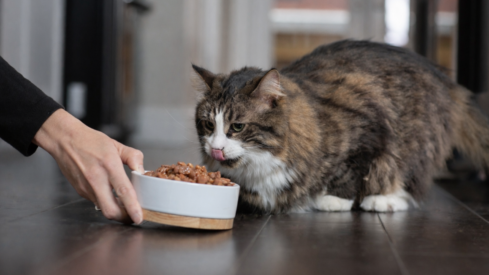
As wet cat food gains popularity, pet owners increasingly value the eating experience, viewing palatability as a multi-sensory journey beyond just taste.
Taste and aroma are important, but texture is also crucial in how cats perceive and accept wet food. Besides processing conditions and formulation, the choice of palatant can affect the final texture of wet cat food.
Texture and eating experience
From the initial bite to swallowing, the eating experience is influenced by texture. Features like cohesiveness, firmness and chewability influence how easy and pleasurable it is for cats to consume their meal. Even minor formulation adjustments can result in discernible texture variations in formats like chunks-in-gravy.
During processing, palatants may participate in physicochemical interactions with moisture and macronutrients in wet cat food. For example, hydrocolloids (such as gums or carrageenan) can bind water and modify viscosity, while functional proteins (e.g. hydrolyzed proteins) or starch fractions may contribute to the structural network that develops during retorting. Through these mechanisms, palatants can influence both the final product’s texture and the delivery and perception of flavor.
Assessing palatant impact
To understand this, six wet cat food palatants were evaluated within a chunks-in-gravy format. The palatants were chicken- or fish-based with equal inclusion levels, and the samples were processed under the same retort conditions.
Instrumental techniques were utilized to evaluate texture based on a simulated cat eating experience. Firmness upon the first bite (penetration test), ease of breaking down the chunks-in-gravy (perforation tests), and food elasticity (double compression test) were evaluated during chewing.
Although the palatants were included in identical base formulations and processing, differences in texture were evident. Some palatants produced a chunk that was firmer, requiring more force to chew at first bite, while others produced a softer, less chewy texture.
Differences in cohesiveness were also observed, affecting how well the chunk held together during eating. These findings show that palatants can contribute to the texture of wet cat food, potentially influencing eating ease and enjoyment.
Holistic approach
As innovation within wet cat food continues, palatability should be considered from a holistic point of view, taking into account not just flavor, but aroma, appearance and texture. The use of palatants represents an opportunity to influence not just flavor, but these other aspects as well.
Share this story:
One click prioritizes GlobalPETS in your search results and AI answers.
