Interview with CEO of Zigly Pet Care
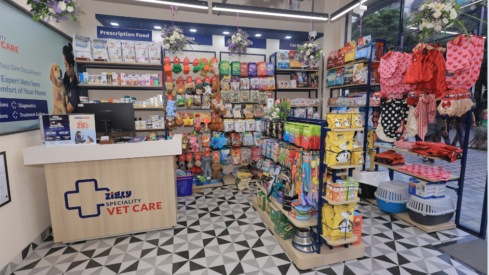
The Indian retailer is expanding beyond products as services reach 65% of revenues and it scales up health and veterinary offerings.
India’s pet care market is still largely served by neighborhood pet shops, alongside more organized retail and a growing e-commerce sector. Zigly Pet Care is taking a different approach, combining products with veterinary care, grooming and digital services within a single model.
Founded five years ago as a product-led retailer, the New Delhi-based company operates close to 50 centers across 19 Indian cities. While starting as a pure retailer, it has evolved into a broader pet care ecosystem. CEO Saurabh Jain shares with PETS International how Zigly Pet Care is adapting its business model to respond to the needs of India’s growing base of first-time pet parents.
Where does the average Indian pet parent buy food and pet supplies?
In India, the pet care industry is at least a couple of decades behind some developed countries. Having pets at home is still a fairly new phenomenon.
India is a large geography, but shopping and commerce typically rely on small pet shops. These are neighborhood pet shops catering to an area of a maximum of two to three miles, and most regular needs are handled through these stores.
Historically, this has also been the case for other FMCG categories. Today, however, that trend is changing very quickly. In India, we saw this happening in regular consumer industries, where these small shops, known as general trade, shifted toward larger superstores, or modern trade, followed by the last leg: e-commerce.
We saw that shift to modern trade for regular FMCG categories perhaps 10 to 15 years ago, and the e-commerce wave has been very strong over the last seven to 10 years. We are now seeing the same evolution in pet care.
Today, the market is still largely driven by general trade – mom-and-pop neighborhood pet shops – but some of these are now being converted into more organized chains. In parallel, the e-commerce wave is getting very strong, and customers are now relying on all three channels.
What role is Zigly Pet Care playing in this ecosystem and the broader retail landscape?
When we started out five years ago, we were a product-led retailer. We also had grooming and experience centers within our format, while veterinary care was part of our offering, allowing any pet parent looking for healthcare-related advice to consult our in-house vet.
We have now transitioned from that starting point. Today, we don’t think of ourselves as a retailer that simply added some services on the side.
Zigly Pet Care has been built on the idea that pet parents don’t think in channels. They don’t think about products, veterinary care, grooming, nutritional guidance and digital convenience separately. We believe in an omnichannel thesis and an integrated ecosystem, rather than simply a chain of stores.
Today, Zigly Pet Care has close to 50 centers across 19 cities in India, offering end-to-end care focused on health and wellness, while addressing all the needs of a pet parent, including products.
Within veterinary care, we offer consultations, diagnostics, hospitals and surgeries. We also have grooming spas and a section dedicated to products, where we can consult with pet parents and guide them on what best suits their pets depending on their individual needs.
What’s the split between the retail and services sides?
When we started out, retail accounted for around 75% to 80% of our revenue. Today, it represents 35%, while veterinary care and grooming make up the remaining 65%.
Having said that, this doesn’t mean that products have declined. Zigly Pet Care has continued to grow significantly, and products have grown as well. However, our focus on vet care, services and health has increased significantly, leading to higher growth in those segments.
How many SKUs do you have for products compared with when you opened?
We follow a product assortment strategy where we review our assortment on a quarterly basis. To begin with, because we did not have any trend lines or patterns, we went with market trends and kept a larger assortment. At that point in time, we may have had close to 2,500 SKUs.
Over a period of time, we realized what our pet parents need, and we noticed that needs were slightly different from region to region. Based on our patterns, we have now rationalized the assortment we keep, and today it is close to 5,000 SKUs.
Which categories are working best?
As an overall category, cats are growing faster – whether it is food, litter or accessories. Most things related to cats where there is a repeat purchase are increasing and growing fast.
Cats used to account for less than 5% of our total share. Within a span of 12 months, that has increased to 15% to 20%. I see cats eventually becoming 25% to 30% over the midterm. We are focusing a lot on cats, and we are about to launch a few cat-specific products under our own private label.
The second trend I see is in health-focused, nutritional food. Zigly Pet Care customers are much more health-oriented, so we see prescription food – whether recommended by vets, specific to certain ailments or having medicinal benefits – increasing very well for us.

What about novel proteins such as plant or insect-based, or cultivated meat?
There is a trend toward different variants of dog food. At Zigly Pet Care, we don’t see as much demand for insect-based food, but vegetarian and other non-meat variants are picking up.
This also has a regional nuance. India has a large population in certain regions that are non-meat eaters, often for religious reasons. In those geographies, we see higher demand for vegetarian or vegan meals for dogs compared to other regions.
Where do you want to position Zigly Pet Care? Are you targeting the mainstream market or are you tapping more into high-expenditure pet parents?
Let me help define the customer first. If we look at the numbers, in 2019 or 2020, there were close to 10 million household pets in India. Today, that number is around 40 million, and we reached that before 2024. In just four to five years, the pet population multiplied by four.
This means almost 70% of pet parents in India are first-time pet parents. They are informed but not very confident, and they are cautious. A lot of them are Gen Zs and millennials who are digitally savvy, do their research, and are proactive about vaccinations and grooming. However, they are unsure of themselves, feel lonely in this journey and feel guilty that they aren’t doing enough because they lack real people advising them.
A lot of brands focus on what to buy, but they don’t explain why it matters. That is where Zigly Pet Care comes into the picture. Our ideal customer needs to see the value in what we offer.
We are definitely not at the bottom of the pyramid in terms of price or offerings, but we appeal to people who have the means to spend and want to understand the ‘why’.
What about accessories and lifestyle products like beds, crates and cushions?
These are some of the fastest-growing categories for Zigly Pet Care. We have our own private label, and the first set of offerings we started under that label was around lifestyle. We see that category growing phenomenally well.
We also have a private label called Catmos for cat-related products like litter and training pads.
It has to do with the humanization of pets. People are buying beds, loungers, clothes, comforters and accessories. During the festive season, pets are getting the same attention as humans. The overall lifestyle and toy category is also encouraged by human clothing and lifestyle brands entering pet care. It is a growing category in India and definitely for Zigly Pet Care.
What’s the price difference between your private labels and traditional brands?
Taking dry food as an example, and using rupees per kilogram as the benchmark, brands like Drools or Mars Pedigree are priced between ₹200 (€1.82/$2.09) and ₹300 (€2.73/$3.13) per kilo. Big premium brands like Royal Canin or Acana are priced between ₹900 (€8.21/$9.41) and ₹1,200 (€10.95/$12.55) per kilo. Our brand sits in the middle or just below the premium price range, somewhere between ₹650 (€5.93/$6.80) and ₹700 (€6.38/$7.32) per kilo.
We focus on nutritional value, which is much higher than you find in basic brands and equivalent to premium brands. Our food is oven-baked, not extruded, which helps preserve the nutritional value. Because the product’s cost is higher for us, the price point translates to being higher than the starting range in India.
What percentage of Zigly Pet Care’s product assortment is its private label and what is your target?
Today, private labels make up around 25% of our assortment. We continue to offer and launch private label products. Over the past couple of months, we’ve launched toys, beds and cat accessories.
From a future perspective, we are getting into hygiene categories with a new variant of training pads. We plan to get into cat food and tissues. For lifestyle, we are launching our winter collection in November. On an active basis, we continue to look for private label opportunities, and that assortment will continue to increase.
This August, you launched a new integrated pet center with at-home vet visits and pickup and drop-off services. Can you explain this new model and tell us if you plan to roll it out further?
At Zigly Pet Care, we are prioritizing convenience. The first layer starts with trust, and once that is built, we prioritize what the customer is looking for. Today, our pet parents need expertise alongside a lot of convenience.
With that in mind, we started ‘vet at home’ in a few postal codes, where an expert vet visits the pet at home if it is too sick or afraid to travel. We also offer to pick up pets from home, bring them to our center for grooming or vet care, and return them.
This service is currently limited to certain postal codes, and based on the feedback we receive, we will expand it to other geographies.
From a new launch perspective, we are also rolling out our e-pharmacy. You can order medicines online and attach a doctor’s prescription or, if you don’t have one, you can speak to a Zigly Pet Care vet who will prescribe the right medicine and help you order it for home delivery. We have done a soft launch, and it has recently fully launched nationwide.
You launched your first-ever dog day boarding service in July in New Delhi. How is this working, and do you plan to expand it to other locations?
Yes, we will expand this service to a few centers in selected geographies to begin with and, based on the response, we can expand further.
Pet health is also becoming a priority for you. What else is in the pipeline?
The biggest issue for pet parents is uncertainty regarding health expenses. Since 70% of them are first-time pet parents, we are trying to build certainty into their lives.
We are going to launch a comprehensive health package, which isn’t public yet, that will cover the entire vaccination schedule, doctor consultations, deworming and any seasonal health interventions at a fixed price. It will also cover a few nights of inpatient department (IPD) stays if a pet needs to be admitted to the hospital.
How does it differ from traditional pet insurance?
Insurance doesn’t cover vaccinations, so it is not insurance. It covers the predictable things that happen in your pet parenting journey. Instead of a pet parent having to set their own reminders, figure out where to go and deal with increasing prices, we tell them not to worry. You pay a fixed monthly fee, and we take care of all health-related needs for the entire year. This will be launched very soon.
Do you have competition in this, or are you pioneering the concept?
In India, healthcare is very fragmented, and there are hardly any large health chains. Most health aspects are addressed by neighborhood vets running small clinics. While some doctors might have local packages, we have not come across any comprehensive India-wide packages.
If a pet parent moves to a new city, they can visit the local Zigly Pet Care center to continue their vaccinations or use their IPD benefits in an emergency across India. That is the convenience, scale and certainty we bring to pet parents’ lives.
In terms of expansion, are you still targeting up to 65 centers by next year?
Our target is to be close to 60 centers by the end of this financial year (March 2027). Long-term, we see Zigly Pet Care having close to 200 centers over the next four to five years.
We are moving confidently on a path to easily achieve that scale, given the low penetration of healthcare services in India. Fortunately, pet parents are becoming more aware of the need for hygiene, expert vets and proactive care rather than just reacting to issues as they arise.
What role will emerging urban markets play in your expansion strategy over the next years?
We are already present in Tier 2 and Tier 3 markets. I don’t see them as smaller versions of Tier 1 markets; they are a completely different opportunity. People there have spending power but seek value, so you need to explain why they need what you offer.
Almost 30% to 35% of our centers are in Tier 2 and Tier 3 cities, and they are doing very well. Our strategy is to go deeper into the cities where we are already present, and we will probably add three to four more cities to our expansion map over the next 15 to 24 months.
Which areas of the country where Zigly Pet Care is not yet present do you think offer the most potential for expansion?
The northeast is one area where we are not present, and we haven’t planned to be there very soon. The market is expanding, but from a logistics point of view, it is a bit cut off, and you need a properly managed supply chain to operate there.
We already see a lot of opportunities in the cities where we are present, which is why we are not prioritizing new regions initially. We are keeping an eye on some fast-growing Tier 2 and Tier 3 cities and will decide the timing based on market evolution.
It’s more organically possible to open another center in a city where your brand is already known compared to starting fresh with just one in a completely new city.
What are your priorities for the next 12 to 24 months?
From a process and model point of view, we will stay focused on vet care, health and wellness. I see our share of revenues from services increasing from 65% to probably 70%. Another leg of expansion for us is acquisitions. We acquired two hospitals last year and will continue to acquire more clinics and hospitals.
Our second major focus area is creating a seamless online and offline experience. We sell products on our website, on e-commerce platforms like Amazon and Flipkart, and through q-commerce. We will continue to invest in these channels.
Technology will play a strong role in ensuring the customer experience is seamless – whether it’s looking up health records, receiving vaccination reminders, tracking product purchases or managing appointments.
Share this story:
One click prioritizes GlobalPETS in your search results and AI answers.