Interview with founder and Chairman of Favor Pets

The Chinese pet retailer is using digital customer acquisition to drive traffic to physical stores, as services now account for much of its business.
China’s pet retail market is becoming increasingly competitive as e-commerce takes a larger slice of sales and consumers place greater emphasis on health, services and personalized care.
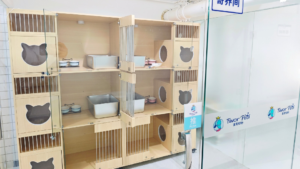
Favor Pets has responded by evolving from a product-led retail model into a broader pet care business. The company is expanding its sixth-generation ‘smart store’ concept, using AI-enabled health assessments and automated grooming equipment, while also targeting lower-tier cities, fresh food and the growing cat segment.
Yan Jinsheng, Favor Pets founder and Chairman, shares with PETS International how the pet retailer is adapting its store model and growth strategy to changing consumer demand in China.
How has Favor Pets changed over the past decade and what has driven its growth?
When we first started, we focused on stores and building a strong pet product supply chain. That reflected the demand of China’s pet market at the time. Now Favor Pets works with a range of third-party brands, such as Myfoodie [a Chinese nutrition-focused pet food brand], while our own private label products account for around 10% of our retail sales.
As the market has grown, we’ve moved toward what we call ‘technology-driven profitability’, with tech playing a larger role alongside the supply chain. More recently, the focus has shifted again to customer acquisition, including the use of digital marketing and livestreaming.
How is technology improving service quality and efficiency?
We’ve introduced a 16-point in-store health check, an 18-step standardized grooming process, AI-powered four-spectrum skin and coat assessment, and automated washing and grooming equipment. This equipment allows one employee to serve more than 30 pets a day, increasing labor productivity to around four times that of traditional methods, while reducing grooming consumables by 35%. The advanced technology has earned clients’ trust to visit the store for services, which drives revenue.
How have changing pet ownership trends shaped your business?
Our business mix has changed with consumer demand. In the beginning, dogs were the main category and more than 90% of Favor Pets’ business was dog related. As cat ownership has increased and spending on cats risen, our model has shifted. We launched a separate cat-focused brand in 2017 and gradually separated cats and dogs into two distinct business lines. We have continued to adjust according to what consumers want. Nowadays, dogs account for around 70% of the business and cats around 30%.
What are the considerations when deciding where to open new stores?
Our first phase of expansion focused mainly on first- and second-tier cities. We gradually moved into third-tier markets more recently. Going forward, county-level markets and other lower-tier areas will become a bigger focus for us. We see opportunities in growing consumer demand in rural areas, and we want to support people who return to their hometowns to start businesses. More importantly, government policy is also supporting business expansion into lower-tier cities.
In 2026, China’s Ministry of Commerce and eight other government departments called for chain businesses to accelerate their expansion into lower-tier markets. Favor Pets already has a presence in lower-tier markets such as Handan in Hebei province, where one franchise store has operated for around a decade. This shows how specialized grooming and pet training services can support growth in third-tier cities.
Around 70% of our stores are in lower-tier cities. Rents and labor costs are lower in these areas, competition is less intense and demand for pet-related spending is growing quickly. As a result, franchisees can have greater profit potential in these markets.
For franchisees in county-level markets, we are developing a support package covering financing, technology, training and customer acquisition. These markets will be an important area of expansion, although we will continue to develop our presence in first- and second-tier cities as well.

How does your franchise model work?
The majority of our stores are franchised outlets. Favor Pets’ core model combines education and retail franchising. Our headquarters provide training, technology, brand support and other resources, while franchisees are responsible for day-to-day store operations.
What is the typical size of a Favor Pets store?
We have three main store formats. Our small stores are around 60sq m and are mainly located in lower-tier cities and residential communities, serving customers within a radius of around one to two kilometers.
Our standard stores are around 100sq m and are typically located in key commercial areas of first-tier cities. This is our most common store format.
Our flagship stores are around 200-300sq m and are mainly located in provincial capitals, offering services such as pet spa treatments and health and rehabilitation care. We generally do not operate stores of more than 500sq m because pet services rely heavily on frequent, neighborhood-based consumption. Very large stores would increase rental and staffing costs and could ultimately reduce sales efficiency per square meter.
Which categories are growing fastest?
Consumers in China are becoming much more aware of their pets’ health. As a result, we are seeing growing demand in products such as baked pet food and freshly prepared food for cats and dogs.
For Favor Pets, fresh food is one of the fastest-growing categories, with average annual growth of more than 30%. The main driver is a shift in how pet owners think about feeding their pets, moving from simply making sure their pets are full to focusing more on healthier and fresher food.
At the same time, more traditional categories such as dry and puffed food are getting less popular. In the cat category, products such as wet food, canned food and treats are growing particularly quickly.
We are also putting more emphasis on preventive care and everyday health management. We have developed what we describe as a five-part health framework, covering eye, ear, oral, digestive and coat health.
Consumers have responded positively to our approach, and we think health-focused products and services will continue driving growth in the future Chinese pet market.
With the Chinese economy slowing down compared with previous decades, are customers becoming more price-sensitive?
We have not seen a particularly obvious shift toward lower spending among our own customers. If anything, I feel some are spending even more on their pets’ health.
However, customers behave differently when using physical pet stores and online shops. In our stores, we provide a free 16-point basic health check. This can help identify issues that owners may not have noticed previously.
Based on that assessment, we can recommend products or services that better suit the individual pet, which builds trust because the recommendation is tied to a specific need, rather than simply selling a product. This includes diet, nutrition, supplements, treats and toys.
For many owners, an additional $7, for instance, is not enough to make them compromise on their pet’s food. They often see their pets as part of the family, and they are willing to spend a little more if they believe it will improve the pet’s health.
How has e-commerce reshaped the role of your physical stores?
Five years ago, around 80% of our business came from offline channels and 20% from online channels. Today, the split is approximately half and half. At the same time, we know that more than 90% of new customers first discover or engage with our stores online before visiting a physical location. Our aim is to convert these customers into repeat customers through our in-store services and experience.
Our business mix has therefore changed significantly. In the past, product sales could account for 70% to 80% of the business. Today, services can account for around 60% to 70%. That is why services have become much more important for physical stores.
If you look only at in-store transaction value, it may seem like consumers are buying fewer products. But that does not necessarily mean they are spending less on their pets. In many cases, they are simply buying those products through other channels or from other brands.
You launched your sixth-generation store model in 2025. How does it use technology to enhance the in-store experience and services?
One area we are developing is what we call our rehabilitation center. It sits somewhere between a traditional pet shop and an animal hospital or clinic, with a stronger focus on everyday pet health.
This is also part of our smart store concept. One element is using smarter in-store tools. For example, we have introduced AI-enabled coat and skin assessment equipment. Rather than relying only on visual inspection or more traditional methods, the equipment can help assess a pet’s condition and identify potential health issues or areas that need attention.
This provides a more precise basis for understanding the pet’s condition and deciding which services may be appropriate. Meanwhile, we also apply AI to enhance our workflow such as in customer support.
Fresh food cooking is another area where we are using technology. We have in-store equipment that lets staff add fresh meat, vegetables and fruit to produce a freshly prepared meal in around 40 to 50 minutes. But the preparation starts before we make the food – we first assess the pet’s nutritional needs.
We currently have more than 100 recipes and, based on the assessment, we can provide a nutritional recommendation and a suitable recipe. That allows us to offer much greater variety for both dogs and cats, while also making the food more personalized.
Where do you see the biggest opportunities for growth?
We have a very long-term vision. Our mission is promoting love and peace between people and animals, and that has remained consistent since the company was founded.
That said, we always follow government policies, and our business model has already evolved several times, from supply-chain support and store development to technology and then to customer acquisition and traffic distribution. We adjust our strategy to market changes and, more importantly, changes in consumer demand.
Firstly, we want to expand our sixth-generation smart store model, combining AI-enabled equipment with data-driven store operations. Secondly, we will expand our presence in lower-tier cities across China.
Thirdly, we want to grow fresh food and our pet health management services – extending our business to broader pet health and wellness. Fourthly, we will embrace AI and smart equipment, which can improve efficiency while reducing operating costs.
Finally, we want to develop our cat-related business, and we are hoping to build it as a second major growth engine for the company.
Share this story:
One click prioritizes GlobalPETS in your search results and AI answers.