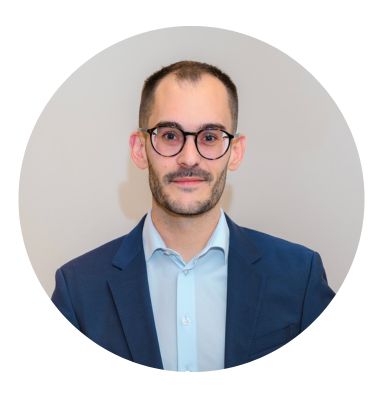
Interview with Ramin Danaei, Managing Director, Kölle Zoo

Customized service and high basket value are keeping this German pet retailer strong in a competitive environment.
Ramin Danaei has been at the forefront of Germany’s pet retail industry for nearly two decades. He joined Kölle Zoo in 2007 as a trainee, and two years later he became store manager at Weiterstadt, 30km from Frankfurt.
After taking on responsibility for marketing on the company’s Executive Board in 2013, he has been Managing Director since 2018.
Here, Danaei shares his insights on customer behavior, today’s product trends and the business strategies that help maintain Kölle Zoo’s position as a competitive premium retailer offering a personalized and inspiring in-store experience.
In today’s corporate world, it’s rare to see someone start as a trainee and work their way up to Managing Director…
I basically turned my hobby into my job. While I was studying, I worked at a Fressnapf store in the seawater department. I was crazy about reef aquatics, and that’s how I came into contact with the pet industry.
After finishing my studies, I asked myself: should I continue at this store or do something else? In the end, I chose the right path by joining Kölle Zoo as a trainee. Step by step, I’ve reached the position I have today.
Where does Kölle Zoo fit in the local retail market?
Our stores are around 1,400 sq m and we offer a large selection – about 18,000 products. The idea is that when customers come into the store, they spend a lot of time there.
We invest heavily in how our shops look. They’re very attractive and inviting, so people want to stay for a while.
The longer they stay, the higher the chance they’ll interact with one of our employees, who can then help them or sell them something for their pet.
This leads to a lot of impulse buying, which is why our average transaction value is quite high, at around €40 ($47) per purchase.
Can you tell us more about your product assortment?
Like many retailers, we rotate products each month to give customers a different picture of the store. Every month, they see new products. About 20% of our assortment is private label.
For other products, we look at the market and what customers want. If a customer asks for a brand, we bring it into our stores.
We’ve gone through a pandemic and are now facing another challenging period economically. In what ways have your customers’ behavior changed?
The frequency of visits has gone down, but the average basket size has gone up. The pandemic period was special for everyone in the pet industry – turnover kept increasing. Now, the situation is different.
How are you adapting to this trend of lower shopping frequency but higher value per purchase?
The products must always be available, with no stockouts. That’s one of the most important things in retail. For us, retail is about detail.
We pay close attention to how our shops look, and we make sure that when a customer walks in, an employee approaches them, helps them and sells them products that make life better for them and their pets.
We also have trainers who work with our employees to make sure they know everything they need to know about the products and the pets they are for. That’s one of the reasons why our average transaction value has gone up.
With many customers becoming increasingly price-sensitive and seeking discounts, how do you differentiate Kölle Zoo from your competitors?
For customers who are very price-sensitive, we say: no problem, come to us. You’ll get the same price as you find online. We have a best-price guarantee for everyone.
If you show an employee a product that’s €10 ($12) cheaper somewhere else, we’ll match that price.
Why? Because we want everyone to come to our stores. There should be no reason for a pet consumer to not visit us.
We have a huge assortment, beautiful stores – and extremely good, knowledgeable employees who know what they’re doing.
Which categories are performing well?
One of our most important departments is snacks and treats – especially dog treats. Toys are also important.
If you go into one of our stores, the first thing you’ll notice is that it’s like an old-fashioned shop, with wood, hand lettering and vintage touches – it doesn’t even look like a pet shop.
Within that area, we have a shop-in-shop concept called Lottis Häppchen, which is our own brand. It’s our company’s bestselling brand.
We always say we have the largest selection of treats in Germany – and that’s no joke. I think we have around 600 different dog treats, and that’s one of the reasons why the average basket is so high.
In aquatics you have to inspire your customers. It’s all about how the tanks look. Customers see them and think, “I want that in my home.”
It’s like in a restaurant: if it looks beautiful, smells good, the music is nice and the service is great, you’ll probably order dessert, an espresso, maybe another glass or bottle of wine – and the average spend increases. It’s the same for us.
How are small animals and birds performing?
For about eight months now, we’ve seen a strong demand for hamsters. We’re not exactly sure how this trend has happened – we think it’s linked to social media – but hamster sales have increased significantly, by about 30%.
We are seeing a downward trend in bird food. In our stores, we only carry small birds, like budgerigars and a few others, but it’s not a significant category anymore. We don’t have large parrots, for example.
And aquatics?
Freshwater aquatics has grown by around 15% in the past year. It continues to grow for us, and it’s very important because it’s part of our DNA. We sell a lot of small tanks at affordable prices.
In the past two years, we have sold about 5,000 units of 60L freshwater tanks, so that’s a big success.
Customers often start with a small tank, buy gravel and plants, and after a month or two, many upgrade to a bigger tank. Some people don’t continue with the hobby, but many expand it. So aquatics is a rapidly growing and very positive segment for us.
Are there any other categories growing rapidly?
A current trend is electronic toilets for cats. We’ve seen a clear rise in demand across our store network.
Another growing and very successful segment is mystery boxes for dogs and cats, containing items that customers don’t know about in advance.
We have versions for small, medium and large dogs. Dog clothes are also popular. We have a large selection, and customers often buy multiple items. Veterinary-diet dog food is another strong segment.
Why is this type of food seeing such strong growth?
I think there are several reasons. Although the dog population is slightly declining, many pets are older and require special diets. Overall, demand for vet-diet food is growing rapidly. Increased prices also play a role in revenue growth.
What’s your approach when it comes to in-store services?
We don’t currently offer services. We have considered it, but we are focusing on retail – selling the right products and presenting them properly.
How products are displayed to customers is extremely important in retail. It’s like that everywhere – from bazaars in Istanbul to pet stores in shopping centers. Inspiring the customer is key for us.
And how about offline and online?
Our stores are very important and we also operate an online shop. About 4% of our turnover comes from online sales. This year, we expect combined total sales of approximately €110 million ($128M). W
e keep the same prices online as in-store. While it’s easy to increase online turnover by lowering prices, it doesn’t generate any real benefit. In October, we launched click and collect in three stores to increase in-store visit frequency.
You have implemented a retail media strategy that includes in-store digital signage…
We started retail media about a year ago. We installed large screens in every store – about 2m high. We use them for our own communication, and the industry can buy space for advertising.
In some locations in Germany, we also have smaller 1m screens above products, for advertising or other consumer information.
How is it working as a promotional tool?
It’s growing… slowly. We work with an external agency that coordinates with big brands who want to reach customers in our stores. Companies can use the screens to promote their brand, products or services.
It’s another potential revenue stream, but it’s still too early to tell. Our main focus remains selling products in our stores.
What’s your strategy when it comes to stores?
We focus on big cities with large stores, but we also see opportunities near big cities with smaller shops. We opened our first store in Belgium in November, with a franchise partner. That shop has only 750sq m – it’s a colorful, lighter version of our concept.
Would smaller stores also be something you’d implement in Germany?
Yes, why not.
You currently have 26 stores. Are you planning to open more?
We would like to expand everywhere, but we need the right people. The concept isn’t complicated, but it’s not easy either, because of the livestock and the variety of products we sell.
We want to be a premium partner for customers, and our level of service and store quality is very high. Currently, we can realistically open two or three stores per year, no more than that.
What about other German-speaking countries?
We have five stores in Austria and they’re very successful. We acquired them in 2019 from Mega Zoo, which belonged to Fressnapf. Our largest Austrian store is 3,600sq m, with a turnover of €8 million ($9.3M). Switzerland is not on our radar at the moment.
Are there other markets where Kölle Zoo could succeed as a premium retailer?
We could expand globally – anywhere in the world – but the key is always having the right people. It’s not easy to replicate our particular concept abroad. With the right team, however, the potential is there.
Share this story: