Lap of luxury: the high-end cat accessories market
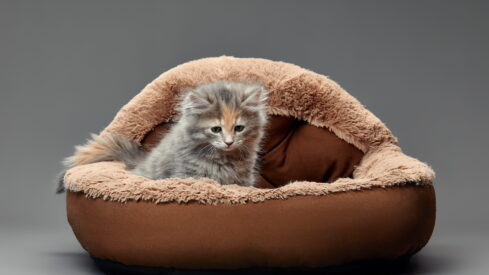
Owners remain willing to spend more on premium products tailored to their pets’ comfort – despite the durability of this market being tested by inflation and discount marketplaces.
Against the backdrop of impressive growth forecasts for the premium cat accessories market, we look at what is driving the rapid expansion. Even more importantly, as disposable incomes decrease and budget online shopping sites like Temu and Shein continue to gain ground, can this growth be sustained?
Snapshot of the market
The global pet accessories market is expected to grow to almost $10 billion (€8.6B) in 2030, compared with $6.71 billion (€5.7B) in 2024, according to Grand View Research. Owners are spending more on accessories as they view their pets as family members and are willing to invest in customized and luxury items. Euromonitor’s Pet Care in Western Europe report from 2024 suggested that premium products are outpacing value goods.
The cat accessories market is expanding faster than many other pet care areas, with Grand View Research projecting demand to rise at a compound annual growth rate of 7.7% until 2030. Data from Axial Insight Dynamics suggests UK pet owners spend over £7.9 billion (€9.1B/$10.7B) on pet products annually, with the share of cat-specific accessories getting bigger each year.
Shift towards comfort and luxury
Besides being driven by higher-priced and personalized products, the boom in the feline segment may also be due to more cat ownership in urban areas and a shift towards products that put comfort and style at the forefront.
Personalized bowls and collar tags are popular ways for pet owners to express their pets’ identities and preferences, as well as their own. At the same time, everyday items like collars, bowls and harnesses are being made more luxurious, for example, while products like beds and cat towers increasingly resemble high-quality furniture.
Appeal of independent brands
Another contributor to the market growth has been the increase in smaller companies offering products through platforms like Etsy. Such websites allow consumers to connect with independent brands and artisans offering an alternative to major retailers.
The product range of Cheshire & Wain, a UK-based cat accessories business launched in 2013, includes luxury cat collars and engraved ID tags. The company sends each order out with a handwritten note and connects with customers and their cats on social media.
“Delivering a personalized customer experience was a core mission from the beginning. Developing these personal relationships is what made us investigate how we could offer something more tailored within our collection, too,” says Sonja Farrell, founder and Creative Director.” In 2016, we started offering hot foil personalization on our leather cat collars, and it became an instant hit.”
Inflationary pressure and budget platforms
Disposable income has decreased in real terms in some markets, with inflation rising faster than wages. Combined with the rise in popularity of vast online marketplaces offering low prices, including Temu and Shein, high-end cat accessory brands now have greater competition. For example, a pack of 10 reflective cat collars sold by Temu costs £2.35 (€2.71/$3.18) for consumers in the UK, whereas one of Cheshire & Wain’s reflective cat collars is £45 (€52/$60). A personalized cat bowl from British ceramics company Emma Bridgewater starts at £33 (€38/$45), while a customizable bowl is priced just £5.10 (€5.90/$6.89) on Temu.
Farrell acknowledges that Cheshire & Wain will lose some sales. “The pet products market has been flooded with cheap alternatives and dupes from sites like Temu in recent years,” she says.
“But I believe consumers are waking up to the fact that buying these items is a false economy. It’s not as easy to guarantee their quality and safety versus purchasing from a well-known and trusted brand,” she continues. She explains that the business can’t compete on price without sacrificing quality, and so it doesn’t try to. Instead, it positions its products as luxury goods and prioritizes brand equity.
Special and unique
Farrell adds that “the array of cheap and low-quality items has allowed us to really shine a spotlight on what makes us special”. She highlights Cheshire & Wain’s Gold Label line, saying it has taken the company’s product design in a “slightly different direction”.
Other brands have seen similar patterns. “[Discount marketplaces have] been something of a marketing funnel for us,” says Leili Farzaneh, co-founder of UK cat accessories company Supakit. Some customers turn to the company after unsatisfying experiences with discount marketplaces or lower-quality goods. Consumers may pay more, but this is in exchange for a more positive experience and higher-quality goods.
Peak demand for high quality
Farzaneh adds that Supakit offers “not luxury for luxury’s sake, but for the sake of a cat’s safety, wellbeing and comfort”, observing that its customer base values quality and longevity when it comes to products such as cat collars and harnesses.
Another firm supplying collars, harnesses and apparel for cats and dogs is Lucy & Co., which is based in the US. “We’re seeing a shift in the cat accessories market that I personally didn’t expect,” says Anna Knutson, Director of Marketing. “Cat parents are wanting elevated, high-quality products just like dog owners have for their pups… The demand for independent brands to make high-quality products is at its peak.”
Two parallel streams
So despite the economic pressures, many cat owners are still willing to pay a higher price, or wait longer, for products with a focus on comfort and appearance. This is creating two parallel markets: a budget tier where price is key, and an upper tier where design, safety and comfort are prized.
In fact, many premium brands are now refusing to sell their products through platforms like Amazon. Instead, they direct consumers to their own websites where they can control the journey and reinforce their high-end positioning by offering a more curated service.
Why brands are branching out
With owners continuing to spend more on cat accessories, the market might see more brands diversifying into the category. Like Emma Bridgewater, human lifestyle and apparel brands are moving into pet products, and dog accessory companies are increasingly catering to cats too.
Lucy & Co. is looking at expanding its cat range and could develop feline versions of its personalized dog tags. Meanwhile, Supakit has branched out in the other direction, launching a sister brand – Rowlie – for small dogs after it realized owners were buying products from its cat range. While cats can still use many products designed for dogs and vice versa, it would not be surprising to see more businesses expanding in this manner.
While cheaper options have flooded the market, the evidence shows pushback from pet owners who prioritize comfort and style, preferring branded companies with a high level of trust. Therefore, it’s difficult to imagine anything other than luxury and custom products increasing in popularity in the medium term.
Share this story: