How is Petsense by Tractor Supply doing? An interview with SVP Neil Tenzer
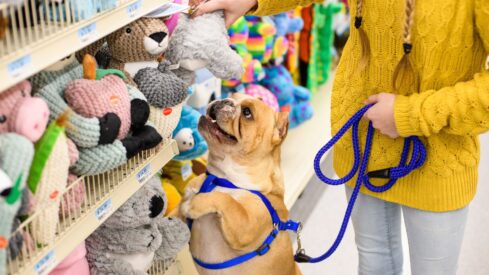
Combining small-format stores with services and a growing private label portfolio enables the US pet retailer to capture market share outside major metropolitan areas.
Petsense by Tractor Supply recently celebrated its 20th anniversary, a milestone reflecting how well it serves pet owners in rural communities, which may not be catered to by big retail corporations.
At the heart of its strategy is Senior Vice President Neil Tenzer. An economist by training, he joined Tractor Supply in 2021, initially supporting marketing and the company’s loyalty program, Neighbor’s Club.
In 2024, Tenzer took over leadership of Petsense, a “dream come true” after 20 years of experience across retail strategy and operations. He shares with PETS International his perspective on how Petsense is capturing market share in both premium and specialty categories and the role of digital channels in customer engagement.
How would you define Petsense’s core value proposition?
We are a small-format pet specialty retailer serving rural America, what we call ‘Life Out Here’. We have about 207 stores across 23 states. Our business model is to cater to the communities in those markets – making sure we’re providing access to pet products, nutrition and services.
Tractor Supply has always won by embedding itself in its communities, and you’ll find that in a lot of rural communities in the US. We view services as a differentiation, providing grooming, for example, as well as the pet specialty products we offer.
Did the 2022 re-branding shift your way of operating?
Tractor Supply has learned that our ‘out here’ customer has more than one pet and tends to spend more too. What we recognized was there was a need for more pet specialty, which is why we invested in the first place.
We realized that we had customers who had needs beyond what we could serve inside Tractor Supply walls – some unique exotics, small specialty pets, and types of brands that maybe didn’t fit within that box. So we made sure we were connecting that customer to that premium assortment offering and the services we provided.
Adding ‘by Tractor Supply’ gave the confidence in the trusted brand that our customers already had, and showed them that we had another place where they could get those services and products. In addition to the re-branding, we invested in our Neighbor’s Club program.
So now our customers can get the loyalty benefits associated with the Neighbor’s Club at both Tractor Supply and Petsense. What we’ve noticed is that people who shop both tend to be our most valuable customers in the market.
How has using the Tractor Supply network changed Petsense logistics?
Fairly dramatically. That starts with supply assurance – by reducing the ways we can access products, we’re a much more dependable supplier. That’s a huge trust benefit. We also have great transportation partners and our own distribution, so delivery frequency is more consistent and we can balance it with customer demand.
Another point is the extra time our team members then have to serve our customers. It’s just one scan on one truck, rather than multiple deliveries across many different vendors. Given the importance of customer relationships in these markets, it’s been a huge benefit.
You’re also improving your distribution capabilities…
We’ve spent the past few years investing in the integration of Petsense into Tractor Supply through rebranding, the loyalty program and moving to our own distribution network. We used to buy from distributors, and now we’re supported by the Tractor Supply distribution network. We’ve built the platform for growth. Now we’re thinking about how to leverage that platform – investing in local communities, services and the omnichannel customer experience.
What does a typical store look like in terms of size, product range and services?
Our average store is about 5,000-6,000sq ft and has between 5,000 and 7,000 SKUs. We split this into dog and cat – obviously a prevalent area of the business – specialty, which includes small pets, reptiles and exotics – and services.
Nearly all our stores have a salon, and that’s a significant and growing part of our business. Demand for grooming services has outpaced supply, particularly in rural markets. Reptile and exotics are also areas that have grown substantially, just as the consumer has shifted post-pandemic.
How fast are exotics and small pets actually growing for you?
Reptile and exotics are growing mid-single digits and we’ve noticed that we’re taking share in that market. This is growing faster in rural US areas than in the overall market, and we’ve established ourselves as a destination for that, particularly for reptiles.
As more people return to the office, and dog adoption rates slow, we’re seeing a shift in pet preferences. For those who can’t easily take a dog for walks, smaller pets are becoming increasingly popular because their care fits a busier lifestyle. We’re excited about this as a growth opportunity.
We’re hearing a lot about growth in the cat category. Are you seeing the same trend at Petsense?
We’re noticing the cat category is growing faster than it has in the past, because the dog adoption growth we saw during the pandemic has slowed down a bit. It’s driving an increase in the cat market size, and we’re taking share in that market. You’re seeing growth in interesting, more premium foods, as well as ways to engage with cats. Customers want that opportunity to bond with their pet.
We are seeing a change in the way owners relate to dogs too. Our customers are very intentional in what they’re buying for dogs. If you hear about the ‘silver tsunami’ – growth in older dogs – the focus is on high-quality nutrition, supplements and longevity.
You are also strong in private label offerings…
Tractor Supply has some of the largest private label brands in the US: 4Health is a highly trusted food for dogs and cats, and Retriever is for hardline goods and more value-oriented products. Our customers recognize that 4Health is a great quality product and really good value. We continue to invest in growing our share on the shelf with private label brands.
How much more room do you see for your own brands?
It would be great to see beyond 10% growth. If you look at the market, you’ll find ranges at anywhere from 5% to 35%. I think that we have an opportunity to increase our penetration with our own brands.
What about in-store services?
Services are growing low-to-mid single digits at Petsense, and we’re noticing our ability to take share in that space too, mostly in grooming. We do offer some in-store vet services on a weekly or monthly basis, but our main focus is building grooming. We’ve seen our growth there outpace the market.
This is a combination of a few factors. First, the quality of our service – our stores receive consistently excellent reviews, and we offer strong value for what we provide. Second, there simply aren’t enough groomers to keep up with rapid growth in the marketplace. That’s why we’ve invested heavily in attracting and hiring groomers, plus training.
We’re helping to build this profession, which is both a rewarding career and a skilled trade.
The third factor is improving the customer experience. There’s a lot of variation in service and experience across the grooming market. We’ve invested heavily to ensure that our customer experience meets a consistent standard that we believe is right.
How does a customer typically discover and shop with Petsense?
A lot of customers find us online. They’re searching for something like ‘grooming near me’ or ‘pet food’. So our digital business has historically served as a way to find Petsense. That journey for most customers starts with grooming.
They try out our grooming services, build trust with that groomer and the team members, and then move toward food. It’s really solution focused. Our offerings are specialty products – customers often find value-oriented options at grocery stores or mass retailers – so the basket builds from there.
Our digital business is something we’re just starting to build. We have same-day delivery, which has become a true differentiator, and we’ve noticed a lot of customers taking advantage of that, as well as buying online and picking up in-store, just to make sure they have that product reserved.
Can you walk us through the typical customer journey?
What we find is that most customers purchase two to three items per transaction, including food, plus a toy or a treat. Our most engaged customers shop with us every month or month and a half, but on average it’s about every six to eight weeks.
Do you see changes in consumer behavior regarding premium vs value?
I don’t see a lot of customers trading down on food. I think there’s a stickiness toward that intention – they really do care about what their pets eat. With the current economy, you’re seeing that customers want more value from premium food: transparency in ingredients, getting additional supplements.
I have not yet seen a flight towards value. That’s the last place customers are willing to sacrifi ce. They might be shifting in terms of discretionary toys or treats, but we’re not seeing it in terms of food. If anything, you see things like fresh, frozen and dehydrated growing.
Where do digital channels fit into your overall strategy?
I have a strong belief that it’s not our place to tell our customers where to shop. I tend to look at this as a customer lifetime value and not what our revenue is in that market. I don’t have a target for online because I’m focused more on where the customer wants to shop, rather than compelling them to go toward a digital transaction.
How do you leverage the Neighbor’s Club loyalty program to engage and retain customers?
That is very important, because we’re dealing with over 43 million people – one in seven adults in this country is a Neighbor’s Club member. It informs a lot of our perspective about who our customer is. So how do you commercialize that? It’s thinking through ways to ensure that our customers are getting the most value from us by giving them opportunities to engage.
If it’s a customer who’s come in for grooming but hasn’t purchased food from us, how do we introduce food to them in a way that’s educational and relevant? We manifest that through different channels: in-store at checkout, offers on receipts, prompting them with information.
We don’t want to be invasive, but we do collect information during grooming. If they have a smaller dog, these are things that might be relevant. And then in our marketing, we make sure we’re personalizing that experience.
Are most of those 43 million Petsense customers only?
If you think about Petsense as a company, we’re less than 2% of the size of Tractor Supply, with 207 stores versus 2,400 stores. So it’s a smaller share. But maybe this is an interesting fact: more than 80% of our customers are Neighbor’s Club members.
How does Petsense compete with mass retailers and e-commerce giants?
One dimension is specialty versus mass/value. The other is geographic. If you look at the mass/value space in rural areas in the US, you’ve got grocery stores and the mass retailers. For the customer who’s not a specialty customer, these are an option. There are smaller independents and a few small chains too, but not very many other players beyond Petsense.
When you come into our stores, you’ll find team members who are plugged into the community. So mass retailers are competition insofar as they offer pet products, but for the specific customer who’s shopping pet specialty, those retailers and grocery stores don’t provide the type of trust and products we offer.
Which regions in the US offer the most potential for your business?
We’re still filling in the space in the southern states. Longer term, we can enter new ones. We have some stores in the upper northwest, so there’s always opportunity in that Washington/Oregon area, but I would say predominantly in the south: Texas, Tennessee, Georgia, North Carolina and Florida.
Do you see opportunities for accelerating store openings in the future?
We’re growing stores at about five a year. That enables us to be thoughtful about where we place our stores, as well as to really embed ourselves in those communities. We spend time investing in the local community, so it’s the right pace for us.
What are the challenges of serving rural communities in the US?
It’s funny that you say challenges. I think a lot of retailers outside of Tractor Supply view them as challenges – how to resonate with the customer, how to engage in the local community. We don’t see it as a challenge. That’s our unique advantage – the fact that Tractor Supply is a known and highly trusted brand in our communities. Petsense is just a natural extension.
Share this story: