Opportunities in South East Asia for value for money pet food
This region shows marked differences in how owners feed their pets and how sales channels are able to develop. But market analysis gives some promising prospects for the industry.
High consumption of scrap food
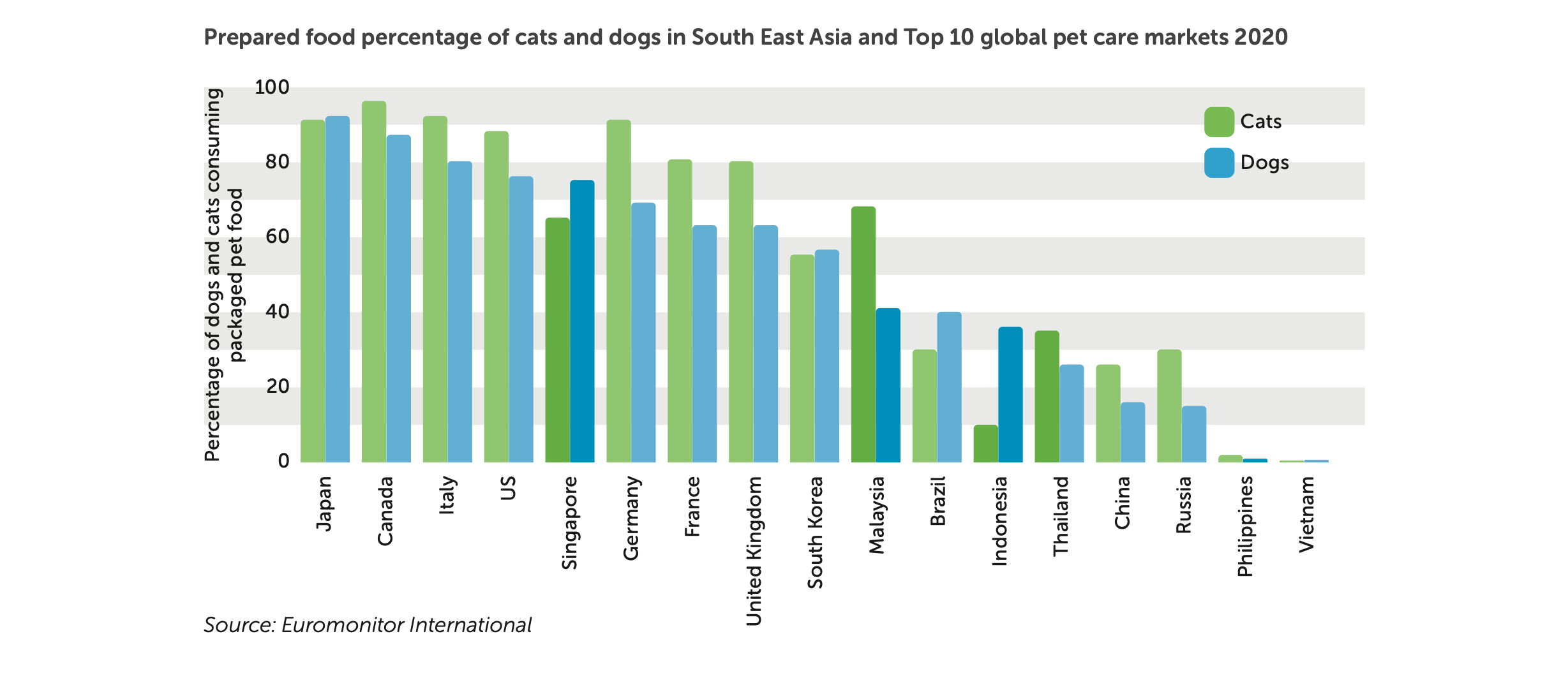
South East Asian pet populations are as high as in mature markets, but the prepared gap is still much lower than in other countries. Apart from Singapore and Malaysia, the prepared gap in South East Asian countries is lower than 40%, which means that more than 60% of pets in the region are not consuming packaged pet food.
In many South East Asian markets, awareness of the availability of economy food options is limited, as is indicated by the domination of mid-priced products in most markets. Moreover, 58% of the pet owners who responded to Euromonitor International’s Lifestyles Survey are in the under $20,000 (€17,727) income bracket. As a result, many of them are feeding their pets with leftovers from their own meals.
E-commerce growth and opportunities
Despite the e-commerce opportunities observed throughout the COVID-19 outbreak due to lockdown and social distancing measures, e-commerce growth has not developed equally across countries in the region. This is because some countries are facing logistic and delivery issues.
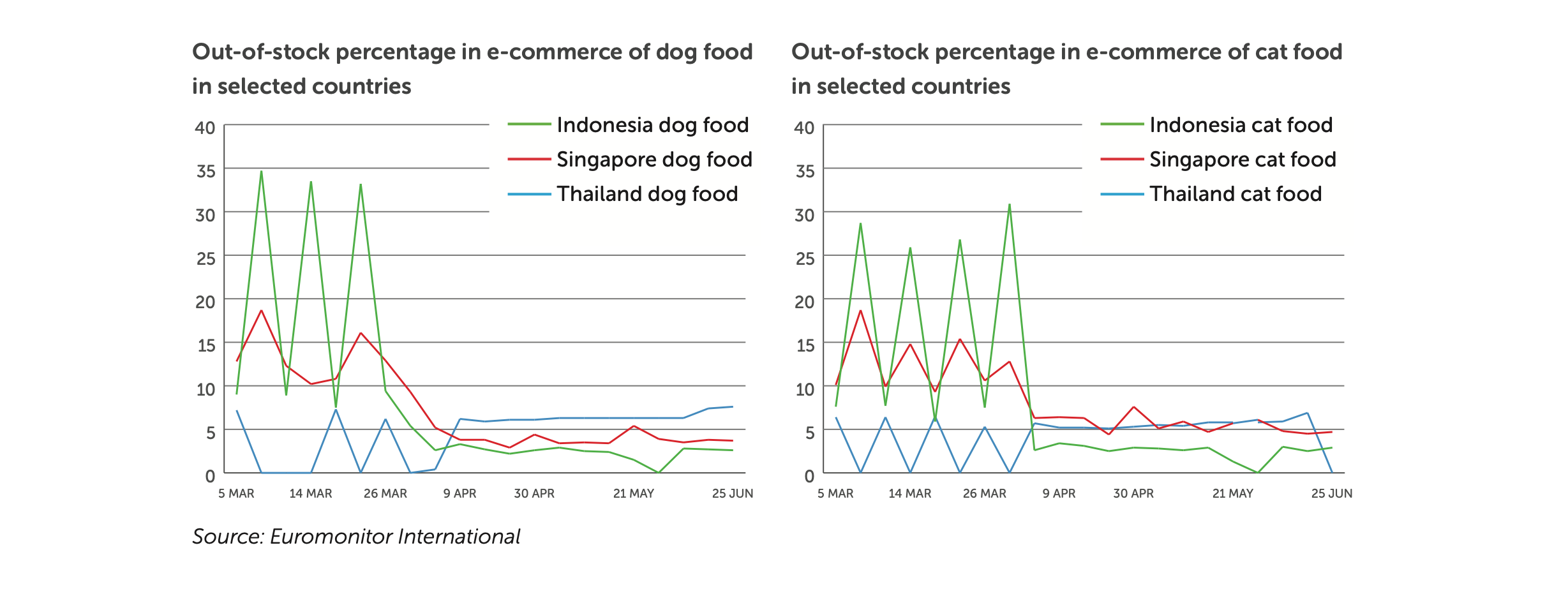
In major pet food markets in South East Asia like Singapore, Indonesia and Thailand, e-commerce increased significantly during the COVID-19 lockdown period between March and June. This can be seen from the ‘Out-of-stock percentage’ charts.
In Vietnam and the Philippines, however, the e-commerce sector was less positively impacted during the outbreak, as logistic constraints and high delivery fees remain an obstacle to take-up of this channel.
Geographical factors pose a challenge for e-commerce in Indonesia. But this is not a significant problem in Java, where over 50% of Indonesia’s population live and the infrastructure is highly developed. 70% of Indonesian households now own a smartphone. This means that e-commerce is rapidly growing, supported by successful marketplaces such as Lazada, Tokopedia and Shopee selling brands like Royal Canin, and also by s-commerce and third-party delivery services such as Gojek. To ensure affordability, some pet retailers are repackaging premium products such as Royal Canin into smaller pack sizes, giving a lower per unit price.
Economic downturn due to COVID-19
COVID-19 is expected to cause an economic downturn globally, and this includes South East Asia. Most countries in the region are likely to see GDP impacted negatively in 2020, with the exception of Vietnam, which has been much less affected by the pandemic, and where positive real GDP growth is forecast. The economies of major countries in South East Asia are expected to bounce back quite quickly.
With their household budgets under pressure, pet owners are limiting purchases to essential items.
Treats, and supplementary pet products, are often bought as people browse in stores. So with the decrease in store traffic during the COVID-19 outbreak, it is sales of these products that are expected to experience slower growth.
There will also be a shift towards value for money products, as many pet owners trade down to cheaper items. For example, economy products in Malaysia are expected to see more stable growth, in contrast to the slower growth in premium products. This phenomenon is also being seen across other countries in South East Asia.
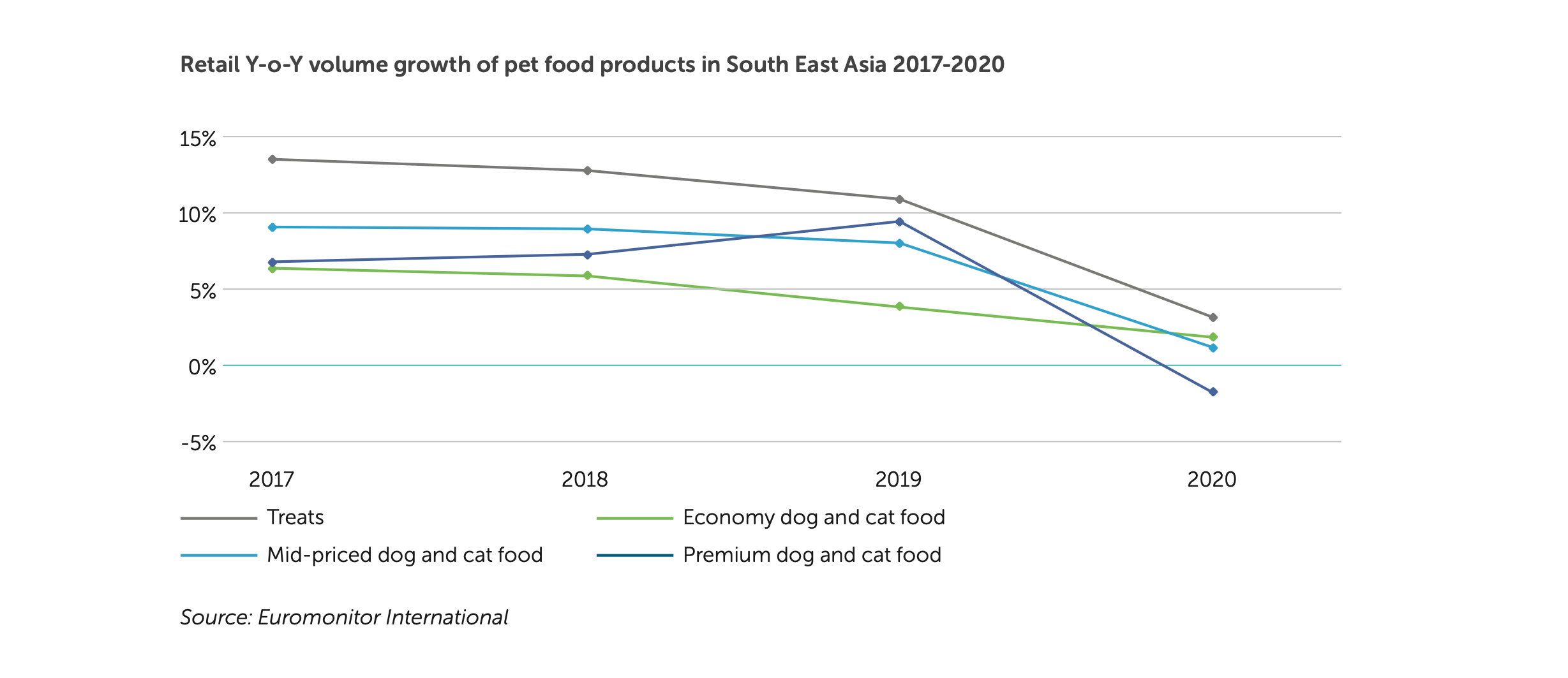
As Malaysia has a relatively high percentage of prepared food consumed by pets, Malaysian pet owners are not likely to trade down to scrap food. On the other hand, pet owners in countries with a very low prepared food percentage, such as Vietnam and the Philippines, may go back to giving scraps to their pets. This is leading to a decline in overall pet food products as seen in the chart ‘Retail Y-o-Y volume growth’.
Supply chain disruption
COVID-19 has presented an unprecedented challenge to the industry, with regard to logistic issues as well as its impact on pet ownership and value-seeking trends among pet owners.
South East Asian pet food markets – except for Thailand where premium brands such as Royal Canin and Nestlé Purina have manufacturing sites – are highly reliant on imports of pet products, especially premium products. These countries are being negatively impacted, with short-term shortages caused by border closures and trade flow disruptions.
Future pet ownership
Pet ownership growth has been restricted due to the limited rate of pet adoption in countries such as the Philippines and Singapore, where governments have been implementing social distancing measures and this affects pet fairs and adoption events. The recessionary fallout from COVID-19 will also negatively impact future pet ownership. The additional expense, plus misinformation regarding the spread of viruses from domestic pets, may well lead to a reluctance to own a pet and even pets being abandoned. Lower growth in pet ownership will then dampen the demand for pet products.
Categories for expansion
With the current preference for value for money products, due to limited knowledge of packaged pet food and lower disposable income available for pet food purchases during the COVID-19 pandemic, there is now a bigger market for economy and mid-priced products. Supply chain issues will also have a negative impact on the availability of premium products in the region. So economy and mid-priced are becoming categories with great opportunities, which global players could use to expand further in South East Asia.
Share this story: