Optimizing strategy in an era of omnichannel shopping
Optimizing strategy in an era of omnichannel shopping

E-commerce and pet specialty are increasingly the first choice for pet food launches, while grocery stores are gradually playing a lesser role.

Channel choice can no longer be linear. Relying on one, or only legacy options, limits product visibility and access. In this environment, a successful multichannel strategy is one that leverages each channel’s strength, with the ability to translate that into growth.

Decade-long shift

In 2015, e-commerce stood at a minor 6% share of global distribution. Today, it is responsible for nearly one third of global pet food retail sales value. Grocery channels like supermarkets and hypermarkets – once the most frequented stores for pet food, with a 49% share in 2015 – have today dropped to a 36% share, the single biggest percentage point drop across all channels.

These shifts can be attributed to the rise of digital retail, plus the subsequent changes in consumer shopping behavior. From online platforms and marketplaces to DTC, social commerce and q-commerce, digital retail has transformed channel dynamics in a relatively short space of time.

In doing so, it has created both opportunities and challenges for new and legacy pet care brands alike, forcing a rethink of product placement strategy.

Appeal of the pet specialist

Rising levels of pet humanization have been a key factor in the growth of specialized pet retail channels, which enable broader access to innovative assortments. The desire to offer the best to their pet has taken owners to pet specialty channels as well as to e-commerce platforms.

Wide category assortment, product and brand variety, access to in-house services like grooming and vet consultations, and being able to interact with knowledgeable in-store staff , have at the same time supported the growth of offline pet shops and superstores, which saw a CAGR of 7% from 2020 to 2025.

Finding the right formula

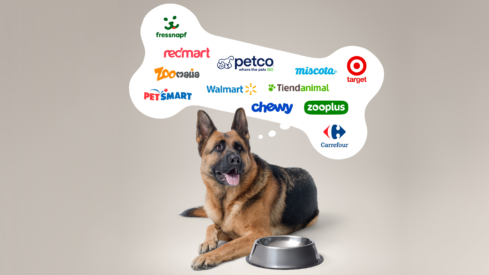
It was e-commerce that registered the strongest CAGR of 15% across all channels for the same five-year period, and sitting at the intersection of the two is the omnichannel pet specialist retailer. This segment is dominated by the likes of PetSmart and Petco in the US, and Fressnapf and Zooplus in Europe, while Chewy dominates the e-tailer space.

Today’s pet care brand and category managers are often challenged to defi ne an optimized channel strategy in this omnichannel environment. Product placement must not only align with where consumers are, but also with brand perception. For example, a premium brand sitting on a hypermarket shelf is not only losing out on sales – it could be damaging for the brand’s image too. So reviewing product launches across different pet retailing channels is vital.

What does launch data tell us?

Euromonitor’s Innovation Tracker monitors product launches across global e-commerce. A comparison of the type of launch highlights the differences in retail channel choice. Looking at the top 10 retailers for all pet food launches in 2024 and 2025 in 32 markets, it’s clear that 80% were pet specialists, while grocery only accounted for 20%. This is a different picture for senior pet food launches, which are entirely dominated by pet specialists.

Driving category expansion

Tracking and analyzing new product launches helps identify the optimal channels for product placement as well as shifts in competitive strategy, white space opportunities and evolving consumer preferences. A look at the frequency of launch events also highlights how pet specialists are updating their assortment on a relatively more frequent basis compared with grocery retailers.

In this scenario, retailers’ launch patterns show that pet specialists are critical in driving category expansion, making them essential partners in the pet retail ecosystem. Channel selection must reinforce brand positioning, as misalignment risks value dilution and weakened performance.

How to market innovation

Innovation strongly shapes a brand’s channel strategy. Inevitably, the nature of the innovation will determine where and how it is best for the new brand or type of product to be introduced to potential consumers. Success or failure will very much depend on creating the ideal opportunities for something new to be understood and adopted.

Take, for instance, fresh pet food – a relatively new format that requires consumers to be educated on the benefits of fresh diets and feeding portions, plus product storage and handling. Fresh formats also require controlled cold-chain logistics as well as precise and predictable delivery schedules. So channel strategy is governed by factors like trust, credibility and expertise.

Market entry models

Over the years, new fresh pet food brands have implemented a DTC-led market entry model that eventually transitions into selective offline retail expansion. The Honest Kitchen, in the US, is a good example. Starting out as a pure play DTC brand in 2002, it has since expanded across multiple retailers such as Chewy, Petco, PetSmart, Target and Kroger.

This omnichannel strategy increased access to consumers, enabled shopper flexibility and helped drive household penetration. The company’s online-only sales through various e-commerce retailers over the past three years is indicative of the brand’s health, with consistent growth in nearly all quarters.

Leveraging future technology

Globally, pet care retailing is rapidly adopting omnichannel strategies. Specialized pet retailers and digital-first brands are driving innovation, enabling convenience and deeper consumer engagement. Generative AI is emerging as a differentiator, providing personalized experiences and smarter retail solutions.

Ultimately, success in pet care retail will depend on how each channel’s strength is leveraged and how AI-driven intelligence is meaningfully deployed to enhance the consumer experience and create value.

2/2
Free articles
read this month

Register and read all articles, for free