Packing a punch
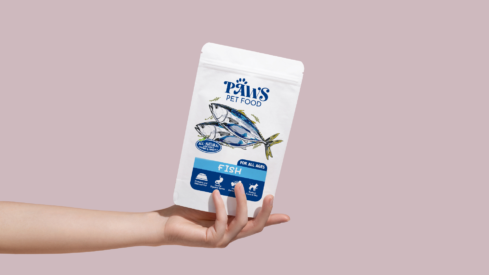
Driven by changing consumer habits and attitudes, brands are rethinking packaging formats, materials and messaging, with a heightened focus on clarity and credibility.
As pet owners look beyond visual appeal when they buy a product, they are seeking environmental standards as well as nutritional and health benefits for their pets. Manufacturers must strive to meet these demands while still creating marketing impact.
Upgrading for premium appeal
Kulbhushan Malik is Global Business Head at Cosmo Films, a Delhi-based manufacturer of specialty film for packaging. He says that beyond rising worldwide demand for packaged foods in general, and smaller pack sizes in particular, the pet food packaging market is also benefiting from growing global awareness of branded nutrition and higher spending on pets.
This shift in consumer behavior is driving innovation and compelling manufacturers to accelerate operational efficiencies.
Subscription models and changes in consumer lifestyles are pushing premium products. “With all of these trends, pet food packaging is shifting more towards specialty films, mostly among premium and DTC brands, as companies continue to spend more on better finishes, unique laminates and functional nutrition segments,” Malik says, adding that customers are seeking features such as matte finishes, soft colors, ingredient storytelling, see-through windows and clean typography.
An example of this is The J.M. Smucker Co., which has purposeful ingredients as part of its strategy. According to CEO Mark Smucker, the US corporation is modernizing the packaging of its pet brand MilkBone to highlight its protein content and functional attributes.
E-commerce requires flexibility
Ray Recchia, Global Innovation Manager for Sustainable Paper Packaging at ProAmpac, an Ohio-based company, tells PETS International that the rapid expansion of e-commerce, along with the rise of single-serve and convenience-oriented formats, is accelerating demand for flexible packaging solutions.
Made from materials that can change shape when filled or during use, this type of packaging is widely used in pet food due to its durability and efficiency in distribution – particularly necessary for e-commerce. “These formats also provide high-impact graphics that communicate freshness, quality and premium positioning,” Recchia says.
Malik explains that light-weighting (reducing the weight) and downgauging (reducing the material thickness) are facilitating transportation without affecting barrier properties. He agrees that e-commerce has also changed packaging designs, as they need to be stronger, puncture resistant and better for shipping purposes.
“There is clear rising demand for flat-bottom pouches, resealable zippers, retort pouches – multi-layered metal-plastic laminate packaging – for wet food and smaller trial formats,” he says.
For pet owners, bags like this bring convenience given they are resealable, portable and support portion control. Malik says: “Furthermore, these demands are now coming with strict specifications, such as better barriers to oxygen and moisture to protect high-protein and fresh formulations.”
Packs of different dimensions
While small is popular, some customers are also looking for value and bulk options, which has led to pack sizes becoming more fragmented over the years. “Today, one size doesn’t fit all in pet food packaging. While larger 10-20kg packs are still popular, there has also been a demand for smaller 1-3kg packs, for trial purposes, retaining freshness or ease of use,” Malik says.
According to Laura Latišonoka, Tetra Recart Product Management and Market Support Director at Tetra Pak, a Swiss-Swedish multinational packaging manufacturer, the continuous rise in the cost of living is prompting consumers to reassess their purchasing habits, which also influences demand for different pack sizes.
Many pet owners are choosing to buy in bulk, look for promotions, mix premium and more affordable brands, or research alternative options that offer both quality and value. “In response, producers may increasingly seek packaging solutions that help them meet these evolving consumer expectations while maintaining cost efficiency,” Latišonoka says.
In December last year, raw pet food manufacturer Carnivore Meat Company introduced a new 3lb (1.4kg) format for its Vital Essentials brand, as part of its continued expansion of pack sizes. The new format is now available across the US for both Crunchy Mini Nibs and Soft Nibs, two of the brand’s most popular freeze-dried meals.
“Every pet parent’s raw feeding journey looks different,” says Heather Govea, CEO of Carnivore Meat Company. “Expanding into a 3lb format allows us to better serve families who are ready for larger feeding routines, while continuing to support those just getting started.”
High levels of personalization
For pet brands, personalization is an opportunity to venture into high-margin segments. They are now also incorporating this into their packaging by trying out breed-specific, age-specific and condition-specific segmentation to make pet food look unique or more distinctive.
Blue Buffalo, for instance, has invested in more segmented options, highlighting functional ingredients as well as age-specific messaging in its offerings. Dana McNabb, Group President of North America Retail and North America Pet at parent company General Mills, talked about this during a conference in February.
“We’re expanding support behind our new Life Protection Formula (LPF) salmon innovation, which is our biggest launch in three years and the third largest new product in the entire dog feeding segment. We’ve also expanded the assortment on our LPF senior dog food line,” she said.
Sustainability and transparency
Material innovation is also being accelerated by sustainability expectations. Recchia explains that, when coupled with regulatory requirements, this is advancing the transition to Post-Consumer Recycled (PCR) content – material made from items that consumers recycle after use. This includes plastic bottles and aluminum foil, mono-material structures, recyclable formats and fiber-based solutions.
While brands are increasing investments in recyclable, compostable and plant-based packaging materials, the growing number of on-pack sustainability claims underscores the need for clearer messaging, according to consumer intelligence firm NielsenIQ.
The company explains that straightforward statements such as ‘recycle me please’ are clearer, but ambiguous or more technical claims such as ‘biodegradable’ and ‘eco-friendly’ – provided without context – can create confusion.
According to Euromonitor International’s 2025 Voice of the Consumer Lifestyles Survey, product labels and other information on packaging are perceived among consumers globally as some of the most trustworthy sources of information, ranking just behind word of mouth.
Retailers are beginning to prioritize shelf space for products with verified sustainability certifications, adding pressure for standardization. At the same time, transparent labeling is becoming more important. NielsenIQ data shows that nearly half of pet food products are formulated without artificial dyes, yet only a limited number explicitly communicate this on their packaging.
The regulatory imperative
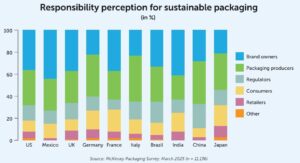
Regulations are being introduced across the world to reduce the environmental impact of packaging, and this also affects the pet industry. One example is Extended Producer Responsibility (EPR), a framework designed to improve sustainability and accountability across product lifecycles. It requires manufacturers to take greater financial responsibility – from production and distribution to the post-consumer stage, including the management of packaging waste.
In the UK, the Plastic Packaging Tax was introduced in 2022 to encourage higher rates of plastic waste collection and recycling. Across the US, EPR policies are also gaining momentum. As of August 2025, seven states – California, Colorado, Maine, Maryland, Minnesota, Oregon and Washington – have enacted packaging EPR laws, while more than a dozen others have introduced or are considering similar legislation.
Under these policies, brands may be required to report packaging data such as material type, weight and recyclability, to pay EPR fees based on the environmental impact of materials, and to meet recycled content and recyclability targets over time.
TerraCycle, a private recycling company in the US, is working with the pet sector to help advance its EPR goals with in-store recycling programs. Some of its partners in the industry include pet retailer PetSmart, pet care company Mars Petcare, pet retail chains Pet Supplies Plus and Wag N’ Wash, plus pet food brand Earthborn Holistic
On-pack communication
Harm Geurs is Director of Product Marketing at Missouri-based BW Packaging and provides strategic direction for the global bag filling and palletizing division. He says that on-pack communication is increasingly focused on recyclability, reduced material use and ingredient transparency. “In premium pet food, packaging plays a meaningful role in reinforcing trust, as consumers often associate packaging quality with product care, safety and brand credibility,” he says.
He explains that brands are navigating a balance between cost, sustainability, shelf impact and functional reliability. In terms of operational efficiency, producers are increasingly looking at automation and data-enabled performance.
“Producers are investing in systems that improve consistency, support shorter product lifecycles and reduce operational risk. These developments reflect the growing need for packaging operations that can absorb complexity without sacrificing efficiency,” Geurs says.
Improvements to materials
ProAmpac has introduced sustainable packaging solutions for pet food products across both recyclable fiber and film formats. Its PRO-EVO Recyclable SOS Bags are multi-wall paper bags for pet kibble, designed with barrier properties and grease resistance while remaining recyclable.
For wet pet food, ProAmpac has developed recyclable mono-material film structures for both small and large bags, as well as mono-material retortable packaging.
Cosmo Films also expanded its flexible packaging portfolio last year with a new range designed for pet food packaging. This includes films for outer layers used in printing and protection, materials for sealing or heat-processed packaging, and polyester films stretched in two directions to improve strength and stability.
The portfolio is designed for dry and wet pet food, treats and other functional nutrition segments, offering strong oxygen and moisture barrier performance. In addition, Cosmo Films launched a heat- and tear-resistant film that can withstand temperatures of up to 185°C.
Collaborating on ways forward
In Switzerland, a three-way partnership has produced new recyclable packaging for pet food. This incorporates recycled plastic derived from advanced recycling processes that is food-contact approved. The initiative brings together Dow, a global materials science company, packaging manufacturer Zermatt and the Spanish pet food brand Nature’s Variety.
The resulting pouch, specifically developed for Nature’s Variety products, contains 10% recycled content. It is designed to support the EU’s 2030 requirements for contact-sensitive packaging under the Packaging and Packaging Waste Regulation (PPWR). The brand is aiming for 30% recycled content in four years’ time.
A collaboration in France between sustainable packaging producer Mondi and pet food company Saga Nutrition led to the introduction last year of recyclable packaging for Saga’s dry pet food portfolio.
The new design improves recyclability by replacing traditional multi-material plastics with a mono-material structure. It also incorporates secure sealing for easier storage and handling, while maintaining durability to protect products during transport and distribution.
Impactful solutions
As both mainstream and niche pet food manufacturers continue to expand worldwide beyond specialty retail into grocery, mass and e-commerce channels, they are increasingly looking at how to use the packaging itself to make more impact. At the same time, they are improving packaging materials to meet today’s demands from both consumers and distribution channels.
Share this story:
One click prioritizes GlobalPETS in your search results and AI answers.