Pet retail revolutions in the UAE and Saudi Arabia
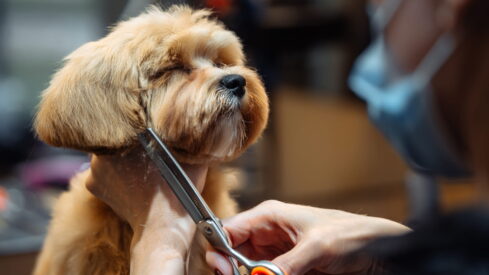
As the younger populations of the Gulf states become more plugged in to global innovation, they have an increasing interest in securing what’s best for their pets.
The Middle East pet care sector, once dominated by small independent shops and limited ranges, has undergone a radical professionalization. Today, the six countries of the Gulf Cooperation Council (GCC) represent one of the fastest-growing pet markets globally, and consumers can benefit from more specialized products, care and advice.
The UAE: essentials and solutions
As pet ownership has surged by roughly 30% since the pandemic, the pet retail industry in the UAE has evolved into a fully developed category of products and services, featuring organized merchandising and specialized ranges. Amr Hazem, CEO of UAE retail group The Petshop, notes two dominant shopping missions.
The first is the replenishment shop, where customers restock essentials for their pets, such as food and litter, and then add extras such as treats, hygiene products and toys. “These trips and orders are routine-led and convenience-driven,” Hazem says.
The second is a solutions-led shop, where pet owners buy around a desired outcome, such as digestion support, skin comfort, dental care, anxiety relief, healthy weight, mobility and enrichment. “These baskets naturally span multiple categories, because customers are building a routine, not just purchasing a single product,” he adds.
Enrichment and training products
Overall, customers in the UAE are increasingly benefit-led and label-aware, and are beginning to ask more detailed questions about suitability, ingredients and how products fit into daily care. While the best-performing categories are dry food for dogs and cats, wet food for cats, and treats – especially training and functional varieties – there is also strong demand for litter products, as well as parasite control, basic grooming and other hygiene-related items.
“A notable growth area is enrichment and behavior-led supplies – toys, chews, puzzle feeders, scratchers, calming and routine-support tools – as more owners prioritize quality of life at home and practical solutions that reduce household stress,” says Hazem.
Wraparound support
Customers are now increasingly seeking 360-degree services from retailers, and The Petshop can provide that. “Our teams stay close to the community, support responsible pet ownership and help families make informed choices about nutrition, healthcare, grooming and lifestyle for their pets,” says Hazem.
This philosophy has birthed a digital-first landscape where convenience is king. The Petshop was the first to offer 60-minute delivery across Dubai, Abu Dhabi and Sharjah, seeing double-digit month-on-month growth for this service since it started. It also led to the launch of its app, that allows customers to shop, access a loyalty program and book services such as boarding, grooming and pet relocation.
Saudi Arabia: new cat-loving generation
The Saudi market, meanwhile, is defined by a younger, globally connected population – with a median age of just 29.6 – that is moving past traditional hesitations toward pet ownership.
Nawaf Tabbaa, Chief Marketing Officer at Saudi pet products supplier Muntajat, believes this generational shift will drive the growth of pet retail. In Saudi Arabia, cats dominate with 82% market share.
According to Tabbaa, the current average order value among Saudi customers in physical specialty stores is $32 (€27.50), with e-commerce orders reaching $53.33 (€45.84) and q-commerce hitting $39.99 (€34.38). Pet-related supermarket orders are much lower, at $13.33 (€11.46).
Tabbaa warns of a volatile product landscape, with “fake brands” coming in from Turkey and China – often disappearing as quickly as they arrive – which he believes creates instability in consumer perception.
There’s also the fact that some local consumers choose low-cost products over high quality. “In Saudi Arabia, [we] do not have the habit and culture of reading labels and understanding what’s good and what’s bad in terms of ingredients,” he notes.
Toward higher quality brands
One of the ways Muntajat is combating this issue is with its ShipGo dropshipping model, launched in 2024, which allows retailers to sell high-quality brands on their websites and effectively acts as a quality gatekeeper for the market. It also lets new e-commerce businesses enter the pet market without holding inventory. In its first year, 25 new businesses started using the service.
In addition, there’s also a new wave of local manufacturing. Felyn Go and Canine Go are local sister brands with affordable pricing and high-quality ingredients that have taken the market by storm since their launches. They are available at specialist retailers nationwide, with their ranges spanning wet and dry food, treats and milk – all grain free – plus a raw products line.
Meanwhile, Delicious Food Factory in Saudi capital Riyadh is set to become the largest pet food factory in the Middle East by late 2026, with an annual production capacity of 60,000 tons of dry food and 40,000 tons of wet food.
Balancing showrooms and dark stores
Within both Middle East markets, the role of physical versus digital channels is still being navigated by local players. In Saudi Arabia, e-commerce sales reached $50 million (€43M) in 2024, more than double the previous year, according to Tabbaa.
Global giants, such as Amazon, and local q-commerce leaders, like Ninja, are capturing significant market share. Ninja alone accounts for 8-10% of sales. There are also new players, for example Keeta, which is expanding aggressively and aiming for 130 dark stores by mid-2026.
Physical retail is not vanishing in Saudi Arabia though. Muntajat is currently expanding its B2C footprint, with showrooms that have a minimum size of 1,500sq m. Tabbaa argues that these branches are essential for brand experience. “Having a physical store is always a better choice for people who want to experience the brand, who want to understand [the benefits] and have one-on-one talks with our nutritional consultants.”
The showrooms serve as strategic hubs for delivery. “Our strategy is to keep going with retail stores and then use them as dark stores,” Tabbaa says, referring to using physical locations as localized distribution centers to solve the ‘last mile’ delivery challenge in cities where there is, as yet, no q-commerce.
Omnichannel is the norm
While online plays a strong role in the UAE too, stores remain essential, “because pet care is still a high-trust category”, Hazem says. He adds that proprietary online channels, including The Petshop’s app, are used the most for planned replenishment and repeat purchasing, while third-party delivery platforms are typically used for urgent top-ups and convenience.
“This is also why we’ve invested in keeping delivery capability in-house,” Hazem explains. “It gives us better control over the customer experience end-to- end, from product availability through to fulfillment standards.” Being omnichannel is non-negotiable now, says Hazem: “Customers will discover something in-store, replenish online and receive it quickly, with a consistent experience across touchpoints.”
Overviews and outlook
While the UAE is a hub for international concepts, and currently has the most sophisticated market in the region, Saudi Arabia offers the greatest scale for growth. The competitive landscape is diversifying. Even non-specialized retailers such as Nahdi (pharmacies) and eXtra (electronics) are entering the pet supply space, alongside general supermarket chains, who are expanding their pet-related lines in parallel with the local market.
The industry still faces hurdles, including rising regulatory costs and a need for better animal welfare infrastructure, but the overall trajectory is upward. In the UAE, the future lies in one-stop ecosystems – super-apps that integrate retail, veterinary care and grooming into a single digital interface. In Saudi Arabia, the focus is on education and shifting the culture toward quality.
According to Hazem, the whole pet ecosystem in the UAE “has grown up”, with more players in the sector, such as veterinary hospitals and daycare. “In many ways, we are still at the early stages,” he says of the market.
“Pet ownership in the UAE is lower than in some Western markets, which means there is plenty of room for responsible growth. At the same time, the industry here is professionalizing quickly – with clearer standards, stronger regulation and more structured, long-term businesses,” he concludes.