Smarter proteins for a sustainable wet pet food future

How you can cut the carbon footprint of wet pet food, without compromising nutrition or quality.
Meat remains the foundation of most pet food formulations, valued for its nutritional profile, taste and functionality. Yet, it’s resource-intensive, and manufacturers are increasingly seeking ways to lower the environmental footprint of their products.
Achieving that balance is not straightforward: any ingredient replacing part of the meat content must maintain the texture, juiciness and palatability that pets and owners expect. Advances in processing technology are bridging this gap. By converting animal byproducts into high-value ingredients, producers can reduce waste while maintaining performance.
These so-called functional proteins are engineered to behave like meat, offering similar structure, water-binding ability and color – essential attributes in wet pet food manufacturing. One example is Protein Fiber, commercially known as QExtend. First created for human food products, it now demonstrates how this technology has transitioned into proven application in pet nutrition.
The functional protein
Protein Fiber is a fibrated protein derived from pork or beef plasma byproducts using a patented process. Originally developed for use in processed meat products for human consumption, it is now being explored for wet pet food.
Delivered as frozen blocks for easy handling, it can replace part of the meat content in formulations while maintaining protein levels, moisture and product appearance. With a substantially lower carbon footprint than meat, it provides a practical way to improve sustainability without sacrificing quality.
Proven performance
Extensive trials have shown that Protein Fiber can replace up to 20-25% of fresh meat in loaf-style wet pet food without affecting texture, hardness or gel strength. It also enhances homogeneity and color consistency, important factors in both production and consumer appeal. The ingredient’s strong water-binding capacity further contributes to stable product structure.
Palatability and acceptance
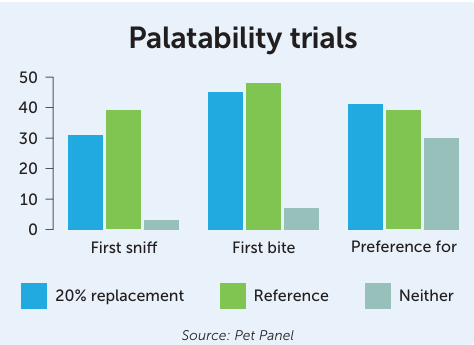
Palatability studies confirmed that cats accepted formulations containing Protein Fiber as readily as those made with 100% meat. Pet owners reported no significant differences in first impression or enjoyment, showing that the functional protein can deliver sustainability benefits without compromising eating experience.
Share this story: