The implications of insect meal for pet food texture
As alternative proteins gain traction, manufacturers are adapting formulations and processing methods to maintain kibble quality.
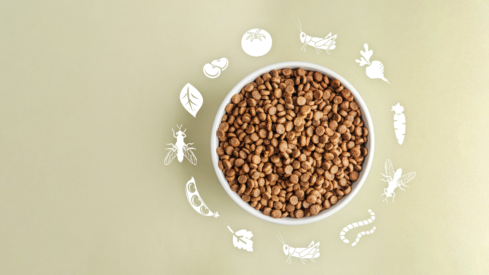
Insect meal is emerging as a popular alternative protein, both as a way of making pet diets more sustainable and of catering to dogs and cats with allergies or other food sensitivities. But, according to recent studies, consumers may notice differences in the color and texture of insect-based kibble, suggesting some buyers may need persuasion before they are willing to adopt these novel diets.
Researching differences
A study from Kansas State University (KSU), published in Processes in 2025, suggests insect meals may require careful formulation and handling to avoid textural and structural issues.
According to the study, replacing poultry or fish meal with black soldier fly larvae (BSFL) meal produced a more compact kibble with a hard, fragile texture and darker color. The difference was significant enough for consumers to notice the darker color and more irregular pellets, according to Tucker Graff , who worked on the study.
“If you expect to throw [BSFL] in a random bag of dog food… I think you will be a little disappointed,” Graff said. He added that consumers might think the kibble was burnt or damaged if the difference was not addressed through labeling or marketing.
Even so, Graff believes working with insect meals is a worthwhile endeavor, noting that “it’s a very good product – it’s good nutritionally, it’s good for sustainability. It’s just a little more challenging to process”.
Insect meal comparisons
Cricket flour produced a more attractive color in the KSU trial. But the flour’s higher fat content reduced flow throughout the manufacturing process and caused slippage in the extruder, Graff said.
Separate studies have reported similar results with other insect meals. Researchers in Poland, for example, published a study in Animals in 2025 which found that the inclusion of yellow mealworm meal in dog food resulted in a softer, more flexible texture. They also found that the meal stabilized the kibble’s protein levels and increased fatty acid content.
Adapting production
Bill Reed, Head of Operations at Jiminy’s, a pet food company that makes pet diets and treats using cricket protein, says he hasn’t run into any textural or processing problems while working with insect ingredients. He attributes this to working with skilled manufacturers.
Jiminy’s did reformulate its soft training treats two or three years ago; the treats initially came out too hard when the company reduced its use of glycerin, but further reformulation resolved the problem.
Conversely, BSFL texture was found by the company to have some advantage: Jiminy’s recently launched a line of dental chews after realizing the crunchy texture, paired with the peptides and amino acids the BSFL contains, fights dental plaque.
Yora Pet Foods, a company which makes a range of insect-based dog and cat foods, has had similar success with BSFL in its lineup of pet foods and treats. Texture hasn’t been a significant issue according to Co-CEO James Milbourne, but they do find that the BSFL produces a darker-colored kibble than conventional proteins such as chicken.
Yora Pet Foods Brand Ambassador George Gardner says the darker hue of the insect-based kibbles hasn’t turned consumers off their products. Buyers seem willing to accept that different proteins result in different colored kibbles, according to Milbourne.
Science meets marketing
These positive experiences working with insect meals don’t surprise Graff, who notes that the KSU study may have inadvertently exaggerated the potential negative effects of insect meals. Because the study was designed to test how BSFL meal and cricket flour behave in the manufacturing process, it didn’t fully reflect how pet food is formulated in actual production.
For example, the study relied on cornflour as a sole source of starch in all its experimental diets. Using other starches, such as wheat, rice or potato starch, could mitigate the textural issues introduced by the BSFL, Graff says. Targeting a smaller particle size or sticking with a gentler production chain – smaller drops from belts, for example – might also improve kibble quality.
Ingredient quality could also play a key role in textural outcomes. The BSFL meal used in the study was high in chitin, which Graff’s team found affected the meal’s water absorption. Buyers should consider attributes like protein solubility when selecting an insect meal supplier, according to Graff.
Taking quality into account
Gardner seconds the importance of selecting high-quality insect proteins. While Yora Pets has not experienced significant issues with the texture of its products, Gardner says the company has encountered problems when testing BSFL meals from producers outside its core suppliers.
“When we used other sources, which may have been cheaper or more available, in trial runs, we found that the color was much more variable, we found that palatability was much more variable, and we found the nutritional levels would vary more,” he says.
“Insects are very, very influenced by whatever they are fed. They are nature’s upcyclers, composters, so you have to make sure what they are being fed is spot on and consistent.”
Growth and popularity
Advances in defatting and drying techniques have improved the quality of many insect meals in recent years, leading to increased use across industries, according to a March 2026 report by market research and consulting firm DataM Intelligence. The report estimated that sales of insect-based pet foods and livestock feeds will reach $3.8 billion (€3.3B) by 2032.
Insect-based pet foods have also proved popular with consumers, and Reed says Jiminy’s sales growth exceeds 10% per year – though the company did see a dip around 2023 amid a cultural backlash against insect farming.
Reed is optimistic about future growth but acknowledges that consumer mindsets can be hard to sway. “Most people are happy with what they have, so we have to convince them to switch. It’s a big undertaking, but I wouldn’t be here if I didn’t believe it made sense long-term.”
Share this story:
One click prioritizes GlobalPETS in your search results and AI answers.