The pet bed market: Customizing comfort
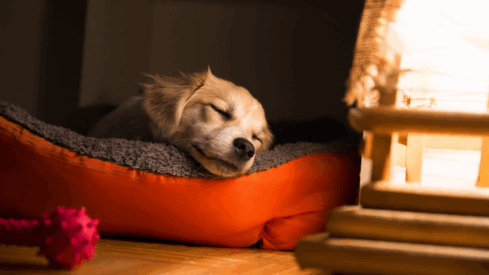
Consumers are looking for more sophisticated sleeping accessories that meet their pet’s individual needs and can easily be moved from one place to another.
With owners increasingly treating their pets as part of the family, they’re willing to spend more on products such as beds, crates and cushions. Accordingly, the global market in this sector is estimated by Future Market Insights (FMI) to grow from $5.4 billion (€4.6B) in 2025 to $10.5 billion (€8.9B) in 2035.
Where are pet parents buying?
According to FMI, online retail dominates pet bed sales, with 66% of consumers buying there because of price, availability and consumer reviews. Convenience is also a factor. However, 50% of European consumers still shop offline in order to physically touch and feel the level of comfort and fit of the product before they make a purchase.
FMI analysis shows that major retailers such as Amazon, Chewy and Petco have been at the forefront of customizable and smart products, indicating that these items have firmly begun to enter the mainstream.
And with disposable incomes increasing in many markets, consumers are willing to pay extra for something that brings added benefits to themselves and their pets.
Appeal of customization
“Customizable options are on the rise, particularly regarding size, firmness and fabric,” says Joe Chanda, founder of US company Bully Beds. “Pet parents want to provide their pets with a specialized bed for their needs, but also consider their home decor.”
Durga Gandhi, a Product Development Consultant and buyer, has noticed an increase in the number of customizable and smart beds at pet trade fairs and “more players” in the market. “We are now more obsessed with data – and what we can do with it – than ever before. I think it is due to rapid growth in the pet space,” she explains.
Health and comfort benefits
Gandhi says that pet owners are willing to pay more for a comprehensive product to save themselves “stress, heartache and money” further down the line. Chanda is seeing increased consumer interest in features including “temperature adjustment, orthopedic memory foam with tracking, and active sleep analysis powered by artificial intelligence”. He believes that features need to address real issues – such as health
and comfort – while not making the product itself too complicated to use.
Rosica Petrova is the founder and CEO of Bulgarian-based company Home of Wool, which produces customizable pet beds made from hypoallergenic and breathable wool. “For us, it was always about providing pets with the same comfort and health benefits we can offer to their owners,” she says.
Meanwhile, Domethics, an Italian company in the Internet of Things industry, has developed the Carepet, a smart pet bed that monitors health indicators including heart rate, respiration and sleep quality.
Pet owners can share data on the app with their vet if they’re concerned about something. With the growth of smart collars like Tractive’s pet health trackers, it wouldn’t be surprising if more companies were to go down this route.
Dog-friendly adventures
When considering travel with their pets, owners are looking for products that are portable, yet still meet their pet’s needs. More people than ever are taking their pets with them when they go away. Over three-quarters (78%) of US pet owners do this each year, according to GlobalVetLink, while a study from the UK’s University of Surrey indicates that the dog-friendly travel sector will be worth almost £40 billion (€46B/$54B) by 2030.
Gandhi suggests that there may be a link between increases in separation anxiety and the desire to take pets on vacation. Christine Chau, Creative Director and Chief Product Designer at the UK dog bedding company Charley Chau, believes the increase in dogs being considered family members means they’re included in more family experiences.
“The travel industry was quick to recognize the value of the ‘hound pound’, so for the past 10 years or so an increasing number of hotels, B&Bs and cottages have welcomed doggy patrons, which has impacted the demand for travel-friendly dog bedding,” Chau says.
Charley Chau offers travel pads with slimline mattresses that are suitable for dogs to sleep on at home, in the car and on vacation, as well as ‘burrow bags’, which contain the same mattresses and look very much like human sleeping bags.
Alleviating anxiety
Chau first offered travel-friendly lines in 2012. “A change in environment can be stressful for many dogs. One way of reducing their stress is to make sure they’re comfortable – and therefore content – so they can quickly settle into their new surroundings,” she says.
“With all the luggage you already have with you, it’s very important that a dog bed is lightweight and easy to transport, while still delivering supreme comfort,” Chau continues, highlighting features such as moisture-wicking and quick-drying fabrics and anti-microbial waterproof liners.
Leena Chitnis, founder and CEO of Californian-based Timberdog, started the company when she spotted a gap in the market for dog beds suitable for camping, after realizing that she had the outdoor gear she needed for herself – but not for her dog. She sketched out the multifunctional RuffRest bed based on features designed for the comfort of dogs and ease of use for their owners.
Seamless transitions
Michael Leung, co-founder and Lead Product Designer of Sleepypod, another Californian company, says the brand first introduced its mobile pet bed – which doubles as a carrier and a car seat – back in 2006, to offer “unmatched safety while helping to mitigate pet travel fear”.
Leung explains the brand promise: “Sleepypod’s multifunctional designs encourage positive associations, by seamlessly transitioning from cozy, everyday pet bed or napping spot to a carrier, and then a crash-tested car safety restraint.”
As owners’ enthusiasm for involving their pets, particularly dogs, in pastimes, holidays and activities only increases, the pet bed market remains one where there could be space for further premiumization and customization.
Share this story:
One click prioritizes GlobalPETS in your search results and AI answers.