The specialty diets reshaping the premium landscape

After years of ‘natural’, grain-free and human-grade claims dominating innovation, market growth in the US is now increasingly driven by precision health positioning.
Pet food premiumization has entered a new chapter. Specialty diets respond to two powerful and sometimes overlapping consumer motivations: the desire to proactively manage food sensitivities through simplified formulations, and the wish to rely on clinically validated nutrition to address specific health conditions.
Entering the mainstream
Limited Ingredient Diets (LIDs) have evolved far beyond their niche origins. Diets like these were initially designed to help veterinarians and pet owners identify and manage food allergies, but LIDs are now widely adopted as both reactive and preventive solutions.
In a survey held by Packaged Facts in September 2025, 11% of dog owners and 7% of cat owners in the US report that their pets have food allergies or sensitivities. These reactions often center on specific proteins – commonly chicken – or grains such as wheat. Even among owners whose pet has not had an allergy or sensitivity diagnosis from a vet, concern over intolerances has become part of the purchasing mindset.
Keeping it simple
LIDs address concerns about allergies and intolerances by reducing ingredient complexity. Formulations are built around a single or limited number of protein sources, a minimal number of carbohydrates and carefully selected functional inclusions. The premise is that fewer variables make it easier to pinpoint potential triggers and reduce the likelihood of adverse reactions.
That said, the appeal of LIDs is no longer confined to medically necessary use. In a retail environment saturated with a wide range of product claims, ingredient simplicity itself has now become a mark of quality and transparency.
Pet owners are increasingly drawn to products with simpler ingredients. When asked about their own food priorities in the Packaged Facts survey, 42% of them ranked ‘clean label’ (no preservatives/artificial ingredients) as a top priority and 29% said the same about non-GMO foods. And nearly three-quarters of pet owners agree that pet foods without artificial ingredients are healthier for their pets, with a similar percentage screening ingredient lists of the pet foods they purchase.
Generational and income differences
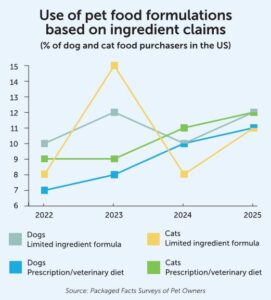
While 11% of dog and cat owners are currently keeping their pets on LIDs, usage by generation and income level does vary. Millennials are the most likely to feed their pets with these diets, at 15%, but Gen X, baby boomers and older seniors are much less likely to do so.
Usage of these diets is also impacted by household income, with households earning $100,000 (€86,000) and up being the most likely to buy and feed them, at 15%, while those earning under $60,000 (€52,000) are much less inclined to do so.
Clinical credibility drives growth
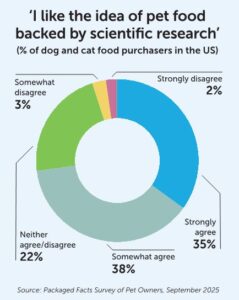
With LIDs representing simplification in pet foods, it is veterinary diets that represent scientific complexity. In a marketplace where natural claims have become mainstream, science-backed positioning is emerging as a key differentiator. Packaged Facts reports that 73% of US pet owners like the idea of pet food backed by scientific research, suggesting that there is robust consumer receptivity to clinically grounded nutrition.
More specifically, 10% of the dog and cat owners in the survey report that their pet is currently on a prescription or therapeutic diet. But as is the case with the diets with limited ingredients, usage is still skewed towards specific demographics.
Complementing vet care
Millennial pet owners are more likely than average to have their pets on a prescription diet, at 13%, with baby boomers significantly less disposed to do so. Households with higher incomes are also much more likely to feed prescription diets, at 15%, which is unsurprising given that use of these diets requires a veterinary visit and this demographic skews high for veterinary usage.
The veterinary diet segment is benefiting from heightened awareness of chronic pet health conditions. As pets live longer, conditions such as digestive disorders, kidney disease, cognitive decline, obesity and mobility challenges become more prevalent. Therapeutic diets offer targeted nutritional interventions that complement veterinary care.
Importantly, science-based positioning is not limited to prescription products. Brands across the superpremium spectrum emphasize research, feeding trials and professional endorsement. This shift reflects a broader reframing of premium value: from ingredient storytelling alone to measurable, evidence-based outcomes.
Understanding and modulating the gut microbiome is increasingly viewed as foundational to overall health – influencing digestion, immune function, skin condition and even cognitive wellbeing.
Veterinary and science-forward brands are integrating prebiotics, targeted fibers and functional ingredients designed to ‘activate’ or support beneficial gut bacteria.
The expansion of therapeutic portfolios also reflects growing complexity in pet health management. Multi-condition diets, therapeutic products for different life stages and formulations addressing overlapping nutritional needs are gaining prominence.
This mirrors trends in human nutrition, where personalization and condition-specific solutions are reshaping product development.
A competitive ecosystem
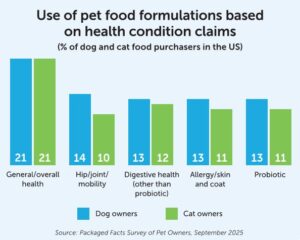
Specialty diets operate within a crowded functional landscape that includes complete foods, treats and supplements. Packaged Facts data shows that 21% of dog and cat owners purchase foods targeting general or overall health. Other popular condition-specific claims include hip/joint/mobility (particularly among dog owners), allergy/skin and coat, digestive health/probiotic, heart health and omega fatty acids. Among cat owners, indoor (18%) and hairball (12%) formulations remain strong.
Functional treats and supplements compete for similar territory. General health claims lead across functional food (31%), treat (28%) and supplement (25%) purchasers. Dental and immune health treats are particularly popular, while omega fatty acid and immune support supplements draw strong interest.
For manufacturers, this overlap underscores the importance of clear differentiation. Veterinary diets rely on clinical validation and professional endorsement. LIDs emphasize ingredient transparency and allergen management. Both must articulate distinct value propositions to stand out in a market where functional claims are ubiquitous.
Precision nutrition
The growth of LIDs and veterinary diets reflects a larger transformation in pet food: the rise of precision nutrition. Rather than broad claims about naturalness or wholesomeness, today’s specialty diets focus on targeted solutions grounded in either ingredient control or scientific research. For retailers, these segments offer opportunities for trade-up and education. For manufacturers, they provide defensible differentiation in an increasingly competitive premium environment.
Specialty diets no longer niche
Looking ahead, the convergence of simplified, recognizable ingredient lists, alternative protein innovation, microbiome science and professional engagement will likely shape the trajectory of specialty diets. As pet owners become more health literate and more willing to invest in evidence-based care, the balance of power in premium pet food is shifting.
In this environment, limited ingredient and veterinary diets are not peripheral niches. They are central expressions of how the industry is redefining quality, credibility and long-term sustainability in pet nutrition. These specialty segments reflect a broader recalibration of premium pet food, from lifestyle positioning toward measurable health outcomes.
Share this story:
One click prioritizes GlobalPETS in your search results and AI answers.