“We are looking to enter a sixth country in 2026”, Timo Tervo, CEO, Pet Network International
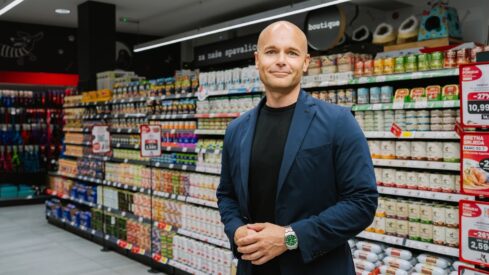
Entrepreneurial by nature, the Croatian omnichannel retailer is keen to take advantage of all platforms that can bring it closer to its customers.
Originally from Finland, Timo Tervo has spent the last 2 decades living and working across Europe, including 15 years in leadership roles at supermarket chain Lidl.
After his time with Musti Group in the Nordics, he joined Pet Network International (PNI) in 2022 as CEO – an opportunity to invest in the company and steer it into its next growth phase.
Today, Tervo oversees operations in 5 countries, with plans to double the store network by 2030.
You operate in several Eastern European countries. Which is the market to watch?
Slovenia is a very mature and high-margin market. From a profitability perspective I would say it is our best market by far. In terms of population, it’s relatively small – just 2 million people – and we hold a significant share of the pet specialty trade.
As the leading player in Slovenia, most of our competition comes from online, so it is definitely Zooplus that we are competing with.
And which markets have the most room for improvement?
Serbia is a double-digit growth market. The market is maturing, and we’ve recently taken more market share through acquisitions and by opening new stores.
Despite Serbia’s relatively low GDP compared to our other markets, it offers significant growth potential.
Growth in Bulgaria is also extremely strong. We entered the market a few years back under our Maxi Pet banner, operating 5-6 stores in a very competitive environment.
We then acquired Dr. Stefanov, led by Mario Ivanov, who’s still our CEO in Bulgaria. All Maxi Pet stores became Dr. Stefanov stores.
Today, we operate just over 40 stores and are opening 5-10 annually – more if the right opportunities arise.
In Romania you operate under 2 banners. How is the market performing there?
Romania is one of our top priorities. From a revenue perspective, it’s our best-performing country. We operate Animax, with roughly 135 stores, and Maxi Pet, our big-box format with 14 stores.
Convenience is becoming increasingly important in Romania, so customers need a good reason to visit big-box locations. Maxi Pet is priced lower than Animax to attract volume buyers.
Our largest Maxi Pet store in Romania has a turnover of about €10 million ($11.6M) annually, making it one of the highest-selling pet stores in Europe.
Moving that much volume is a real operational challenge, but Romania is developing fast. Fressnapf has now entered the market, and while we take all competition seriously, it hasn’t impacted our business so far.
Do you manage logistics in the same way in different countries?
We have a fully integrated group supply chain and purchasing function. These are operated centrally, but each country has its own teams. To service our markets efficiently, we have a logistics center in every country we operate in.
Roughly 50% of our supply comes from group-level suppliers managed centrally from Croatia, and 50% from domestic suppliers. I strongly believe in local brands – they’re important for each market.
We see many international businesses expanding without making use of strong local teams. That’s against my philosophy.
While marketing, finance, supply chain and purchasing are coordinated at a group level, we also maintain full local teams for each function, including a country CEO in every market.
Half of your sales come from your own and exclusive brands…
Across the group, we carry one of the widest assortments in the pet industry – well over 10,000 SKUs depending on the country. In some markets close to 15,000 SKUs.
This breadth is a key success factor, particularly online where it is critical to remaining competitive and interesting for consumers.
In Romania, we operate a wholesale business too, supplying around 1,000 pet stores, which helps to expand our brand footprint beyond our own network.
Are Eastern European pet parents demanding more in-store services?
Personalized service is increasingly important. Most of our locations feature a pharmacy, and we’ve recently opened grooming salons in Romania and Bulgaria, with our first high-quality location in the Croatian capital Zagreb.
It’s early days, but we already see that customers who use our services spend, on average, about 1.5 times more. That’s why services will continue to be a growth area, but we will scale them carefully and ensure the business case works.
What are the differences in basket size across your markets?
In Romania, our Animax convenience banner has an average spend of slightly below €15 ($17). These are high-traffic stores with frequent purchasers, but the average basket has room for improvement. Our destination stores average between €25 ($29) and €30 ($35).
Convenience locations get more visits, but discretionary purchases – especially accessories – are struggling across the pet industry. Competition from online players like Temu is intense.
This forces us to constantly review our sourcing strategy, balancing direct sourcing from China against buying from major European vendors and distributors, because accessory margins are tightening.
What’s your strategy when it comes to store size?
In Slovenia, our stores are larger than elsewhere. They generally start from 300 sq m, with destination locations exceeding 1,000 sq m.
In Croatia, we initially focused on big-box stores of 700-1,000 sq m, but now we’re also opening smaller locations, with a minimum of 250 sq m. Anything under 200 sq m doesn’t give us enough assortment to generate meaningful revenue.
Romania is different. Our smallest stores there are in extremely high-traffic locations and can be as small as 70-80 sq m, yet still generate around €700,000 ($815,000) annually.
We’re also opening 150 sq m convenience stores where we can secure good locations, while still investing in big boxes of up to 1,000 sq m when the right site becomes available.
We have moved away from a one-size-fits-all approach. Location is everything. People are less willing to travel far, so convenience is key.
Quick commerce is also growing fast, and some of our smaller stores double as hubs for rapid delivery.
You are partnering with quick delivery channels for your pet products…
We’ve started working with Glovo, and more recently with Wolt, and we’ve seen immense growth with quick commerce. Obviously, our initial worries were the expense – but running the logistics yourself is also costly.
It’s comparable to how we look at online. If you want to stay relevant, you have to be on these platforms. That’s how I see it.
There is tremendous growth in the sector in Croatia and Romania. In Bulgaria, we started working with Wolt recently, so we are quite excited about this opportunity.
From a cost and profitability perspective, we just see it as an extension of our own sales channel. I’m satisfied with it and I think it’s part of the future, so it’s best to integrate it today.
How’s your online channel doing?
Each of our markets has an average online share of sales of between 7% and 12% – definitely lower than in Northern Europe, but growing. From a pet specialty perspective, we are operating online in all markets.
Currently, our biggest investments are going into our CRM systems, as we renew everything and put millions into our data capabilities. Knowing your customer is more and more important in Southeast Europe today.
Is there any market where you see more potential to grow online?
I think stores will remain the priority for our business in each of our markets. That is where we invest in infrastructure and try to create the best experiences for pet parents. I don’t think online can replicate that.
From a growth perspective, Romania is definitely the highest-potential market for us – simply due to the high number of consumers.
Serbia is also a very good online market for us, possibly due to limited competition. It’s outside the EU, and we are fairly dominant there in terms of pet specialty online.
How important is loyalty for PNI?
This is where most of our technical capability investments are going right now. We are replacing some of our legacy loyalty systems to gain more knowledge – because knowledge is certainly power. We want to have a better understanding of consumer behavior.
Depending on the market, 70-85% of our consumers are in our loyalty systems. It’s worth remembering that it was just 3.5 years ago that we started from scratch, so we’ve grown our consumer base quite rapidly.
But there’s still a lot to do to better understand consumer behavior and patterns, and to gain more detailed knowledge about pets and pet parents.
Bulgaria is adopting the euro in 2026. How do you expect this will impact your business?
We’ve already done a project like this in Croatia, when the country adopted the euro. Generally speaking, there’s some inflationary effect during a change from the domestic currency to the euro, so we have to be very cautious when managing our price points.
Changing the currency entails a huge project from the back end. It’s not a big challenge, but it does mean major operational disruption for a few months.
From a group and finance perspective, being in the euro is positive, as reporting becomes much easier. For Bulgaria as a country, this is just another step toward becoming a modern European market. We will benefit from it, even though it gives us extra work.
A new currency usually brings some inflation with it…
I hope not. This also depends a lot on the suppliers. Many suppliers might take advantage of the situation, rounding up prices when switching to euros.
If the whole ecosystem – from suppliers to retailers – approaches this sustainably, it can be done without harming the end consumer.
As a retailer, we are always cautious and want to remain price driven. Price is very important to us, and consumers tend to be extremely sensitive. If they’re not happy with a retailer’s price point, they are quite likely to switch.
Are there any expansion plans on the horizon?
In Romania, we believe we can almost double our store count within 5 years, from roughly 145 today to around 250-260. We’re opening about 10 new locations this year. That said, we’re cautious, as anything below a local population of 15,000 is not viable for us at the moment.
Rural areas are developing, but not all of them are able to sustain a pet specialty store. Romania’s main limitation right now is the lack of really good retail spaces. Developers are investing, but it all takes time.
In Slovenia, we can’t double our store count due to the small population and the market’s maturity level. We estimate we can sustainably open about 25 more stores there without excessive cannibalization.
Croatia, Serbia, Bulgaria and Romania will all see a doubling of our store counts. So Slovenia is the only market with real restrictions from a population and maturity perspective.
And any plans to expand internationally?
We are now operating in 5 countries and are number 1 in all of them. There’s still growth potential, so we are looking to roughly double our store count in the next 5 years. It’s ambitious, but we believe it’s doable.
In terms of other markets, Southeast Europe is our main focus. But we are currently reviewing a sixth country we’d like to enter in 2026. I see it as a relatively fragmented market where consumers could benefit from an established retailer.
We’re also always looking at acquisitions – reviewing businesses we could potentially acquire and integrate into our group. In our current operating countries, we’ve basically acquired what there is for sale. So now it’s time to look at other markets as well.
Share this story: