Why flexibility defines the future of pet food manufacturing
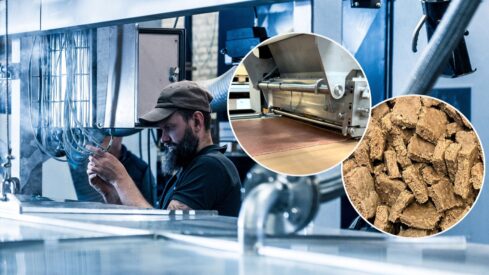
Discover how wet food manufacturers benefit from integrating flexible systems into production processes.
The pet food industry is transforming quickly. Manufacturers face increasing pressure to deliver a wider range of products, from wet food to semi-moist treats and snacks. Traditionally, the solution has been to add extra production lines. However, this is not always the most effective answer. The smarter alternative is to build flexibility into a single, integrated system that can switch between wet and semi-moist production without the overhead of multiple dedicated lines.
Running separate lines is costly
Most pet food manufacturers face the same challenge: operating separate production lines for different product types. The wet food line runs on one side of the plant, while treat or snack production takes place on the other. These are 2 independent operations that require full resources regardless of actual demand.
At the same time, wet food lines, often designed for larger capacity, may run only at medium output when producing both product types simultaneously, yet still need full staffing and ongoing maintenance. In today’s competitive market, this inefficiency has a direct impact on profitability.
A multi-purpose line is a smarter solution
Many processors may not realize that both wet chunks and semi-moist products can be processed on the same equipment with an extended steam cooking zone. Both undergo protein structuring and thermal treatment, with the main difference being final moisture content.
A flexible system leverages this overlap, processing wet chunks through steam cooking or routing them through extended cooking to achieve 50-60% moisture for the semi-moist drying line. One line delivers 2 outputs, depending on demand.
This approach modernizes semi-moist production. Instead of traditional batch processing with tray handling and manual transfers, products flow continuously from forming through cooking to packaging. Semi-moist products from the DANA steam cooker can also be transferred into batch drying equipment if needed.
The FlexLine advantage
DANA’s Wet-Semi Moist FlexLine™ demonstrates this integrated approach in action. The same line seamlessly switches between producing wet products and semi-moist formats, before moving into the final drying stage where the desired moisture level is set according to customer specification.
The technical configuration optimizes both processes: a steam tunnel ensures precise thermal treatment, while the dedicated drying system controls airflow and temperature zones. Semi-moist products do not require sterilization, unlike chunks in gravy, which must pass through an autoclave, a step that adds significant cost. By consolidating 2 production capabilities into one flexible system, manufacturers can reduce CAPEX, optimize floor space and cut labor costs. This creates clear operational advantages.
Share this story:
One click prioritizes GlobalPETS in your search results and AI answers.