Analysis: Pet food makers step up in quality assurance and food safety
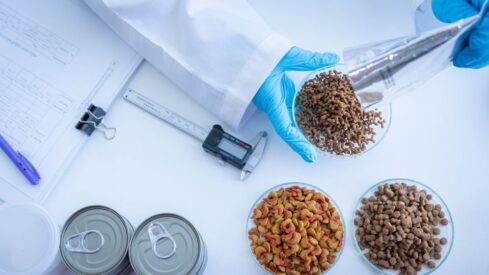
With 47% of food and beverage manufacturers increasing investment, traceability, analytical testing and digitalisation are gaining traction.
Food safety and quality controls are attracting greater investment across the food and beverage industry, with manufacturers allocating more resources to traceability, testing and operational improvements.
A 2026 report by engineering and consulting firm CRB found that 47% of more than 300 food and beverage manufacturers surveyed in North America had increased investment in food safety-related operational improvements compared with two years earlier.
Although the survey does not break out findings for the pet food sector, interviews with manufacturers indicate that quality assurance is also a priority in the industry.
Manufacturers step up quality investment
UK-based Burgess Pet Care increased its investment in food safety and quality control as a proportion of revenue by 63% over the past two years, according to Trish Parker, the company’s Technical Manager.
“Our investment is directed across people, training, laboratory testing, supplier assurance, quality systems, traceability, calibration, hygiene controls and manufacturing process verification,” Parker tells GlobalPETS, adding that the investment is outpacing business growth.
German manufacturer Josera Petfood did not disclose how much it spends on food safety, either in absolute terms or as a proportion of revenue. However, 40 people work across its quality management, quality assurance and laboratory functions, according to the company.
“With the commissioning of our new pet food plant in Poland, we have made significant investments in expanding our quality management and quality assurance teams and in implementing more effective analytical methods,” Ulrike Waber, Head of Quality Assurance at Josera Petfood, tells GlobalPETS.
Traceability and testing
According to CBR, 54% of surveyed manufacturers in North America can trace products back to their source within hours, while 29% said the process could take up to one day.
On average, 17% of respondents identified insufficient product traceability as a key challenge when executing a recall within 24 hours.
Pet food manufacturers are also investing in systems to improve traceability. Josera uses a SAP-based enterprise resource planning (ERP) system to compile lot and batch numbers, supplier documentation — including certificates of analysis (COAs) and origin statements — and supplier audit records.
“We can complete batch traceability in less than four hours. All we need is the production date or batch number, which customers find on the packaging. This lets us trace a product right back to the origin of the raw materials used,” Waber explains.
Burgess uses batch coding, system records and goods-in controls to support traceability across its internal operations and supplier processes.
“The systems we have in place mean that internal stock traces can be completed in minutes. It takes a bit longer when we have to go back to raw material suppliers for traces; most will be complete within two hours but certainly all within four hours,” Parker says.
At Purely Golden Foods, a pet food brand focused on small-breed nutrition, all ingredients are sourced from approved suppliers with documented records. Founder Irene Ou says each ingredient lot can be traced to the finished batch in which it was used.
Technology and operations
Manufacturers are also looking to digitalisation and automation to improve operational control. According to CRB, the proportion of respondents planning to integrate and digitalise facilities using predictive, real-time analytics increased from 39% in 2025 to 44% in 2026.
Josera Petfood’s Waber explains that automation can be used in pet food production to monitor parameters such as temperature, weight and pressure. Automated in-line moisture measurements and advanced analytical instruments can also support faster laboratory testing.
For Burgess Pet Care, the most useful technologies are those that improve speed, verification and confidence, including on-site analytical testing, digital quality records and process monitoring.
“Onsite testing capability, supported by external specialist analysis where appropriate, has particularly strengthened our ability to verify processes, raw material authenticity and product consistency,” says Parker.
She adds that near-infrared (NIR) spectroscopy, a non-destructive technique used to analyse the composition of materials, provides almost instantaneous process-control data.
Across the wider food and beverage industry, however, adoption of advanced processing technologies remains limited. CRB identifies capital costs, uncertainty over return on investment and operational complexity as barriers.
Processes and contamination prevention
Technology alone is not enough to ensure product safety. At Purely Golden Foods, Ou says quality controls for fresh food include validated cooking parameters, cold-chain management and documented quality checkpoints.
The company also uses standardised documentation and checks at each production stage. To reduce cross-contamination risks, it follows controlled production procedures and verifies sanitation between runs before restarting the line.
At Josera, Waber says cleaning routines and carefully planned production sequencing are essential to minimise the risk of ingredient carry-over between batches.
According to CRB, 67% of surveyed manufacturers use physical segregation to control allergens in their facilities, highlighting the role of facility design in preventing cross-contamination.
Consumer expectations
Consumer concerns are also influencing manufacturers’ food safety strategies. According to CRB, 57% of respondents said consumers were more concerned about food safety than they had been three years earlier.
Half of the manufacturers surveyed said these concerns were driving them towards cleaner labels or simplified formulations. Meanwhile, 44% cited investment in sustainability and packaging, and 42% pointed to improvements in transparency and traceability.
Pet food manufacturers interviewed for this article also highlighted pet humanisation, greater demand for ingredient transparency, clean-label and health-focused formulations, and interest in fresh and natural products.
They stressed that these trends must be addressed without compromising quality and safety.
Recalls and third-party certification
Product recalls and legal challenges have further increased scrutiny of manufacturers’ quality controls. In the US, the Food and Drug Administration (FDA) maintains a database of animal food recalls and other product safety actions.
Recent pet food recalls illustrate the range of risks manufacturers must manage, from potential foreign-material contamination to microbiological hazards. For example, Mars Petcare recalled certain Pedigree wet dog food products in July 2026 over potential plastic contamination.
Manufacturers are also seeking third-party certification to demonstrate that their production processes meet recognised food safety standards.
Lider Pet Food announced in June 2026 that its wet-food facility in Salihli, Turkey, had obtained BRCGS Food Safety certification under Issue 9 of the Global Standard for Food Safety.
Burgess Pet Care also highlighted the value of external testing methods, including isotope analysis to investigate ingredient origin, spectral fingerprinting and DNA testing to assess raw-material authenticity.
Together, these examples show how manufacturers are combining traceability systems, analytical testing and documented quality controls to manage food safety risks. As consumer expectations and regulatory scrutiny intensify, the ability to verify ingredients and production processes is becoming increasingly important to pet food manufacturers.
Share this story:
One click prioritizes GlobalPETS in your search results and AI answers.