Data: Cost pressures drive veterinary care delays across UK, US and Canada

Pet owners in the UK are delaying or skipping treatment, US households report heightened financial insecurity and Canadian research highlights a growing gap between veterinary training and practice.
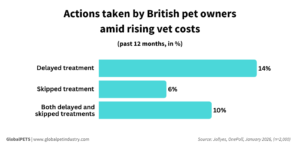
As many as 3 in 10 pet owners in the UK have delayed or skipped veterinary care amid rising costs, according to a survey by pet retailer Jollyes of 2,000 respondents in January 2026. The figure rose to 46% for pet parents living in London.
Annual booster vaccinations were the most frequently missed service, with 50% of respondents reporting they had skipped or delayed them in the past 12 months. Puppy and kitten vaccinations (28%) and microchipping (26%) followed.
The situation is also affecting compliance with the UK’s cat microchipping law, which has been mandatory since June 2024, as 31% of owners say the cost of microchipping has limited their ability to meet the requirement. Only 33% had their cats already microchipped.
Impact on the household budget
Financial strain is also influencing household spending in the UK. Nationally, 23% of respondents say they or their family have given up something they wanted to cover vet expenses. The share rises to 33% in London and reaches 46% in Northern Ireland.
Pet owners are also calling for pricing transparency, with 92% supporting proposals to require vet clinics to clearly display prices for key treatments, such as vaccinations and microchipping, both in practice and online. Additionally, 63% believe vet groups should offer standardized pricing nationwide.
Struggle with everyday expenses
Across the United States, pet owners are similarly reporting changes in how they manage pet care.
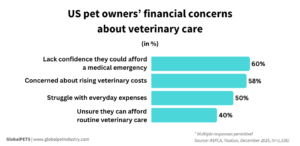
A survey by the American Society for the Prevention of Cruelty to Animals (ASPCA), conducted by YouGov among 1,536 pet owners, found that 58% of American pet parents are concerned about rising veterinary costs, while half are worried about the everyday costs of pet food and care.
In addition, approximately 60% of respondents say they are not confident they can afford a medical emergency for their pet. According to ASPCA estimates, this leaves 100.4 million companion animals at risk of not receiving emergency care in the country.
Meanwhile, 4 in 10 respondents say they are unsure whether they have the resources to even meet their pet’s routine medical needs.
Gap between owners and vets
A separate Gallup survey examined the topic from veterinarians’ perspective in North America. In the US, 97% of vets say cost is the main reason pet owners sometimes, often or always decline recommended care.
Cross-referenced data from the vet survey and a previous survey of pet parents suggest a disconnect between what vets believe they are offering and how pet owners perceive those options. Gallup surveyed 933 vets in the US between September and October 2025, and 2,500 cat and dog owners between November 2024 and January 2025.
Among pet owners who declined care due to cost, 73% say their vet did not offer a lower-cost alternative, compared with 81% of vets who say they often (44%) or always (37%) recommend alternative treatment plans.
About 4 in 10 vets say they often (22%) or always (19%) provide financing or payment plan options when clients decline treatment due to cost. In fact, 7 in 10 vets say their practice offers third-party pay-over-time options, while 24% provide in-house-managed payment plans.
However, the findings suggest that payment plans may be underused relative to their availability, as only 2 in 10 professionals say these options are always offered in practice. In addition, payment plans are discussed only when clients express financial concerns (57%), request a pay-over-time option (48%) or when treatment costs reach a certain level (23%).
Results from Canada
Gallup conducted a similar survey in Canada during the same period. Most vets (93%) say they are familiar with the Spectrum of Care approach, which encourages tailoring treatment recommendations to a pet’s medical needs, the client’s circumstances and the capabilities of the vet team.
However, nearly half (49%) say their education prepared them only a little (31%) or not at all (18%) to apply this in practice. Gallup surveyed 369 vets in Canada in September 2025.
In addition, only 19% of vets say they begin by understanding a client’s goals for care after completing a physical assessment. Instead, 72% say they typically present multiple treatment options and allow clients to choose what works best, while 9% start with the most medically advanced option and adjust only if concerns arise.
Similarly, 21% of vets say they try to understand clients’ financial concerns before making care recommendations, compared with 51% who address them afterward and 28% who raise the topic only if a client asks about costs or declines care.
Share this story:
One click prioritizes GlobalPETS in your search results and AI answers.