Global airlines and regulators reshape how pets fly
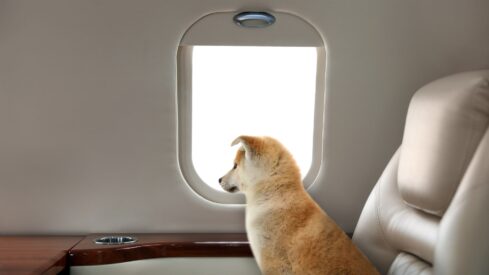
GlobalPETS examines how government mandates, airline policies and owner preferences are reshaping pet air travel worldwide.
Government regulations are playing a key role in shaping how pets are transported, with new and updated rules emerging across different regions.
Italy
In May, the Italian National Civil Aviation Authority (ENAC) approved a rule allowing pets to travel in the cabin instead of the cargo hold.
The authority’s board of directors says pets weighing 8 to 10 kilograms are now permitted in the cabin, subject to airline restrictions.
The rules, advocated by Deputy Prime Minister and Minister of Infrastructure and Transport Matteo Salvini and developed by ENAC, require pets to follow specific procedures, including being placed on seats without blocking emergency exits and having carriers secured by seatbelts or other anchoring systems.
“ENAC’s ability, as the national civil aviation authority, is confirmed, also on the basis of a specific directive from the Minister of Infrastructure and Transport Matteo Salvini, to open up to regulatory solutions that, while fully respecting flight safety, at the same time respond to new social needs, making it easier for a greater number of passengers to transport their pets by air,” says ENAC President Pierluigi Di Palma.
Australia
In Oceania, the Food Standards Australia New Zealand (FSANZ) responded to a request from the Virgin Islands in July and allowed small pets in the cabin while food is being served. The authorization comes a year after the company announced its plans to become the country’s first airline to operate pet-friendly flights.
“Finally, a change to allow food to be served in Australian aircraft cabins when pet cats and dogs are present under controlled conditions will support more flexible travel options for pet owners, without compromising food safety,” FSANZ says in a statement.
From 16 October, pets will be allowed to fly with Virgin Australia under certain conditions. The service will be limited to small cats and dogs on domestic routes between Melbourne and Queensland.
Pets will be restricted to designated rows and cannot roam freely or sit on laps. They must remain in an airline-approved carrier under the seat in front of the owner for the duration of the flight.
“Almost 70% of Australian households have a pet, so this announcement is really significant for a large proportion of the country. It’s also a great thing for pet-friendly accommodation providers who will benefit greatly from increased connectivity and the ease for travelers to fly with their pets. It really will be a whole new economy for pet travel in Australia,” says Virgin Australia Group CEO Jayne Hrdlicka.
Pet-friendly airlines
China
In Asia, China is expanding pet-friendly air travel. Several domestic carriers, including China Southern Airlines, China Eastern Airlines, Hainan Airlines, Juneyao Air and Spring Airlines, now allow passengers to bring pets in the cabin, either under the seat or on an adjacent seat. Prices for a one-way ticket for pets can reach 2,000 yuan ($278/€237).
Guangzhou-based China Southern has added 10 more domestic airports to its program since 1 July, bringing the total to more than 200 pet-friendly routes. The airline has also doubled the number of pets allowed on each flight from 2 to 4 and lifted a ban on short-nosed dogs and cats. Dogs must wear muzzles for the duration of the journey.
Shanghai-based China Eastern expanded its pet travel service the same day, adding 16 routes for a total of 17 since launching the program in May.
In August, China’s Hainan Airlines piloted an in-cabin pet service on its Beijing-Bangkok route.
The airline accepts domesticated cats and dogs that meet specific requirements. Each passenger on international flights may bring 1 pet, with a limited number of pets allowed per flight. The service is available only in economy class.
Passengers must provide documentation, including an animal health certificate, proof of vaccination, pet identification and entry papers and must sign a transport agreement.
Hainan Airlines states that it will consider expanding the service to additional international and regional routes, depending on demand and operational conditions.
As of November 2024, the carrier had transported more than 10,000 pets in-cabin on flights involving 27 Chinese cities, including Beijing, Shanghai and Shenzhen.
Rest of Asia
Across Asia, Air India, Asiana Airlines, Etihad Airways, Korean Air and Jin Air allow pets in cabins on select routes.
Asiana permits small pets in carriers, while Etihad even allows falcons to travel in all cabin classes – free in hand luggage or for $500 (€426) as checked baggage.
Meanwhile, airlines such as ANA, Singapore Airlines and Cathay Pacific require pets to travel in the cargo hold or as checked baggage on certain routes.
In Dubai, pet owners can travel with their pets in-cabin through Fly JetPets, a licensed aviation service provider working with Jetex and Pawsome Pets to offer private and shared charter flights.
Private charters enable clients to book the entire aircraft for themselves and their companions, whereas shared charters are arranged on an on-demand basis by grouping travelers with similar routes and timelines into a single flight.
“Too often, pet owners are faced with limited options, whether that means being separated from their pets during long-haul travel, having to travel in cargo, or navigating solutions that may not fully meet their needs,” says Gunawan Wahab, Founder and CEO of Fly JetPets.
“Fly JetPets was created to offer a more considered alternative, one that combines operational reliability with a pet-first mindset to ensure a safe, comfortable and seamless experience for both pets and their owners,” Wahab adds.
Challenges
While more airlines and jurisdictions are becoming inclusive toward companion animals, some pet owners still face challenges when boarding flights with their pets.
For instance, Ryan Smith, news managing editor at Upgraded Points, an online travel resource website, tells GlobalPETS that in the US, flying with pets would require “so many different sets of rules to follow,” including restrictions on pet breeds and types.
“We had a dog small enough to go inside the cabin with us on the flight, but our larger dog couldn’t, and planes don’t accept reptiles in the cabin [as] we have a bearded dragon. Our larger dog is part pitbull, so navigating the rules of which airlines would accept him and needing to buy a special, reinforced crate was complex,” Smith says.
In addition, Smith also experienced fear for his pet’s safety and a lack of point-to-point communication between logistics providers from the US to his destination in Spain. “When we went to retrieve her from the cargo center at the airport, we had no idea if she (the bearded dragon) was alive inside the box because we hadn’t received any updates. That was really stressful,” he says.
Compared with European carriers, Smith notes that most US airlines no longer accept pets in the luggage hold unless the passenger is a government employee relocating for official purposes. “Otherwise, you have to hire a specialized company, and that gets really expensive. This led us to only consider foreign airlines for our flights,” he states.
Share this story: