How rising insurance costs affect pets in the UK and US

Premiums surge to record levels in Britain, while veterinary care drives expenses in America.
Pet owners in the UK and US are feeling the pressure: on one side, Brits face high insurance premiums, while on the other, Americans face rising veterinary bills, fueling a new reliance on pet insurance.
GlobalPETS takes a look at the most recent data.
UK
In the UK, pet owners are facing record-high pet insurance costs. A recent report by CRIF, a European insurance and credit information provider, found that 36% of British pet owners with insurance have seen sharp price increases in the past 3 years. The number of European policyholders experiencing the same hit 29%.
As many as 4 in 10 (39%) Britons with pet insurance say their costs are now the highest they have ever been – more than double the European average (15%). At the same time, 39% of UK policyholders say their pet becoming sick or injured is a major financial worry.
CRIF attributes the surge in insurance prices to several factors, including rising veterinary fees, persistent inflationary pressures and a sharp increase in claims. According to the Association of British Insurers (ABI), a record £1.2 billion ($1.6B/€1.4B) was paid out in pet insurance claims in 2024.
More than 1 in 5 (21%) UK consumers currently have pet insurance policies, compared to an average of 15% across Europe. Despite the higher costs, pet insurance remains a priority for many British owners, with 17% saying they would cancel other types of insurance before dropping coverage for their pets.
Notably, 32% of UK consumers say they insure their pet’s life but not their own, far above the European average of 13%.
US
American pet owners are turning to pet insurance because some are going into debt due to high vet costs. According to the US Bureau of Labor Statistics, pet services and vet costs increased 5.9% from January 2024 to January 2025.
A 2025 survey by MarketWatch Guides reveals that 83% of pet owners think pet insurance is worth it, with the top reasons being “peace of mind” and coverage “in case of emergency.” In contrast, 16% believe pet insurance is not worth the cost.
The American Society for the Prevention of Cruelty to Animals (ASPCA) is the most popular pet insurance provider, with 20% of survey respondents listing it as their choice. This is followed by Healthy Paws (15%), Progressive (14%) and Lemonade (13%).
Over 6 in 10 (65%) respondents chose their respective providers because the coverage fit their needs, while 48% cited low plan costs, and a positive reputation and online reviews influenced 40%.
When it comes to provider satisfaction, 74% of respondents say they were “satisfied” or “very satisfied.”
Pet insurance trends and spending habits
Of the pets insured, more than 4 in 10 (42%) are aged 2 to 5 years old, while 23% are aged 6 to 8 years old. Another 18% are aged 0 to 2 years, and 18% are senior dogs aged 9 years and above.
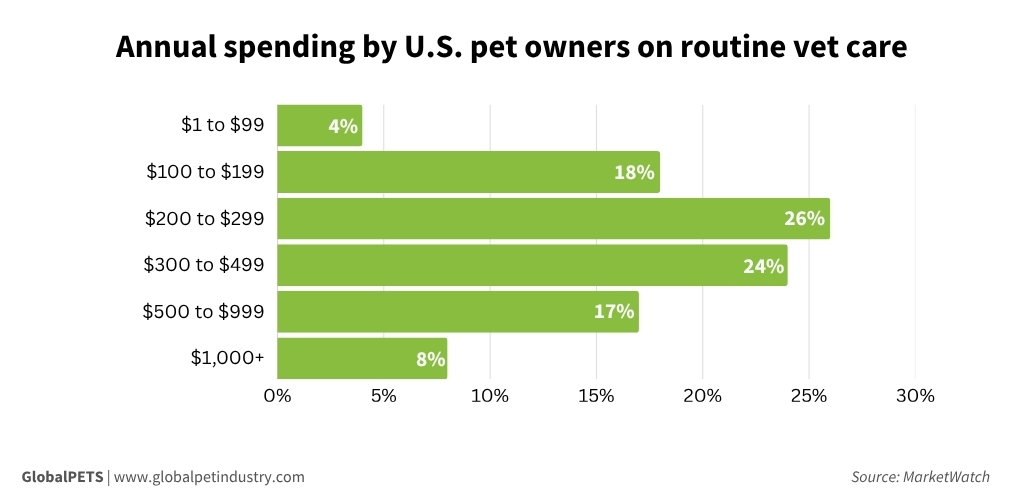
The majority of pet owners (79%) reported spending the most on vet bills for routine care, such as vaccinations, physical exams, and bloodwork, followed by emergency care (17%). Notably, 26% of pet owners spend $200 (€184) to $299 (€275) on routine care.
In addition, 52% of respondents say they have savings set aside specifically for unexpected pet care costs. Of those, a majority (67%) are between 18 and 35 years old, a mix of Gen Z and Millennials.
When it comes to insurance premiums, 32% reported paying $21 (€19) to $40 (€37) per month, making it the most common price range. The second-most popular range was $41 (€38) to $60 (€55) for roughly 28% of respondents. Only 4% of pet owners pay over $100 (€92+) per month for coverage.
Common insurance claim struggles
A third (33%) of respondents made a pet insurance claim within the last year, with 57% filing a single claim and 43% filing 2 claims.
While 82% of respondents had no issues with their provider during the claims process, 63% experienced a long waiting period for reimbursement, making it the most common frustration among pet owners.
Other frequent issues include lengthy claims reviews (53%) and outright claim denials (48%).
The most common reasons for denial were pre-existing conditions (28%), claims filed during the policy waiting period (28%) and lack of documentation, such as past medical records (17%).
Additional reasons included reaching the plan’s annual limit (14%) and other factors, such as the service not being covered under the policy (14%).
MarketWatch Guides surveyed 1,000 pet owners on 5 February 2025 using market research player Pollfish. Approximately 74% of the survey respondents were dog owners, while 25% had cats.
Share this story:
One click prioritizes GlobalPETS in your search results and AI answers.