Oceania: Pet owners reveal top pet care priorities

New data highlights major considerations across nutrition, health, sustainability and technology.
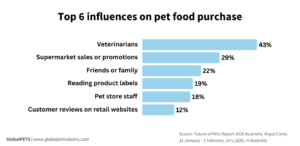
Veterinarians play the biggest role in pet food purchasing decisions in Australia, with 43% of pet owners citing them as an influence on their product choices, according to the Royal Canin Future of Pets Report 2026 Australia. The share is 5 percentage points (p.p.) higher than in New Zealand.
Meanwhile, 29% of respondents in Australia say supermarket sales or promotions influence their purchasing decisions, 7 p.p. lower than in New Zealand, reflecting price sensitivity amid cost-of-living pressures.
Over a fifth (22%) are also influenced by friends or family, followed by product labels (19%), pet store staff (18%) and customer reviews on retail websites (12%).
The report is based on 3 surveys conducted between January and February, involving 1,629 pet owners in Australia, 1,033 in New Zealand and 105 veterinary professionals.
Preferences
Meeting their pet’s nutritional needs is the top consideration when buying pet food (48%). Ingredients and price follow, each cited by 46% of respondents. By contrast, fewer respondents in New Zealand (42%) prioritize ingredients, while a slightly higher share (46%) consider price.
A pet’s preferences also influence purchasing decisions, with 42% buying food based on their dog or cat’s preferred flavor or taste, while 31% consider their pet’s preferred texture. Meanwhile, 30% prioritize locally made products.
Interest in environmental sustainability is high, with 53% of respondents in Australia considering it important when choosing pet products or services, compared with 45% in New Zealand.
Health priorities
While 78% of respondents in Australia and 74% in New Zealand are concerned about veterinary care becoming unaffordable, around 7 in 10 respondents do not have pet insurance.
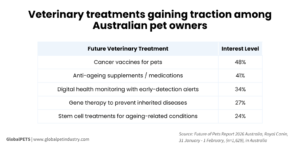
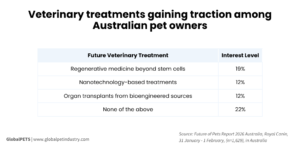
Longevity is a key focus for pet parents, with strong interest in cancer vaccines and anti-aging supplements.
Technology adoption
Approximately 7 in 10 respondents in both countries show interest in AI-powered health monitoring that can detect pet illness early. In addition, 66% of Australians and 64% of New Zealanders are interested in apps that translate their pets’ vocalizations and body language.
Smart collars with 24/7 health tracking are also attracting attention, with 45% in Australia and 69% in New Zealand showing interest. Adoption, however, remains low, with only 12% of respondents in Australia using GPS collars and 18% using pet cameras.
54% of respondents in Australia and 69% in New Zealand are also interested in telehealth consultations. However, 86% of veterinarians believe that fewer than one-quarter of their consultations could be safely handled via telehealth.
Ethical considerations
Approximately 67% of respondents in Australia and more than half (54%) in New Zealand consider ethical ingredient sourcing to be important. Around a third of pet owners in both countries share the same sentiment when it comes to the carbon footprint of their pet supplies.
In terms of pet longevity, 92% of veterinarians believe there should be limits on life-extending interventions when quality of life is poor. According to Royal Canin, this creates a potential ethical tension between owners willing to spend “without limits” for pet longevity and veterinarians prioritizing welfare over lifespan extension.
Meanwhile, 65% of respondents in Australia and 57% in New Zealand are concerned about breeding practices and genetic health, reflecting increasing intolerance for practices that prioritize physical appearance or profit over a pet’s lifelong well-being.
Pet adoption rates decline
Data from Australia’s pet adoption platform PetRescue shows that the monthly adoption rate for pets listed through its system reached an all-time low in April, falling more than 40 percentage points in 6 months from a sustained rate of over 90% to below 50%.
According to the organization, the decline is likely driven by cost-of-living pressures, which are increasing stray intake and surrender requests, alongside lower demand for adoption and rescue animals, as well as limited intake capacity across shelters.
For surrendered pets, the 2 leading reasons are “moving and relocation” and “unsuitable accommodation,” pointing to housing pressures as a key driver. Between 2020 and 2026, 4,664 Australians have surrendered pets through PetRescue’s Home2Home program.
Share this story:
One click prioritizes GlobalPETS in your search results and AI answers.