PetStore Conad grows faster than parent supermarket group in 2025
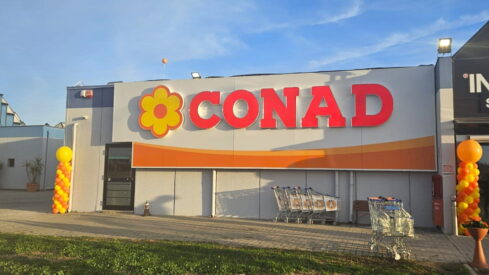
The Italian player plans to expand private-label range and increase store network.
The pet business of Italian retail chain Conad closed 2025 with a turnover of €160 million ($185.8M). This is up from €140 million ($152M) in 2024, representing a 15.7% increase over the year.
This growth outpaces that of the entire Conad group, which reported a 4.43% rise in revenue, reaching €21.8 billion ($25.5B).
Vincenzo Francioso, Manager at PetStore Conad, celebrated the achievement, especially during a period of “slowing consumption” and characterized by a “clear contraction” in volumes.
Market share and store expansion
The Italian supermarket chain says that their pet business currently has a share of approximately 7% to 8% of the specialized channel. The company also highlighted the performance of its new urban format, which grew 27.1% last year.
Currently, PetStore has a strong presence in Central and Southern Italy, where some stores exceed €1 million ($1.1M) in turnover.
PetStore Conad opened 25 new stores in 2025, bringing its total nationwide to 188. This expansion is a considerable leap from the first 2 years since its establishment, in 2016, when only 18 locations were opened.
“The PetStore benefits from supermarket traffic, but the reverse is also true: some customers come for the pet store and spend money in the supermarket [after],” Francioso adds.
Meeting customer demands
Since its launch, PetStore Conad has claimed to be the only grocery chain with dedicated pet store managers in its stores.
“Our store owners hear directly from families who shop for both human and pet products in our supermarkets. This feedback reaches our offices much faster than it does for our competitors,” says Francioso.
According to the manager, associates and cooperatives requested a channel to meet customer needs that supermarkets alone could not satisfy. “This led us to create a dedicated brand for this channel, offering higher-quality products and a wider assortment of accessories,” he adds.
Many of these products are hard to find in supermarkets due to space limitations and limited staff knowledge. To bridge this gap, Conad provides specialised staff trained through the PetStore Academy to offer high-value advice in each store.
“We have people, we have the assortment and we have around 30,000 products in our catalogue that aren’t available in supermarkets. While supermarkets carry an average of 5,000 products, pet stores can select from the full 30,000 references.”
Growing private label
Conad also views pet private-label products as a strong business model. “We have three [tiers] in grocery: entry-level, mainstream, and premium. But in the pet store, even the grocery premium brand is considered entry-level because [although] the quality is good, the price is very low,” Francioso notes.
This competitive pricing is driven by lower grocery margins than pet store margins. Because the same pet products are sold on supermarket shelves, prices must remain aligned, keeping margins low.
“For this reason, the private label range is very limited for a specialized channel because we [only] have around 80 to 100 products,” he adds.
Over the next 2 years, PetStore Conad expects to expand the range beyond the supermarket label to introduce more products in the pet store. “When I work on a private label [brand], in my mind I have around 400 products, because a specialized channel needs a lot of products.”
The own-brand segment performed well within the overall group. According to the company, it reported revenue of €6.5 billion ($7.6B) in 2025, up 5.7% in value and a 34.1% share of the total private label supermarket channel.
Share this story:
