Protix and Tyson Foods halt investment in US insect facility
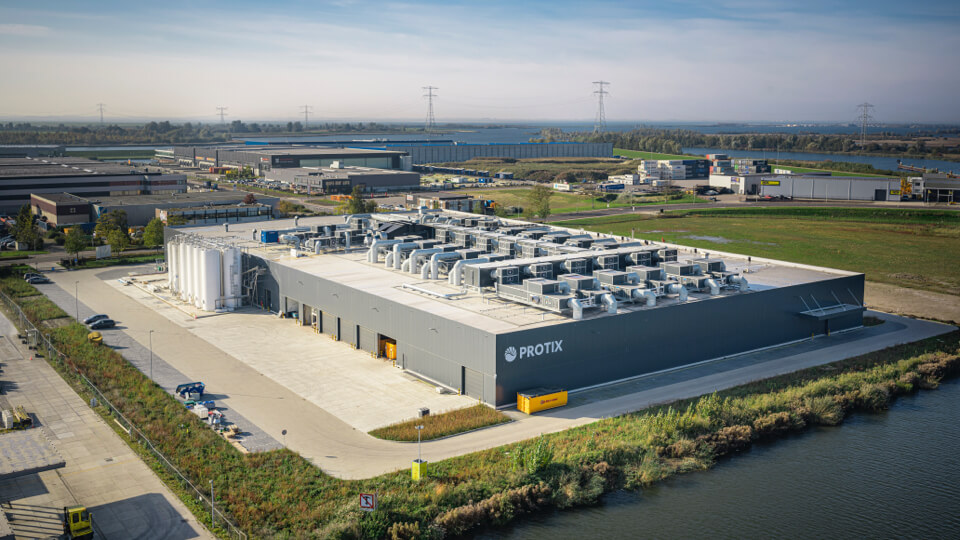
The Dutch firm shifts its focus to Southeast Asia, aiming to lower costs and benefit from a more favorable regulatory environment.
Protix is refocusing its investment strategy toward Asia, as cost and regulatory pressures weigh on expansion plans in Europe and North America.
Protix’s CEO has confirmed that the company’s plan to build a large-scale facility in Nebraska with its partner and investor, Tyson Foods, has been paused. In an interview with AgFunderNews, Maiko van der Meer notes that the company sees more immediate opportunities in Southeast Asia.
GlobalPETS reached out to Protix for comment, but the company declined to provide additional details. Tyson Foods did not respond to our query.
€55 million investment
In 2023, US-based Tyson Foods invested €55 million ($58.2 million) in Protix to support the Dutch firm’s global expansion and research and development (R&D) efforts.
Both companies had also planned a joint venture to build and operate a low-footprint insect-ingredient facility with the capacity to produce up to 70,000 tons of live-larvae equivalent (LLE) annually.
The facility would be capable of converting 250,000 metric tons of waste into high-quality nutritional products, upcycling Tyson Foods’ feedstock and food manufacturing byproducts into insect proteins and lipids for the pet food, aquaculture and livestock sectors.
Shift to Southeast Asia
Last year, the company secured a €1 million ($1.1M) investment from Invest International, a Dutch government-backed development financier, to explore a new South Korea facility using black soldier flies (BSF) to convert food waste into feed for pets, aquaculture and livestock.
According to the CEO, Protix recently signed a Memorandum of Understanding (MoU) with Reco, a post-consumer waste collection company in the country, to start a joint venture.
Van der Meer says that production in Southeast Asia is “much more cost-effective,” citing lower energy, land, construction and labor costs. He also notes that regulatory constraints are less stringent compared to Europe.
Protix is now planning to build a second production facility in the region – potentially in Thailand, Malaysia, Vietnam or Indonesia – through a joint venture with a local partner that has access to feedstock.
In the interview with AgFunderNews, van der Meer says that this model would allow the company to leverage its expertise, intellectual property, operational capabilities and genetics, while enabling the joint venture to secure additional external funding for the facility.
Previous setbacks
Other players in the insect market experienced challenges last year. French insect firm Ÿnsect was ordered by the commercial court of Évry, south of Paris, to liquidate its assets.
Meanwhile, Paris-headquartered Innovafeed suspended operations at its US pilot plant in August 2025, just 18 months after opening. The company received an $11.7 million (€11M) grant from the United States Department of Agriculture (USDA) to support domestic organic fertilizer production and regenerative agriculture.
“The temporary pause of Innovafeed’s US pilot plant reflects a disciplined approach to scaling operations and capital allocation. Innovafeed, together with our partner ADM, continues to prepare the next phase of its US development, aligned with long-term industrial ambitions and market demand,” the company tells GlobalPETS.
Funding and expansions
Despite some setbacks, the global insect protein market gained traction last year, supported by expansions, trade developments and fresh investments.
For instance, French insect producer nextProtein raised €18 million ($19.8M) in a Series B round to support the construction of a second production facility in Tunisia. Another French player, Agronutris, secured €10 million ($10.6M) to support its Rethel plant in the Ardennes region.
In Central Europe, Poland-based Proteine Resources received €9.5 million ($8.2M) to scale insect protein production, while Hungary’s Agroloop announced plans to expand domestically or elsewhere in the region to meet growing demand.
In the Nordics, Finnish biotech startup Volare closed a €26 million ($29M) funding round for its industrial-scale insect protein facility, Volare 01.
India is also emerging as a key insect market in South Asia. In May last year, Delhi-based GreenGrahi raised ₹23 crore ($3.8M/€3.3M) in seed funding to support its insect farming operations. Meanwhile, Bengaluru-based Loopworm secured certification to export its silkworm pupae-derived products to Europe.
Share this story: