Regulators worldwide move to open restaurant doors to pets
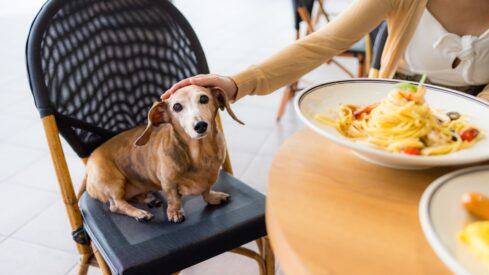
Hong Kong, Chicago, Korea, Quebec, and Italy are introducing or expanding policies that allow pets in dining spaces.
More food and beverage establishments are opening their doors to pets as the trend of pet humanization continues to drive spending. But in many jurisdictions, hygiene concerns remain the main barrier to fully opening restaurants to companion animals.
This year, at least 4 states and countries have passed legislation surrounding this topic. See details below.
Hong Kong
In its annual policy address early in September, the Hong Kong Special Administrative Region Chief Executive, John Lee, announced that pet dogs will soon be allowed inside restaurants under a new pet licensing scheme.
Restaurant license renewals will be tied to the pet permit, eliminating the need for a separate renewal process. Current rules requiring dogs over 20 kilograms to be leashed in public will remain in place, but there are no plans to restrict pet size under the new policy.
“Government statistics show that more than 240,000 households in Hong Kong keep cats and dogs as pets. Together, they number more than 400,000 and generate a huge consumption market, including food and products, healthcare, insurance, grooming, training and more,” says Lee.
“Clear signage will be posted by participating restaurants so customers know that dogs are welcome,” he adds, noting that the policy will open new business opportunities for the food and beverage sector.
Chicago
In the US, Chicago proposed an ordinance to the city council that would allow dogs inside restaurants, at the owners’ discretion.
Dogs have only been permitted in outdoor dining areas since 2019. Under the proposal, 1 dog per table would be allowed inside.
Additional requirements include proof of rabies vaccination, constant leashing and a prohibition on serving food or table scraps to dogs, though water would be permitted.
Employees would not be allowed to pet dogs, and if they do, they will be required to wash their hands before returning to food service.
Restaurants would also need to ensure that furniture and flooring are made of hard surfaces for easier cleaning and that signs are posted at entrances indicating that dogs are allowed.
Korea
South Korea’s Ministry of Food and Drug Safety proposed a revision to the Enforcement Rule of the Food Sanitation Act in April that would permit restaurants to allow companion animals under strict hygiene and safety standards.
The amendment builds on a two-year pilot program launched in 2023 that tested pet-friendly dining at select establishments.
If approved, the law would allow dogs and cats to enter restaurants, provided operators meet specific conditions. Pets must be kept out of kitchens and storage areas through partitions or barriers, and hand sanitizer stations must be installed at entrances.
The revised law would apply only to establishments that voluntarily adopt the designated facility and operational standards.
Restaurants would also be required to display clear signage outside the premises and post notices inside reminding patrons that pets must remain under control. Establishments must inform customers that unvaccinated animals are not permitted and provide facilities such as pet chairs or leash hooks.
To minimize risks of contamination, all food on display must be covered, and restaurants must provide waste bins designated for pet feces. Businesses that fail to comply could face penalties, including suspension or corrective orders.
Quebec
Quebec amended Bill 85 in March to allow pet dogs on terraces or outdoor public service areas, if operators grant authorization. The law took effect in the summer.
According to the Quebec Restaurant Association, 65% of restaurants that responded to an internal survey allowed dogs on their patios this season. Of those, 90% said the experience was positive. Nearly three-quarters reported no issues at all.
However, some problems were reported: 12% of restaurants said some pet owners ignored the rules, 10% said some patrons disliked seeing dogs, and 4% said some animals misbehaved.
Among the 35% of restaurants that chose not to allow dogs, more than half reported no problems. Some, however, said they faced customer frustration.
Looking ahead, 6 out of 10 restaurateurs in the Canadian city said they will allow dogs again next year, and 40% said they will keep their terraces pet-free, a slight drop from earlier in the season.
Italy
A recent survey by Reporter Gourmet shows that nearly 40% of Italians bring their dogs or cats to restaurants. The findings highlight Italy’s strong pet culture but also reveal a split in public opinion.
While many owners view dining with their pets as an extension of family life, others remain concerned about hygiene and the comfort of non-pet-owning patrons.
Restaurant operators are divided as well: some have adapted with pet-friendly menus and outdoor seating areas, while others continue to enforce no-pet policies in line with existing hygiene regulations.
Larger cities such as Milan and Rome tend to be more open to the concept, while smaller towns often maintain stricter rules.
The study recommends clearer national guidelines to help restaurants balance inclusivity with food safety standards.
Share this story:
One click prioritizes GlobalPETS in your search results and AI answers.