Rethinking bentonite cat litter: how sodium clays are setting a new standard
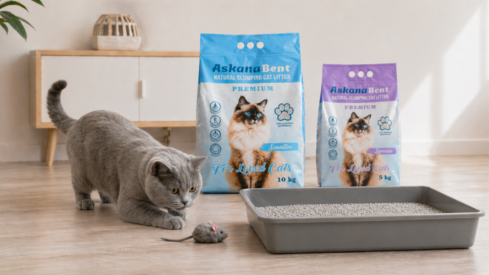
Not all bentonites perform alike – and the difference is reshaping the cat litter category.
In today’s pet care market, it is no longer enough to label a product simply as “bentonite.” As the category matures, professional buyers are recognizing a more nuanced reality: not all bentonites are the same.
Behind a seemingly uniform raw material lies a wide range of mineral compositions and performance characteristics – differences that ultimately define how a product performs in everyday use.
For retailers and private label manufacturers, these differences are no longer theoretical. They directly impact product efficiency, customer satisfaction and repeat sales. Materials that may appear similar at first glance can behave very differently in the consumer’s home. And this is where expectations are either met or quietly lost.
While lighter clays are often associated with visual cleanliness, professional buyers increasingly recognize that color is not a reliable indicator of performance. What matters far more is mineral composition – particularly the concentration of montmorillonite – and the density of the material itself.
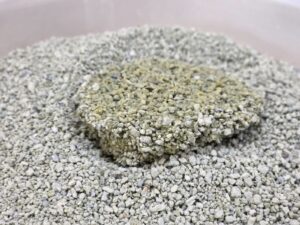
Composition over color
High-quality sodium-based gray bentonite, often referred to as “Wyoming-type,” is emerging as a new functional benchmark. With montmorillonite content exceeding 80%, this material delivers high swelling and absorption capacity, ensuring higher efficiency and faster, more stable clumping.
Laboratory tests show absorption levels reaching up to 400%, but the real value is seen in everyday use: lower product consumption, longer usage cycles, and fewer customer complaints. For retailers, this translates into stronger repeat-purchase behavior and more predictable shelf performance.
Efficiency drives margin
Performance is no longer just a technical feature, it is a financial lever. High-absorption litter reduces overall consumption, increasing perceived value for the end consumer and strengthening loyalty over time.
For private label brands, this creates an opportunity to differentiate through performance, not just packaging. In a category where many products look similar on the shelf, functionality becomes the key driver of long-term sales.
Stability as advantage
At the same time, sourcing has become a strategic decision. Long and unstable supply chains have increased costs and uncertainty across the industry.
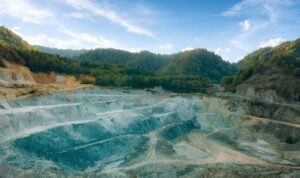
Askana Terra addresses this challenge through its production hub in Georgia, located just 53km from the Port of Poti. With access to over 10 million tons of high-quality raw material and efficient logistics to Europe, the company offers a combination of consistent quality and reliable delivery timelines.
Flexible solutions
For partners, Askana Terra provides both full-scale private label manufacturing and ready-to-market branded products, including the AskanaBent range. This allows retailers to enter or upgrade the category quickly, while maintaining control over positioning, speed to market and margins.
Askana Terra already collaborates with partners in European countries, supporting both private label development and branded product distribution.
Secure 2026-2027 capacity
Askana Terra is currently opening production slots for the second half of 2026-2027. Early engagement allows for full customization – from granulometry and performance parameters to packaging and branding.
In a market where performance defines loyalty and supply defines stability, the right material choice is no longer optional. It is strategic.
Interzoo 2026
If you’re attending Interzoo, you can see the product at Hall 2, Booth 114.
Share this story:
One click prioritizes GlobalPETS in your search results and AI answers.