UK: New best-practice guidelines for pet groomers raise the bar
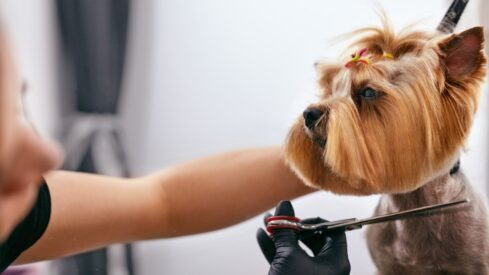
As the market expands globally, the industry is pushing for higher standards in animal welfare, staff training and safety.
Professional pet grooming is under growing scrutiny in the UK as industry bodies step up efforts to ensure animal welfare and professional accountability.
The Canine and Feline Sector Group (CFSG) in partnership with the Pet Industry Federation (PIF), published earlier in June the so-called Best Practice Guidelines for Dog and Cat Groomers, outlining a broad framework that covers everything from handling and hygiene to legal obligations and environmental impact.
While pet grooming remains largely unregulated in the UK in terms of licensing, that doesn’t exempt professionals from their responsibilities. Under the Animal Welfare Act 2006, groomers are legally defined as temporary keepers of pets in their care, meaning they can be held criminally liable for neglect or harm, even if it’s unintentional.
Regulatory path
The CFSG document highlights key welfare needs, from suitable environments to appropriate socialization and how these translate into day-to-day grooming operations.
This includes everything from safe holding areas and clean equipment to stress reduction techniques for anxious pets.
Importantly, the report also notes that failing to provide basic needs, such as clean water, secure enclosures and comfort breaks, could be a breach of the law, providing a clear warning to businesses operating in the industry.
Grooming salons must also consider transport safety, waste management and emergency planning. From first-aid kits and incident logs to clean vehicle interiors and appropriately sized pet crates, professional standards extend well beyond the grooming table.
The report encourages salons to establish clear policies on everything from cancellation fees to procedures for hot weather. Lone workers are advised to maintain safety precautions, such as locking doors and keeping mobile phones nearby.
Pet comfort
The guidelines place a strong emphasis on individual care, requiring groomers to assess each pet’s temperament, health, age and medical history before commencing treatment. Dogs or cats that show signs of anxiety or aggression may require special handling, or no grooming at all, if they pose a risk.
The goal is to reduce stress and provide a positive grooming experience, particularly for nervous or first-time pets. Owners are encouraged to leave familiar items, such as towels with their scent, to help ease their pet’s anxiety. Written consent is required for procedures such as dematting or full clips.
Pets should not be left unattended. Drying methods must be controlled and safe. No invasive procedures (such as anal gland expression or tooth scaling) are permitted unless under the direction of a veterinarian.
Cat grooming, while growing in popularity, is highlighted as a distinctly different process from that of dogs.
Felines must be housed separately, ideally in different enclosures, and should be handled in calm, controlled environments. The use of loud equipment or scented products is discouraged, and grooming may need to be kept brief if the cat does not adjust well.
For groomers, the emphasis is on competence and care. The report recommends a minimum Level 2 OFQUAL qualification, with additional training in breed-specific grooming, handling of elderly or disabled animals, and pet first aid. Continuing professional development (CPD) is also encouraged.
Industry commitment
PFI’s CEO, Nigel Baker, says the new set of guidelines shows the pet grooming sector’s commitment to continuous improvement and professional excellence.
“We’re particularly pleased that the guidelines address the individual needs of different pets, recognizing that a nervous rescue dog requires very different handling from a show-trained poodle and that cats have completely different requirements from dogs,” he adds.
Baker encourages all groomers to adopt these guidelines and help raise the bar across the entire sector.
Growing industry
The global pet grooming services market is projected to reach $7.6 billion (€6.5B) in 2025 and is anticipated to grow at a compound annual growth rate of 7.5% through 2032, according to Coherent Market Insights.
The growth is part of the humanization of pets trend, which increasingly gives them status as fully-fledged family members with a strong focus on their health, well-being and appearance.
While animal welfare legislation is widespread, specific regulations for pet groomers remain patchy globally, with some notable developments.
Last year, the Regional Council of Lombardy, the legislative assembly of the northern Italian region, introduced a bill aimed at regulating the pet grooming industry in a bid to ensure high standards of pet protection.
Effective mid-2024, Malta introduced mandatory standards for pet groomers, sitters, and boarders, which require registration with the Animal Welfare Directorate and qualified staff, at least one of whom must be trained in Animal First Aid, record-keeping, vaccinations and inspection protocols.
While in Australia, the New South Wales government published an Animal Welfare Code for pet grooming establishments.
Elsewhere, specific regulations are more likely to focus on products in conjunction with animal welfare laws.
Share this story: