UK pet owners balance financial pressures with responsible care

Survey shows fewer pet owners cutting back on essentials, but many remain worried about expenses.
Pet ownership remains high in the UK, with nearly 8 in 10 children and more than half of adults owning a pet, according to the RSPCA. As a result, many are actively seeking advice on how best to care for their animals.
Where they look for advice
In this year’s findings from the RSPCA’s Animal Kindness Index, based on surveys conducted by YouGov, the organization reported that 61% of pet owners continue to view veterinarians as their top source of advice on pet care.
However, with most pet owners belonging to younger generations, social media has reached an all-time high as a source of advice (14%), particularly among adults aged 18-24 (28%) and 25-34 (29%).
Among those aged 45-54, nearly half (47%) rely on the internet more broadly, underscoring generational differences.
Vet bills are a consistent concern
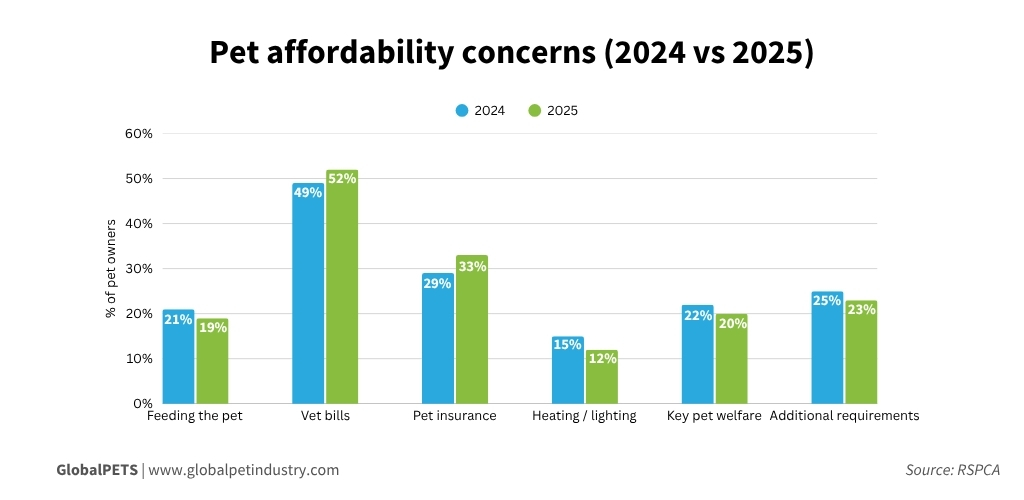
While vets remain the top source of pet care advice, pet owners are increasingly worried about affording vet bills (52%) and pet insurance (33%) compared to last year.
This is particularly observed in younger generations, as 60% of those aged 16-17 own a pet, and this is the age group most worried about affording pet food (32%), insurance (46%) and heating or lighting enclosures (23%).
In addition, 60% of those aged 45-54 still cite affording vet bills as their main financial worry as pet owners, consistent with previous years.
Meanwhile, those 18-24 are most concerned about covering essential welfare needs (34%) and additional requirements (40%) for their pets.
Other costs weigh
Other pet care costs that UK pet owners are concerned about include paying for bedding and grooming (20%), food (19%) and training (23%). The RSPCA notes that these figures indicate a lessening of concern in these segments.
Shift in challenges
Interestingly, the survey revealed that while 4% of pet owners have experienced regret over getting a pet, this feeling is beginning to decline, and financial concerns are no longer the main reason for this regret.
While over 7 in 10 (74%) say pet care is more expensive than a year ago, the share has actually declined over the past 2 years. Residents of the East Midlands feel the pinch the most (85%), while Londoners appear less affected (51%).
“Despite financial worries, responsible pet care is on the rise as 68% now vaccinate their pets annually (up 5% from last year), 71% take them for regular check-ups and 89% are registered with a vet,” says RSPCA.
On the other hand, fewer pet owners have adjusted their behavior in the past 12 months due to financial pressures, with 34% reporting such changes, down from 36% last year.
Among those who made changes, 10% reported buying pet food less often or switching to a cheaper brand; another 10% cut back on their own food or other necessities to care for their pets; 4% stopped going to the vet; and 1% had their pets put to sleep.
Methodology
The 2025 Animal Kindness Index marks the fourth edition of the annual series, produced by the RSPCA, the Scottish SPCA and the Ulster SPCA. The report combines findings from two YouGov surveys: one of children aged 7-15 and another of adults aged 16 and over.
In total, more than 7,000 people were surveyed to capture the UK public’s thoughts, feelings and actions toward animals and animal welfare. YouGov polled 6,272 UK adults and 1,188 children from March to April 2025.
Share this story: