US pet owners struggle to spot parasites, research finds

Low awareness of ticks, mites and allergies persists, even as parasite risks remain a major concern among owners.
Over half (54%) of American pet owners believe they can distinguish between allergy and parasite-related problems in cats and dogs, according to a survey from the veterinary telehealth platform Vetster.
However, when the platform showed the respondents images of common conditions, results pointed otherwise: 72% could not identify a flea-bite rash on a cat, while 60% could not recognize the same condition on a dog.
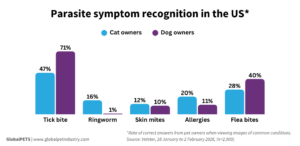
The study, which surveyed 2,000 US pet owners between January and February 2026, also found that only 1% of dog owners correctly identified ringworm in an image.
This gap is notable given that over half (51%) of respondents are concerned about their pets being exposed to parasites, while a further 27% worry about exposure for themselves or their families.
In addition, while nearly 6 in 10 (59%) said they would consult a veterinarian in person when symptoms indicating an allergy or parasite issue appear, 44% said they would search Google before seeking veterinary care.
Cat vs dog owners
Among cat owners, the ability to identify common skin conditions was generally low. While 47% correctly identified a tick bite in an image, recognition of other issues lagged. Only 16% recognized ringworm, 12% identified skin mites and around 1 in 5 (20%) correctly identified allergies.
A similar trend was observed among dog owners. While 71% correctly identified a tick bite, recognition of other conditions remained limited. Around 10% identified skin mites and 11% correctly recognized allergies.
Parasite risks
Data from the German pharmaceutical company Boehringer Ingelheim show that globally, up to 1 in 3 dogs has ticks, while 90% of puppies are affected by roundworm. In the US alone, more than 1.2 million dogs are estimated to be heartworm-positive.
Meanwhile, 1 in 4 pet owners believe parasites live only on pets and not in the home environment, which can lead to infections going undetected. These findings are based on a global survey of 6,500 pet owners in January 2026.
Among those surveyed, 43% reported that their pet had experienced a parasite infection, with 1 in 5 cases occurring within the past year.
However, 27% of respondents said they are only slightly familiar with parasite risks or not familiar at all. Only 20% view parasites as a serious threat.
The research also found that one-third of pet owners felt anxious when their pet was infected with parasites, while 25% said it disrupted their daily lives. For pets, 36% showed behavioral changes, while 46% experienced discomfort.
Share this story:
One click prioritizes GlobalPETS in your search results and AI answers.