Breaking the mold in feline taste testing
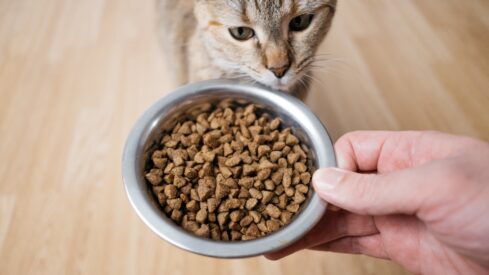
In-home trials can capture real-world feeding behavior while incorporating valuable owner observations.
One scientific study set out to improve the precision and relevance of cat food palatability testing by developing an in-home protocol. The results demonstrate that companies might achieve useful palatability data with just a single test day, saving time and costs while minimizing dropout bias.
Importance of the taste test
Palatability is arguably one of the most important determinants of a pet food’s market success, which is why businesses routinely test it. When testing palatability of cat food, however, traditional ‘expert panel’ settings (e.g. research facilities or kennel-based trials) do not necessarily reflect the real-world diversity of household cats.
Standardized palatability test procedures can improve effectiveness and reliability. Therefore, a 2025 study from Wageningen University & Research (WUR) in the Netherlands, published in Applied Animal Behaviour Science, generated data on key protocol aspects to allow reliable in-home determination of cat food palatability.
Nature of the research
To dive into variability across days and between animals, and to investigate the required protocol length and sample size, 62 cats participated in either a one-bowl or two-bowl test. Four commercial dry extruded cat food diets were used, paired to create either a high contrast or a low contrast in palatability (based on differences in ingredient quality, protein and fat content, and level and type of palatability enhancers).
Cats and their owners got familiarized with the test setup during one day prior to the testing period. That time span was either 10 days or 20 days in total, depending on whether the cat was participating in the one-bowl or two-bowl test. Food leftovers were collected by the researchers, and food intake and food intake ratios were determined each day. The owners also shared their behavioral observations.
No adaptation period needed
It was expected that food consumption by cats might fluctuate over time due to neophobia, neophilia or the effect of learning. Surprisingly, however, this study showed – in both the one-bowl and two-bowl test – that no adaptation period was necessary before taking measurements.
In fact, there were no significant differences in the measurements from both the one-bowl test and the two-bowl test during the testing period, regardless of the different foods and food contrasts.
This suggests that the cats were not subject to neophobia or neophilia and were stable in their food intake responses. This could largely be due to the familiarization day prior to the start of the test, as unfamiliar conditions might promote neophobia and deviant food intakes.
Test outcomes on the first day were therefore predictive of the outcomes on the last day of the testing period.
One day of testing suffices
Since the stable food intake and food intake ratios suggested that one day of testing is sufficient for a reliable result, the researchers used bootstrap simulations to model if multiple testing days would increase precision.
The results indicated that adding more test days only slightly increased precision (i.e. reduced variability), and added an extra cost because more cats dropped out over time – typically because they rejected the food. Therefore, a more precise result was less accurate, as the test population became less representative during the test.
Sample size matters more than duration
The effect of sample size was also investigated using bootstrap simulations. The larger the sample size, the higher the precision levels of food intake and food ratio measures.
However, increasing the sample size influences precision more than increasing the number of test days. Therefore, the number of test days and the number of animals cannot be used as a direct trade-off.
Research implications for the industry
This study demonstrates that in-home palatability testing using privately owned cats provides market- relevant insights. The procedure considers real-life variation impacting both animal measures and owner feedback.
To obtain both accurate and precise results, companies should carefully design the test population. Prioritizing a larger, variable population over longer test durations yields more robust palatability data while minimizing dropout bias.
Providing that the test population is representative, this approach can produce efficient, consumer-relevant testing for cat food. For pet industry players, the study shows that it could be possible for them to achieve useful palatability data with just a single test day, saving time and costs.
Share this story:
One click prioritizes GlobalPETS in your search results and AI answers.