New store equation: The changing economics of pet retail expansion
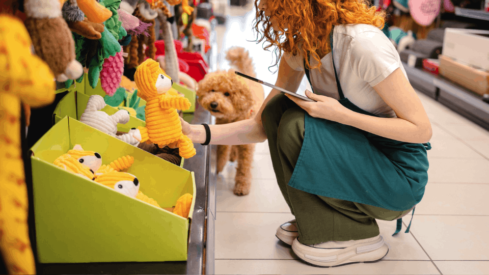
High construction costs, limited availability of suitable locations and tougher lease negotiations are prompting pet retailers to rethink how and where they grow.
Retailers in the pet industry are facing mounting pressure when expanding their store networks, as rising construction costs, expensive rents and limited availability of suitable locations make new openings more difficult to justify financially.
Against this backdrop, retailers are exploring alternative financing arrangements and more flexible store formats to control investment costs, improve returns and sustain expansion.
Sale-leaseback model
As retailers look for ways to finance expansion while keeping investment costs under control, sale-leaseback agreements offer one option. The arrangement allows a company to sell a property to an investor and lease it back, releasing capital tied up in real estate while retaining the right to use the premises.
Tractor Supply’s CEO Hal Lawton said in a recent conference that the company’s new locations are generating return on invested capital (ROIC) of between 23% and 25%, a level he said is similar to what the company achieved 10 to 15 years ago.
“Our new stores are profitable in the first year, cash flow positive in kind of somewhere between year 2 and year 3,” Lawton says. “This maturity curve benefit still significantly exceeds the impact of cannibalization as well as competitive impact.”
The rural lifestyle retailer is also using real estate strategies to improve those returns. According to the CEO, the company is expanding the use of sale-leaseback agreements. This means that it constructs the building, sells it to the financial operator and immediately leases it back for usage.
According to the CEO, this arrangement allows the company to recover the invested money. “We’re using our balance sheet to fund that 18-month development cycle and we’re paying the developer a flat fee. So we’re saving 10% right there in the cost of building our stores.”
Can it be widespread?
Although advantageous, strategies such as sale-leasebacks are not available to every retailer. According to James Cook, Director of Retail Research for Americas at JLL, a real estate services company, the model works mainly for large chains developing standalone properties.
“That is a popular strategy with certain chains, but in the pet world, I can’t think of anybody other than Tractor Supply that’s really doing it,” Cook tells GlobalPETS.
But most large chains in the US operate differently. “PetSmart, Pet Valu, Petco and Pet Supplies Plus don’t work with the sale-leaseback model because they rent spaces within shopping malls and in existing locations,” Cook explains, since they seek places with high consumer traffic.
Higher costs
The cost of most things involved with a store are on the rise, Cook says, mentioning energy prices, retail rents, cost of labor, construction materials and even goods. Commercial real estate services and investment firm CBRE also adds tariffs and labour shortages to the problem.
Data from the US Bureau of Labor Statistics (BLS) helps illustrate. The Producer Price Index for final construction rose 0.1% between May and June 2026 and 3.5% year-over-year (YoY). And the compensation costs for civilian workers increased 0.9% in Q2 compared with Q1.
Retail real estate availability is also creating challenges. In the US, JLL’s data shows retail vacancy rates remain low, limiting options for companies looking for suitable locations. “Availability in Q2, the latest numbers that we have tracked, it’s down to 4.4%,” Cook says.
Changing economics of retail real estate
More recent data from Colliers puts the US retail vacancy rate at 4.3% in Q3 2026. The firm also reported that average asking rents reached $26.20 per square foot, up 0.7% quarter over quarter. Meanwhile, net absorption reached 10.5 million square feet, its highest quarterly total since 2023, highlighting continued demand for retail space.
“Lease negotiations are also becoming more complex. Retailers are increasingly discussing who pays for construction costs, tenant improvement allowances (TIA) and other investments needed before opening a store,” adds Ken Bleznak, Executive Vice President at CBRE.
He highlights that tenants who previously did not request TIAs are now making it a deal point. The mechanism is a pre-negotiated amount of money provided by the landlord or owner to the renter to cover part of the construction costs needed to adapt the leased space.
Other rising trends observed by Bleznak are higher return expectations from landlords, negotiations increasingly focus on restrictive covenants against competition, and co-tenancy clauses requiring a percentage of the project to be occupied.
CBRE’s Q3 2026 data also highlights the tight US retail market. Average asking rents reached $24.89 per square foot, up 2.5% year over year, while net absorption totaled 9.6 million square feet, its highest quarterly level since Q4 2025.
Choosing the right location
Retailers are focusing more on selecting locations that can deliver long-term value. “We look for highly visible sites that are easy to access and offer convenient parking,” Alexander Amicucci, Founder and CEO of Italy-based Zoopark, tells GlobalPETS.
The company also prefers to open in markets where it already operates to create a dense network of stores, but financial sustainability is as important. “We carefully evaluate the relationship between rental costs, local market potential and expected revenue,” the CEO adds.
Because the company invests its own resources in expansion, Amicucci says that every new store must generate a return on investment within a reasonable timeframe. “A new store generally reaches stable sales levels within approximately 6 months. This depends on several factors, including the quality of the location, local brand awareness and the team’s ability to quickly build trust with customers,” he adds.
Ukrainian pet store chain MasterZoo follows a similar approach by evaluating size and profile of the local population, accessibility, foot traffic, availability of quality retail space, and the competitive landscape.
“We also consider the area’s long-term development potential, changes in residential construction, and broader consumer trends,” says company COO Alina Kolesnikova.
The company estimates that new stores typically take around 12 months to reach mature sales levels, although this varies depending on the market. Smaller-format stores, for example, require lower initial investment and typically achieve payback faster, the COO says.
Local challenges
According to Kolesnikova, the main costs involved in opening a new MasterZoo pet store include preparing and renovating the premises, retail equipment, initial inventory, logistics, and team training.
“During the full-scale war, however, energy independence has become an additional and increasingly important expense due to attacks on energy infrastructure and power outages,” she adds.
The COO explains that during the winter of 2026, the group purchased 14 generators and installed 15 inverter systems with batteries for its existing pet stores.
“We also spent an additional €4,000 per cold month on generator fuel and maintenance. We ensure that every new store has a backup power solution in place from the moment it opens,” she explains. In the first half of 2026, the group inaugurated 9 new locations.
New formats
Even with the difficulties described, retailers have innovated formats, including smaller stores, temporary concepts and new ways to combine retail sales and the community.
For Ken Bleznak, Executive Vice President at CBRE, there is a shift towards more creative stores, designs, sizes, and formats. These include shop-in-shop concepts, such as Banfield Pet Hospital locations within PetSmart stores and Sephora outlets inside Kohl’s department stores.
Cook adds that both value retail and premium pet boutiques are among the winners in the US expansion, to supply the K-shaped demand movement that the economy has taken in recent years, with more consumers trading either up or down in purchases.
Recent developments in Europe further illustrate how retailers are adapting their physical networks. Fressnapf | Maxi Zoo is expanding its urban store concept with locations designed for smaller city spaces.
Shop-in-shop concepts are also providing alternative expansion opportunities in Europe. In Germany, ZooRoyal is growing both its standalone store network and its shop-in-shop presence within grocery and DIY retailers, allowing it to reach customers through existing retail infrastructure.
Profitable expansion is no longer just about how many stores a retailer can open, but how effectively it manages the cost, format and location of each one.
Share this story:
One click prioritizes GlobalPETS in your search results and AI answers.