China opens gateway for foreign pet food brands
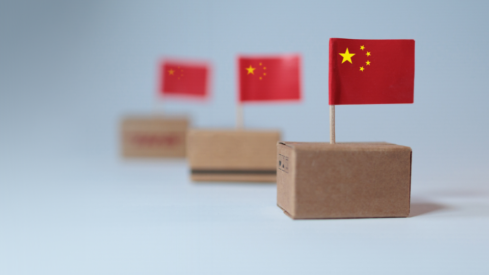
New rules allow international manufacturers to test demand with less red tape, but long-term success will require broader distribution strategies.
Regulations introduced for pet food sales in June 2026 have created fresh opportunities for companies seeking to expand in the Chinese market. The Cross-Border E-Commerce (CBEC) exemption applies to pet food and supplements, allowing products to be listed on major online marketplaces and offered to shoppers in China.
E-commerce opportunities
The CBEC exemption provides an easier route to market, as domestic imports typically require local packaging, labeling and regulatory approvals, including certifications from the General Administration of Customs of China, as well as the Ministry of Agriculture and Rural Affairs.
Experts point out that the CBEC has been a successful channel for human products for more than a decade, with foreign brands now accounting for more than half of the items sold online. The same marketing strategy is now being increasingly used for pet products, creating new opportunities for global brands, particularly amid the tariff challenges associated with traditional imports.
Peter McMath, Chief Growth Officer at WPIC, an e-commerce and digital marketing agency focused on Asian markets, says of the CBEC: “This allows international brands to bypass local laws by shipping directly to consumers via Chinese free trade zones and bonded warehouses.”
A learning process
While some ingredients still require additional regulatory review – including whey powder and meat, bone, fish and blood meal – mainstream dry food, functional supplements and freeze-dried products are generally eligible for sale through CBEC, subject to applicable requirements.
Fabio Alves da Silva, co-founder and COO of pet care platform Wagtopia, sees the exemption as a “vital test-and-learn runway for foreign brands looking to validate their products in China”. As he explains to PETS International: “It gives brands the flexibility to test their products, read market reactions, and make far better capital investment choices regarding their long-term portfolio and distribution strategy.”
While the measure is particularly beneficial for brands still testing the Chinese market, companies seeking long-term ‘wins’ will need more than a CBEC-only strategy. Sory Park, Project and Content Manager at the Chinese firm Daxue Consulting, points out that this is because CBEC sales are limited to selected cross-border online platforms, such as Tmall, JD.com and Douyin.
Pet product sales in China are already heavily concentrated online, and WPIC says that this is a limitation when compared with traditional import routes, which allow brands to access a broader mix of offline and online channels. Chinese consumers are capped at ¥5,000 ($747/€651) per transaction and ¥26,000 ($3,882/€3,385) annually across all CBEC purchases.
For Alves, the individual consumer spending limit is, indeed, a challenge. “As an international brand scales up, this consumer ceiling inevitably becomes a bottleneck. Transitioning to a general trade strategy then becomes the optimal path forward, as it unlocks the massive offline market and allows for a true omnichannel presence,” he explains.
Building a CBEC presence
WPIC describes the typical CBEC process as entailing three main steps. It starts with SKU reviews to ensure products and ingredients meet requirements, followed by the selection of the right marketplaces, and then the development of an onboarding strategy tailored to each platform, including storefront set-up and product page optimization.
The main challenges are building consumer trust and generating traffic. As brands rely largely on direct-to-consumer online sales, Park believes that internationally recognized premium brands may benefit the most. However, building awareness in China requires significant investment. Alves’ advice is that “brands must be prepared to pour massive budgets into livestream e-commerce and local influencer seeding”.
Growth categories
Pet supplements, functional health products and other niche premium categories have strong growth potential through CBEC. “Historically, these complex formulas faced a regulatory nightmare. CBEC gives them a massive shortcut to launch without that red tape,” Alves explains. The country’s pet supplements market is believed to have reached $560 million (€488M) in revenue in 2025, growing 22% year on year, compared to 4.1% for the overall pet market.
Looking at the broader human supplements market, WPIC data shows that more than 56% of Chinese consumers buy foreign brands rather than domestic ones. The same preference could create opportunities for international pet brands entering China through CBEC. And according to Park, Chinese brands are known for being more affordable, so while local companies are increasingly recognized for their quality, foreign brands are still often associated with premium quality.
China-US relations
The trade facilitation can help strengthen ties between US producers and Chinese consumers. It comes after a difficult year, as new tariffs and trade barriers have created additional challenges for exporters seeking to maintain access to this market.
A report published in April by the US Department of Agriculture shows that the country remained China’s largest pet food supplier in 2025. But export values had declined by 17% year on year.
US trade association the Pet Food Institute (PFI) describes the decline as a normalization following the 2022 post-Covid boom. According to the PFI: “We’ve seen a back and forth of higher and lower export value to China since then. But demand for US products has been consistent, and expanded outside of the established, first-tier cities like Shanghai and Beijing to the smaller, second- and third-tier cities.”
Strategies for future success
Last year, China approved 477 imported pet food products (including single feed ingredients and feed additives) for entry into the domestic market. This compares to 581 in 2024, according to Daxue Consulting.
Although CBEC creates a more agile and less costly entry point for foreign pet food brands, industry experts agree that long-term success in China will depend on building more efficient omnichannel strategies and attracting local engagement.
Share this story:
One click prioritizes GlobalPETS in your search results and AI answers.