Five years of Brexit: the state of the UK-EU pet food trade
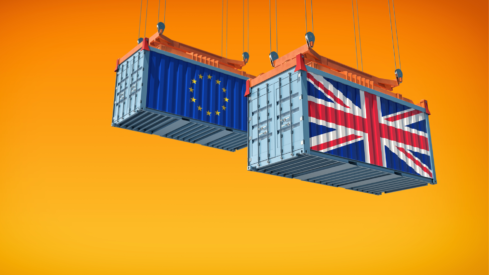
Importing and exporting is still costly and complex for British businesses, but current talks to scrap health certificates and border checks offer a glimmer of hope.
Half a decade since leaving the European Union, UK-based importers and exporters claim that they still bear a high cost burden due to red tape and logistics delays. What is being done to relieve the pressure on traders of some pet-related products?
Familiar set of complaints
Companies exporting animal products – including pet food – from the United Kingdom to the European Union have all voiced similar complaints recently: higher costs due to more stringent checks, longer waiting times at borders and rejections due to bureaucracy.
“Every food order we send into the EU from the UK gets rigorously checked despite the hoops we jump through with veterinary health certificates, specific labeling and other documents, all of which are increasing in cost and complexity,” Chris Keightley, Export Business Unit Controller at pet food manufacturer Pets Choice, tells PETS International.
EHC increases cost burden for exporters
Pet food going from the UK to the EU needs to have an Export Health Certificate (EHC). To receive one, the manufacturer must contact an official vet or inspector to certify its products.
Additionally, British companies need to make sure their import agent has notified the Border Control Post (BCP) – a land-based site where imported goods are checked – in the EU country that their consignment is arriving.
For pet food containing animal byproducts (parts not intended for human consumption), they also need to find specific BCPs that accept this type of food, “as not all BCPs and points of entry accept all goods”, according to the UK government.
In contrast, pet food being exported from the EU to the UK only needs to have an EHC if it is considered risky, says the British pet food industry association UK Pet Food. Low-risk items, such as canned and processed pet food, are exempt from certification.
EHCs must be issued separately for each product category and for each country of origin. As a result, shipments containing various types of pet products manufactured in different countries require multiple certificates. “Our product range splits between three countries, so we need three certificates,” Keightley says.
With an EHC typically costing from £100 ($133/€115) to £200 ($266/€230), this extra requirement since Brexit has considerably increased the cost burden on UK-based traders.
Broader impact on logistics
The extra paperwork and tighter regulations since Brexit can also cause logistics disruptions for exporters. Although Keightley admits it is hard to put a figure on it, he estimates that Pets Choice has suffered over £20,000 ($26,620/€22,970) worth of failed deliveries and lost contracts and clients over the past 12 months.
Other UK-based companies exporting products of animal origin are experiencing a similar impact following Brexit. Toby Ovens, Managing Director of the logistics firm Broughton Transport, was one of the witnesses at a meeting of the Business and Trade Committee of the House of Commons that took place on 16 January to discuss the UK’s trade relationships with the US, India and the EU.
“The introduction of health certificates has had the biggest knock-on impact, resulting in severe delays at BCPs and rejections due to paperwork issues,” Ovens says, pointing to prolonged wait times both at loading points in the UK and at BCPs in the EU. His company’s main business is serving abattoirs exporting to the EU.
“At the loading point, there are frequent delays – waiting for vets, or for paperwork to be done, completed and stamped. This is then sent to the border for approval,” he explained at the meeting. According to him, the worst delay in France lasted for 27 days, which led to additional costs of £16,000 ($21,288/€18,381).
The meeting also heard from Alastair Gunn, Trade Policy Lead at the Road Haulage Association (a trade association representing operators of heavy goods vehicles, coaches and vans) and Julian Walker, Chief Commercial Officer and Regional Director at Associated British Ports (ABP), the operator of 21 ports across the UK.
According to Gunn, the association represents 82% of goods moving around the UK. He told the House of Commons that the situation is posing a threat to companies’ survival. “The sad reality is that, in the last few years, a lot of haulage firms have gone out of business. In 2024, margins were down to about 1.5% or 1.6% from about 2%. We are a low-margin sector,” Gunn stated.
UK importers feeling the pinch
It’s not just exporters who are paying a higher price. British companies that import animals, animal products, plants and plant products are also incurring additional costs. One example cited at the committee meeting is the £12.71 ($17/€14.70) fee charged to trailers passing through any of ABP’s ports.
According to ABP’s Walker, this duty was imposed to “recover both the OpEx and the CapEx costs” resulting from the association having to build four new BCPs in the UK since Brexit. “We are charging the importer, so it will ultimately feed through to the consumer,” he told the committee.
Deadlock on the UK-France border
Both Pets Choice and Broughton Transport cite particular delays and rejections at the French port of Calais, where much of the UK’s trade arrives in continental Europe via the Strait of Dover. For example, Keightley recalls how multiple shipments have been turned around by French Customs due to small matters that had not been reported in the past.
One load destined for Portugal was initially rejected because things were in the wrong box – resulting in thousands of pounds worth of shipping being sent back. “Then the next time we sent it, there was one item that had managed to make its way through that was not for the EU. Rather than taking that single product off, they just rejected it all,” he says.
“In the end, we suspended the agreement with the customer while we set up the third-party logistics (3PL),” adds Keightley. In order to have a smoother supply process, the company opted to partner with a 3PL in Germany to set up a production line and a warehouse.
However, according to a European Commission (EC) spokesperson, goods should be receiving equal treatment in every country, because sanitary and risk-based checks are carried out by Member States’ competent authorities in a “harmonized way” across the bloc.
“Numerically, more controls are naturally carried out at Border Control Posts that receive more consignments. In relation to pet food from the UK, this results in the highest number of checks being carried out by French authorities at Calais,” the spokesperson explains.
EU reinforces control
In December 2025, the EC announced a reinforcement of controls on animals, goods of animal origin (including food of animal origin, animal byproducts and germinal products) and plant products entering the bloc for all exporting countries. “Commissioner for Health and Animal Welfare Olivér Várhelyi set out various measures to strengthen controls at EU borders and in third countries,” the EC says.
Those measures include a 50% increase in the number of audits carried out on non-EU countries programmed for the next two years, a 33% increase in audits of European BCPs, “closer monitoring of non-compliant commodities”, and a dedicated EU Task Force to focus on pesticide residues, food and feed safety, and animal welfare, among other things.
While such measures increase control checks, they do not change any rules already established. “GB-EU exports, including products of animal origin such as pet food, are subject to the same requirement that came into force following the UK’s departure from the EU, as set out in the Trade and Cooperation Agreement,” a spokesperson from the UK government says.
Opportunities for increased collaboration
To handle the “additional administrative complexity” that arose post-Brexit, Emma Gibson, Supply Chain Manager at British pet food manufacturer Burgess Pet Care, says that the company has increased collaboration across its supply chain. “In partnership with our customers and logistics partners, we’ve been able to strengthen our processes and build resilience into our operations to minimize disruption,” Gibson says.
According to her, the company’s close relationships with both UK Pet Food and its European equivalent, FEDIAF, help Burgess Pet Care to not only remain compliant with, but also shape EU regulations for the production and labeling of pet food. “We recently contributed to the updated FEDIAF rabbit nutrition guidelines, for example,” Gibson adds.
“Overall, we continue to see a lot of opportunities in the EU market. The pet food sector there, particularly in markets such as Germany and Scandinavia, is growing,” she concludes.
UK’s attempts to negotiate
The British government is currently negotiating a Sanitary and Phytosanitary (SPS) agreement with the EU, it says, “which will remove the need for an Export Health Certificate and routine checks”. If agreed, this deal could deliver up to £5.1 billion ($6.8B/€5.8B) a year for the UK economy, according to the government, by cutting costs and delays at the border.
UK Pet Food is following these negotiations closely. “We have participated in a number of round table discussions with Defra [Department for Environment, Food and Rural Affairs] and the Food Standards Agency to represent the interests of the UK pet food sector,” says Donna Holland, UK Pet Food’s Head of Technical and Regulatory Affairs.
According to Holland, the removal of EHCs is one of the most significant practical changes being requested as it “would reduce administrative burden and help streamline the export process”.
“Both the UK and EU have agreed to complete talks on an SPS deal before the next UK-EU Summit this year. The date for this has not been publicly set yet. EU Relations Minister Nick Thomas-Symonds has confirmed previously that the aim is to have the legislative arrangements in place to implement an SPS deal in 2027,” states the government.
If these negotiations are successful, the bureaucracy and cost of trade – at least for some pet-related products – may see some relief in the near future.
Share this story:
One click prioritizes GlobalPETS in your search results and AI answers.