Interview with CEO of Grupo IskayPet
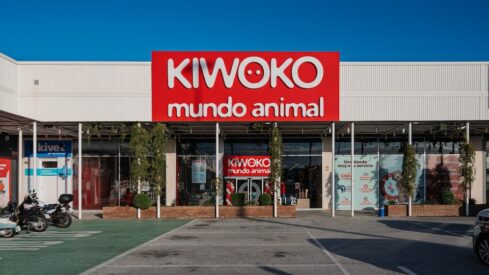
The Spanish pet retailer is targeting services with the aim of achieving more than 10% of its revenue via veterinary care, grooming, insurance and subscription models by 2030.
Operating Kiwoko and Tiendanimal, Grupo IskayPet is leveraging two complementary brands to address different customer needs while building a broader pet care ecosystem across Spain and Portugal.
Today, the company operates 334 stores, complemented by 56 veterinary clinics — Kivet for Kiwoko and Clinicanimal for Tiendanimal – as well as 156 grooming salons across both brands. The retailer is transforming its locations into distribution hubs, expanding urban formats and preparing subscription and insurance models to increase its role beyond product retail.
Grupo IskayPet CEO Alberto Álvarez Ayuso shares with PETS International how the company is strengthening its position in the Iberian pet care market through its store expansion strategy, including 25 new openings this year, omnichannel capabilities, private label growth and new service offerings.
Grupo IskayPet operates two retail banners. How do you differentiate their value propositions and ensure they complement each other?
I would say our strength lies in offering pet owners two complementary brands, each with a distinct value proposition. We aim to make each brand unique while ensuring they complement each other within our ecosystem.
Kiwoko currently operates 202 stores across the Iberian Peninsula, while Tiendanimal has 132 locations. We manage both brands in a way that allows us to serve different customer needs. If customers are looking for convenience and speed, Tiendanimal is usually the stronger proposition.
If they are looking for a more experiential environment, personalized advice and specialist support, Kiwoko becomes the preferred option.
Portugal represents around 15% of Grupo IskayPet‘s sales. How do you see the market evolving and what are your ambitions there?
We are very pleased with the evolution of the Portuguese market. Recently, we presented our five-year strategic plan for Portugal with the ambition of becoming market leaders.
There, we are following the same approach as in Spain, maintaining two differentiated brands with complementary value propositions, supported by our veterinary clinics and grooming salons. We are very satisfied with the progress: every year sales are meeting or exceeding our expectations, and we are convinced that our strategy is being very well received by Portuguese customers.
What differences do you see between pet owners in Portugal and Spain?
There are some differences, although there are also many similarities. Portuguese consumers tend to be somewhat more promotion-driven, but at the same time we are seeing the same broader trend as in Spain: the premiumization of the pet sector.
Pet owners are increasingly looking for specific solutions adapted to their animals’ needs and life stages. In Portugal, the proportion of households with pets is slightly higher than in Spain, and cats also represent a larger share of the pet population. We believe there is still significant room for further premiumization in Portugal.
Which categories are currently showing the strongest growth?
One of the biggest trends we are seeing in both Spain and Portugal is the shift from basic products towards higher-value solutions. Consumers are increasingly looking for more personalized approaches to animal care, adapted to their pets’ specific needs, life stages and conditions.
Pet owners are investing more in preventive veterinary care, animal welfare, specialized nutrition, and services and experiences that improve the overall wellbeing of their animals. The focus is no longer only on feeding pets, but on supporting them throughout their entire lives with a combination of products and services.
Other important trends include the growing penetration of cats, especially in urban areas; the increase in smaller dog breeds and demand for products adapted to them; the growth of frozen food; and rising interest in supplements.
This also reflects a wider evolution in pet care habits: just as people are placing greater emphasis on supplements and wellness products to support their own health, they are increasingly applying the same focus on prevention and wellbeing to companion animals.
Could you explain the customer journey?
There are several possible journeys. A customer may start by browsing products online, place an order and choose to collect it in store to avoid waiting for delivery. Once they visit the store, they may also take their dog to the grooming salon or access another service. Later, if they realize they need something else, they can simply use our app and place another order.
Our objective is to ensure that, regardless of the channel or interaction point, customers always experience the same level of excellence. The customer belongs to the brand, not to the channel. Our role is to make sure every interaction improves the overall customer experience.
What is your approach to q-commerce?
Our priority is to understand and respond to customer needs. Some customers are happy with delivery within a few days, which we cover through our standard logistics model. Others need faster solutions.
Our main tool for speed is click and collect, allowing customers to pick up their orders in store within two hours. We also work with partners such as Glovo and Uber to provide deliveries in around 15 minutes in certain proximity areas.
In summary, we aim to offer different solutions depending on the customer’s needs: immediate delivery through q-commerce, collection within two hours through click and collect or standard next-day delivery.
How is your logistics model organized to support these different delivery options?
We operate a warehouse near Madrid and, since June 2025, we also have a 10,000sq m logistics center in Azambuja, Portugal, which serves our Portuguese stores. Currently, click and collect orders are fulfilled directly from stores when the product is available there. If the product is not available in store, our warehouses supply the stores.
Looking ahead, we are developing a model where each of our nearly 350 locations across the Iberian Peninsula can also act as a distribution point. This will allow customers to access a much broader product range. For example, a customer in A Coruña [northern Spain] could order a product online that is only available in a store in Málaga [southern Spain], and we would be able to fulfill that order directly from the Málaga store.
What has driven this decision to transform stores into distribution points?
We see this as an opportunity rather than a limitation. By connecting our entire store network, we can significantly expand the product range available to customers. Instead of being restricted by the assortment of their nearest store, customers will have access to products available across our entire network.
Are there categories in which you are seeing weaker performance compared with previous years?
The dog category is not declining, but it is more stable compared with other areas. The strongest growth is coming from categories such as cat products, wet food, specialized nutrition, veterinary diets, health and hygiene.
Beyond products, we are also very pleased with the evolution of our services, particularly health plans. We are also preparing to enter the insurance segment, with the ambition that services could represent more than 10% of our total revenues by 2030. Today, we are still at an early stage, with services representing around 3% to 4% of total revenues.
Insurance penetration among pets remains relatively low in Spain. What role do retailers have in helping develop this market?
I believe retailers have a responsibility to respond to all the needs of pet owners. In some cases, insurance products for companion animals are becoming increasingly relevant, and our role is to make these solutions available to customers.
We want to offer differentiated insurance products that bring additional value to the market. We also see strong potential in subscription models, which we plan to launch next year, allowing customers to make recurring payments not only for products but also for services. Our ambition is to eventually reach around 200,000 insurance policies.
Recurring payments are already well established in markets such as the US and Canada. Do you see potential for subscription models in Spain?
Yes, I am convinced they will gain traction. My experience in other sectors shows that customers value this type of convenience.
Not every customer will choose recurring payments, but there is a significant opportunity among those who regularly purchase the same products. It saves time, avoids having to remember orders and ensures products arrive when needed.
It also fits well with our broader ecosystem approach, where we accompany pet owners throughout the entire life of their animals. Customers will be able to add or remove products and services according to their needs and their pet’s life stage, making the subscription model flexible and personalized.
Loyalty programs are becoming increasingly important across retail. What are the latest developments in this area and how is your approach evolving?
We have always had loyalty programs, but our vision of loyalty is evolving. Traditionally, especially in retail, loyalty was mainly based on products, prices and discounts. Today, we see loyalty in a broader way: it is about personalization and accompaniment.
Our goal is to use data to better understand both the pet and the owner, allowing us to offer more tailored solutions. It is no longer only about encouraging customers to buy more through discounts, but about accompanying them throughout the entire life cycle of the animal and responding to their specific needs.
Private label has become increasingly important across the pet industry. What role do own brands play at Grupo IskayPet, and how is this category performing?
Our own brands represent more than 40% of total sales, and some of them are among the bestselling brands in the market. Our commitment to own brands is therefore very clear: we see them as a key differentiating factor and we will continue expanding our portfolio.
At the same time, we are evolving these brands to respond to changing consumer expectations. This means developing more specialized solutions, including specific nutrition and veterinary diets. The market is demanding greater personalization, and our own brands need to evolve accordingly.
Regarding store expansion, many retailers are exploring different formats, from smaller city-center stores to larger outlets offering a broader range of services.
What is Grupo IskayPet‘s approach, and are there differences between Spain and Portugal or between banners?
One of the concepts we have validated is the urban store model. Speaking specifically about Spain, our plan over the next three years is to open at least 15 urban stores of around 300sq m, with an assortment adapted to the needs of urban customers.
We see a clear opportunity here because some of our existing urban stores, both in Spain and Portugal, have demonstrated strong performance. Based on this experience, we have developed a specific approach in terms of layout, assortment and store size to respond to the needs of customers, particularly in city centers.
Urban stores often operate with a slightly higher price point due to their location and convenience. Have you considered a different pricing strategy for these formats?
Our pricing policy in urban stores will not change significantly. The main difference is that these stores will be less focused on promotional activity.
We have seen that urban customers are often looking for convenience, immediacy and speed rather than promotions. Therefore, promotional activity will be lower compared with other types of stores.
What are your expectations for e-commerce growth? Will Grupo IskayPet continue focusing primarily on store expansion or will online become a stronger priority?
Our objective is not to prioritize one channel over another. What we want is to offer excellence across every customer touchpoint, whether that is a store, online, telephone customer service or WhatsApp.
The market will determine the balance between online and offline, but our role is to ensure that every interaction delivers a strong experience. In e-commerce, one of our main challenges is continuing to improve delivery capabilities and offer customers the convenience they expect.
The reality is that customers are increasingly omnichannel. We do not see customers as belonging exclusively to one channel. In fact, omnichannel customers spend twice as much, purchase 2.5 times more frequently and have a retention rate 17 percentage points higher than single-channel customers.
That is why our strategy is to be excellent across every contact point and ensure that Grupo IskayPet, through Kiwoko and Tiendanimal, remains the first choice for both products and services.
Competition from international e-commerce players, particularly Asian platforms offering accessories at very low prices, is increasing. Are you seeing an impact from this trend, and how are you responding?
If I said there was no impact, I would not be being honest. However, this is not the space where we want to compete. We cannot and do not want to compete solely on price with these retailers.
Our focus is different: we want to accompany pet owners throughout the entire life of their animals. That means offering not only accessories, but also specialized nutrition, veterinary services and a complete ecosystem of care.
A customer who is only looking for the cheapest accessory may find a better price elsewhere, and that is understandable. But that is not our target customer. We aim to offer a more complete solution.
Have you adapted your accessories portfolio to also appeal to consumers looking for more affordable options?
Yes, we have a dedicated own-brand accessories team that identifies customer needs and develops products accordingly.
However, our approach always starts with quality. First, we identify a customer need, then we establish the required quality criteria and finally we develop the product at the most competitive price possible. This is the same philosophy we apply to our own food brands. Price is important, but quality and the ability to solve a real need for the pet owner come first.
We also continue investing in innovation to ensure that our assortment remains aligned with market trends and customer expectations.
Share this story:
One click prioritizes GlobalPETS in your search results and AI answers.