Interview with CEO of ZU
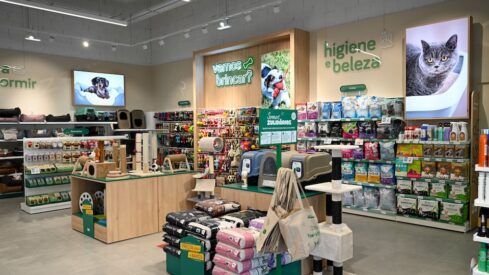
Following its acquisition by Musti, the Portuguese pet retailer is accelerating its expansion strategy, with larger stores in the pipeline offering a deeper range of accessories and services.
Owned by Portuguese retail group Sonae, pet specialist ZU and supermarket chain Continente are taking a complementary approach to the pet category. While Continente provides scale, convenience and broad access to pet products through the grocery channel, ZU brings specialized expertise, premium assortments, and veterinary and grooming services.
Since joining Nordic pet care group Musti last December, ZU has accelerated its expansion plans while gaining access to new products, sourcing capabilities and industry know-how.
ZU CEO Tobias Azevedo shares with PETS International how the combination of Sonae’s retail ecosystem, Continente’s reach, ZU’s specialization and Musti’s expertise is supporting the company’s growth and strengthening its position in Portugal’s pet care market.
What role do Continente and ZU play within the Portuguese pet industry? What is each company’s market share within the category?
Continente and ZU play complementary roles in guaranteeing a complete value proposal for pet owners. ZU’s value proposition expands on what Continente and the grocery channel as a whole can offer with more specialized products, including a large assortment of grooming and veterinary services.
In the grocery market, pet care at Continente is a destination category, characterized by high purchase frequency and strong penetration in the customer’s purchases. In cat and dog food (including wet food and snacks), ZU’s market share in the specialized market for 2025 was 22%.
How do ZU and Continente complement each other in terms of pet product offerings? Are the customer bases distinct, or is there overlap between them?
Although there are some overlaps in product ranges, as we see that the upper line of a typical grocery range and the lower line of a typical specialized store is becoming increasingly blurry, we believe that Continente and ZU complement each other more than they compete.
A clear example of this is the number of locations that have both a Continente and ZU store. And the great indicator for us is that when a new ZU store is opened in an existing Continente shopping gallery, the pet care sales of that Continente store tend to increase rather than decrease.
The relationship between the brands is reinforced by the common loyalty program Cartão Continente, which keeps customers inside the same ecosystem. The data allows us to determine that the vast majority of our consumers also shop at Continente.
Overall, those who shop at two or more Sonae banners within the same commercial gallery tend to spend more, and are more likely to engage with our loyalty program, either through coupons or rebate mechanics. In the specific case of ZU and Continente pet care, it has to do with the capacity of ZU to attract premium pet food consumers who then also shop for accessories or other items at Continente.
How many pet-related SKUs do you currently have in Continente and ZU?
Within Continente, what share of the overall assortment do pet products represent? ZU’s assortment comprises around 4,500 SKUs, with own and exclusive (O&E) brands representing approximately 20% of the total range.
Continente stores offer around 2,100 SKUs, with O&E brands accounting for more than a quarter of the selection.
What are the biggest changes you have seen in Portuguese pet owners’ purchasing behavior over the past two years?
At ZU we are seeing an increase in customers who buy food and pet products both online and offline, and use both veterinary and grooming services. And this is the key reason why ZU has outgrown the pet care market in Portugal in the past three years.
In fact the growth of omnichannel shopping can be observed across the overall market. Consumers are prioritizing convenience and q-commerce. Pet parents now have access to a broader range of products across the retail ecosystem, including online platforms, discount retailers, new market entrants and specialized pet channels. As a result, pressure on perceived value continues to increase.
Are there notable differences in purchasing patterns between dog and cat owners?
The most obvious one is average basket value and visit frequency. Dog customers visit less often but have a higher average basket while cat owners visit more frequently with smaller average baskets.
Additionally we see that dog customers tend to be more experimental in their purchases, often opting for trying out new products. This trend is felt to a greater extent in accessories and complementary products but extends to food to a lesser degree.
Among cat owners we see a much higher resistance to change, which is especially felt in dry food and litter categories. This makes them ideal for the online channel and auto-replenishment or subscription models. In general cat customers also over-index in premium categories compared with dog consumers.
And what about Continente’s grocery channel?
The average basket of cat owners is also higher than that of dog customers. Also in grocery, premium and super-premium brands have a stronger presence in the cat category when compared with the dog category, reflecting consumers’ willingness to invest in higher- quality nutrition and care.
Growth is particularly strong in wet food and complementary products, which are among the fastest-growing segments in terms of innovation. In addition, cat litter plays an important role as a traffic-driving category, generating frequent store visits and repeat purchases.
Within the dog category, the population is gradually shifting towards smaller breeds, which represent the fastest-growing segment. This trend is contributing to significant category growth and is closely linked to the increasing adoption of mixed feeding habits, combining dry and wet food. As a result, the dog wet food segment is experiencing strong momentum and sustained growth.
Which pet categories are growing fastest at Continente and ZU?
At ZU, the fastest-growing categories are wet cat food, dog accessories (particularly toys), and veterinary supplements (such as joint and coat health products) for both cats and dogs.
In the grocery market and in particular in Continente stores, wet food technology is currently the fastest- growing segment in the market, while complementary food is also experiencing strong growth, particularly within the cat category, where we are seeing a lot of innovation.
Are you noticing customers move away from the middle segment towards value and premium products?
At the moment we are not seeing a clear sign of this. While the premium and super-premium categories are clearly growing and represent the majority of ZU’s sales, the introduction of high-quality but lower-priced O&E brands is also driving the lower-value segments of our range.
In fact, pet owners are becoming increasingly well- informed and are seeking higher-quality products; that’s why premiumization continues to gain market share across the category.
However, private label is also gaining market share: as product quality and recipes continue to improve, consumers are becoming more willing to switch brands when they recognize a good-quality proposal. This evolution is helping to reduce the traditional gap between branded and private label products, particularly in mainstream segments.
What share of ZU’s sales currently comes from O&E brands?
It is important to note that, until November 2025, ZU had no own brands. We started by launching two brands – Pescot for dog food and Moggy for cat litter – in late 2025 to early 2026. Currently we average about 4% across all stores with some stores already close to double digits.
What is your target for this segment?
The objective is to reach double digits overall by the end of the year and to increase from there.
How has joining Musti changed ZU’s product offering, sourcing and growth strategy?
We are six months into the integration process but progress is very encouraging. I believe that at this point our customers are the clear winners as we have managed to introduce a record amount of Musti products into our stores, which have been extremely well received by our customer base. The feedback has been constant and almost always positive.
Strategically, Musti gives us access to the scale, sourcing power, brand portfolio and the know-how of one of Europe’s leading pet care groups.
So far this has translated into new products in our stores but also an accelerated expansion plan for new stores in Portugal. As of today [mid-June] we have opened seven new stores and at least 13 more organic openings are planned for 2026. This is a record in the number of store openings in one year.
But not only are we opening more stores, we are opening significantly larger stores with a more complete and deep range of accessories and services. The additional scale and growth perspectives have allowed us to grow the team with key new members in all areas.
Do ZU or Continente have any planned investments to expand e-commerce capabilities in this area?
ZU has recently relaunched its website and plans to develop it over the coming years, adding subscription models and other predictive tools to maximize convenience and drive an experience with the same level of quality as online stores.
What is the strategy for physical store expansion in the near future?
Given the size of the market and its evolution, the activity of our competitors and the general trends in population dynamics we believe that we should reach at least 125 stores by 2030 and that there is demand for these.
For us at ZU we believe firmly this is the moment where the Portuguese market will consolidate, therefore we are betting heavily on expansion and planning to open circa 25 stores per year in the next three years.
For future openings, will you continue to prioritize locations close to Continente stores, or are you increasingly exploring standalone and retail center locations?
Stores located adjacent to a Continente store are always a priority for us due to the multi-banner effect and the high footfall generated by Continente. However, we are also exploring larger stores where we can have a higher percentage of own brands and accessories.
The amount of large spaces located close to Continente stores is limited and has led us to explore alternatives such as retail centers. For us the sweet spot is a retail center with a Continente store present.
Share this story:
One click prioritizes GlobalPETS in your search results and AI answers.