Pet food machinery for smarter production
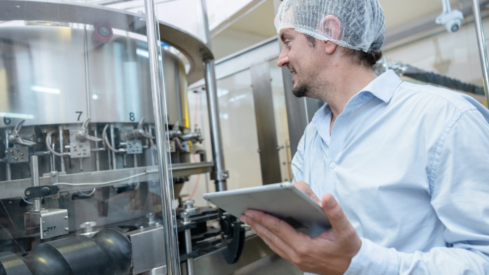
Automation and AI are driving efficiency as producers seek to reduce emissions and labor costs alongside managing a wider range of product formats.
In the past year, several machine manufacturers have launched models that can offer improved precision, speed and safety at different stages of production. Innovations range from advanced extrusion to enhanced cutting and blending.
Next generation extrusion
In May, global leader in processing equipment Bühler Group introduced a new generation of its extrusion systems – the Nutrex 7 Series. Carsten Petry, Head of Market Segment Pet Food at the Swiss company, says the updated version uses a modular concept that can be bundled to serve various applications for premium products, treats and high-flexibility production.
The system is designed around a combination of hygienic design, process stability, integrated intelligence and service. Bühler says the new series has a completely revised, browser-based control system with remote monitoring. The company’s strategy is to standardize all machine and plant controls onto a single platform by 2030.
Configuration options
Waukesha Cherry-Burrell is a US company making high-precision, sanitary processing equipment. Product Sales Specialist Steve Bayse says that since receiving feedback from customers in, among others, the pet food industry, it can now offer several configuration options for its scraped surface heat exchanger. These can reduce pressure drop and improve throughput.
“As throughput requirements increase, overall system pressures can grow significantly due to additional heat exchangers and interconnecting piping,” Bayse explains. He adds that system pressure can approach the maximum pressure capability of the supply pump, potentially requiring an additional booster pump within the system piping network. The update includes new shafts and connections to support higher flow rates.
Dicing, slicing, blending, bottling…
Meanwhile, FAM STUMABO, a Belgian manufacturer of mechanical equipment for food processing, has launched a trio of cutting machines to meet a full range of applications. The CMD.2 is for dicing chilled and frozen products. The Volantis is used for transverse slicing elongated or pre-formed products, and the Yuran Hytec 300 can dice and also make chunks, strips and pulled-look shreds.
The company says this solution is a response to manufacturers’ need for greater variety, more premium- looking products and format-specific textures. “Each product behaves differently under the knife, depending on temperature, fat, moisture, salt content, texture and shape,” says Sven Boen, Senior Sales Manager Europe.
US manufacturer of industrial processing equipment Munson Machinery has launched a Sanitary Paddle Blender with two intensifiers. The combined action of its paddles and intensifiers produces uniform blends of, for example, dry solid materials. And although not in the machine-making business, Dutch private label pet food producer The Fatory recently introduced nitrogen filling capabilities on its liquid bottling line to better protect oil-based formulations from oxidation.
Categories driving growth
According to Petry, extruded dry pet food remains the core volume driver in the sector, “still representing the majority of staple pet food production globally”. But alternative formats such as wet food, baked kibbles, treats and snacks are inspiring innovation. “As a result, pet food manufacturers are investing in equipment that enables the production of premium, differentiated formats, particularly those considered healthier and less processed,” he says.
Boen says there’s a lot of demand in categories that combine premium nutrition, convenience and visible product quality. “In wet pet food, brands are investing in texture and palatability.” And according to The Fatory’s Managing Director Bjorn de Bruijn: “In our client base, demand is primarily driven by liquid oil-based pet nutrition products, including salmon and other specialty omega oils such as algae, krill, flax and borage.”
Fruitful collaboration
Waukesha Cherry-Burrell’s team started its updated heat exchanger design project in late 2024, Bayse says. As part of the development process, the team conducted testing at its Wisconsin facility, which focused on pressure loss reduction.
“Because this project was a direct result of customer feedback, the company had great candidates for field testing. The equipment could be evaluated in real production settings,” he explains. The company is still conducting some customer trials for data collection.
To develop its cutting machines, FAM STUMABO also needed to collaborate closely with pet food processors. “It’s been an ongoing, application-led process, refined through product trials, customer tests and continuous improvements in the company’s test centers and engineering teams,” Boen explains.
Today’s priorities
In addition to technical demands, pet food producers also look for efficiency and sustainability in new equipment. Bühler says that key priorities include reducing energy consumption and CO2 emissions, lowering operating costs and increasing overall plant efficiency. The goal is to ensure consistent product quality and greater automation, especially “due to labor shortages and cost pressures”.
In practical terms, this leads to orders of energy- efficient dryers, fresh meat inclusion systems, and vacuum coating solutions, Petry adds. Bühler is seeing two types of investment. “In mature markets such as Europe and North America, pet food manufacturers are more likely to invest in upgrading and optimizing existing facilities,” he says, “while in growth markets it is about new production lines and capacity expansion.”
Creating confidence
Other customer concerns seen, for example, by FAM STUMABO are hygiene, durability and predictable product handling. Producers are also looking for accuracy, repeatability and less product loss.
Natural pet food producer Dr. Harvey’s is looking for speed. The US company recently upgraded to a Munson Rotary Batch Mixer because of its faster mixing cycles per batch, replacing a ribbon blender with 57 liters of capacity for a batch mixer of 566 liters.
Media and Technology Coordinator Cesar Salazar says: “When the company moved to a three times larger facility, we needed improved production equipment to keep up with growth. From the four-way action of the vessel’s proprietary mixing flights, the mixer yields blends of grains, dry vegetables, protein powders and other ingredients in about five minutes.”
Among oil producers, The Fatory highlights the increasing demand for greater protection from oxygen exposure to maintain freshness, stability and nutritional value throughout a product’s shelf life. Its nitrogen filling complements the quality controls incorporated into its recently upgraded bottling line, providing customers with an additional level of confidence in the quality and consistency of the finished product.
Investing in automation
Overall, Bühler expects investments to move from standalone machines to fully integrated systems that combine equipment, automation and digital capabilities.
The manufacturer is embedding AI “by combining advanced automation with data-driven models, enabling process optimization, predictive maintenance, and working toward self-optimizing, autonomous production systems”, Petry says. In practice, this means machines that can analyze production data in real time, detect deviations, recommend adjustments and show when maintenance may be needed.
In The Fatory’s recent upgrade, “nitrogen is automatically applied during product storage, bottle preparation, filling and sealing”, with pre-established oxygen-reduction measures integrated directly into the production flow, according to de Bruijn. This eliminates a series of steps that would require manual monitoring and adjustment.
All these companies say that equipment development – from design to testing and validation – takes many years of research. Whether through technological resources or the improvement of practical functions, the industry is now moving toward smarter, more sophisticated and versatile machinery to meet an equally diverse demand.
Share this story:
One click prioritizes GlobalPETS in your search results and AI answers.