Pick of the litter: the latest in cat waste solutions
Investments in premium clay and alternative ingredients such as wood, tofu and olive pits meet consumer demands for innovation, efficiency and sustainability.
Premiumization in the pet market has reached even the most generic of products, including cat litter. Behind the small grains that soak up feline waste are research and innovation developments – making products more natural, functional and environmentally friendly, plus a better fit for automatic litter boxes.
The decommoditization process
Cat litter is a product that is currently undergoing a process of ‘decommoditization’, to quote Juan Pablo Martinez, the CEO at Chilean company Ludipek, a wholesale distributor of pet food, accessories and nutraceuticals to veterinary clinics and pet shops.
As the cat segment has become more dynamic, litter has moved from being a commodity with no brand differentiation to a more sophisticated product, with consumers seeking a better composition and smell, as well as durability. “It’s what happened with pet food,” Martinez says.
Recent innovations have been on two fronts: the premium treatment of bentonite clay – the most common component of cat litter – and the incorporation of new materials.
Technology as a demand driver
Whisker is a pet products manufacturer that is best known for its Litter-Robot, now in its fifth generation. The company also manufactures its own premium and natural litter, which is made with just one ingredient: its “high-quality” sodium bentonite clay.
According to Kala Drake-McAloon, Director – International at Whisker, good cat litter is essential for the box to function properly because it “forms tight, clean clumps that reduce waste and help keep the inside of the unit spotless”. She says that lower quality litters tend to scatter, stick to the globe and break apart, leaving residues that affect performance.
The litter premiumization process at Whisker involves sun-drying the clay instead of mechanically processing it, Drake-McAloon explains, “which keeps dust levels low”. According to her, this also helps to improve the air quality in homes that use the product – especially important for owners and cats who are sensitive to dust.
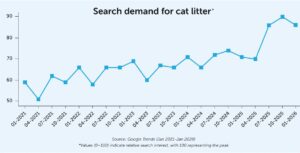
Whisker’s Director believes that automatic boxes tend to drive the demand for premium litters. That is due to consumer awareness of the benefits, as they search for convenient ways to use and maintain the box. One example of this is the growth in litter subscriptions linked to automatic box purchases.
Same clay, new treatment
The premium trend has also been seen with Litter Genie ®, a disposal system owned by the Canadian company Angelcare. In September, the brand launched Litter Genie Light, a premium clumping clay litter that is “naturally sourced and 20% lighter” than conventional varieties, Angelcare CEO Rahul Sharda tells PETS International.
“What sets us apart is the rapid ammonia absorption for odor control, hard clumping strength and [that it is] almost 99% dust-free,” he says. According to Sharda, these aspects are the biggest demands from its consumers. He also mentions that those asks stem from an even greater need: more convenience in dealing with waste without disrupting owners’ daily routines.
Sharda’s analysis is that despite recent advances, there are still opportunities in this segment. “Clay tends to provide strong clumps while using less material. There are possibilities for even faster clay clumping, which uses smaller granules while maintaining dust control,” he explains. Possible next steps in premiumization are further reducing weight, making it more affordable for consumers and implementing fragrance improvements.
These investments have come at a time when feline ownership is flourishing. According to Euromonitor International, “cat favoritism is rising across traditional dog-centric regions like North America and Western Europe, as well as in emerging markets such as Asia Pacific”.
Biodegradable wood fibers
US company Healthy Pet’s ökocat plant-based litter is made from 100% reclaimed wood. In October, the company announced a new formula, designed with greater odor control for homes with more than one cat. Consumer Communications and Promotions Manager Leslie Ellis says that the product innovation is a response to the rise in households with multiple cats.
Healthy Pet wants a share of the consumer market concerned about sustainability, and ökocat offers a plant-based alternative to traditional clay litters.
Ellis says: “The brand has always prioritized sustainability and environmental responsibility, with biodegradable wood fibers that prevent tracking, are gentle on cats’ paws and are free from strip-mined clay, silica, toxic dyes, chemicals, additives and artificial scents.”
In the evolution from a commodity to a value-added product, differentiation allows brands to compete. One way of doing this is by making litter from biodegradable and recycled materials, such as wood fibers, corn, wheat and other natural sources.
Beyond consumers, there’s been an increasingly positive response to this kind of product from retailers and distributors, Ellis says. “Many are dedicating more shelf space to plant-based or biodegradable litters, highlighting natural ingredients, low-dust formulas and recyclable packaging.”
Olives, tofu – what next?
The US pet care business Paco & Pepper has also invested in a plant-based solution for cat litter, which it launched last September. The product is made from olive pits and tackles allergies to the dust and artificial fragrances that some conventional litters contain.
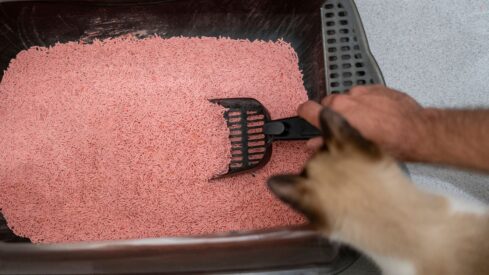
Taiwanese brand Lady N has expanded its offer of tofu granular litter in the US, which is designed for compatibility with the most popular automatic boxes.
According to the company, it registered 200% year-on-year growth in the first 11 months of 2025. Lady N also claims that all of its fragrances follow International Fragrance Association standards, such as being allergy free, and that its materials are biodegradable too.
As consumers demand improved performance, sustainability and compatibility with new technologies, the use of new kinds of materials and processes is already transforming a once basic product into a premium segment of pet care that will continue to evolve in the future.
Share this story: