Powering up for the future
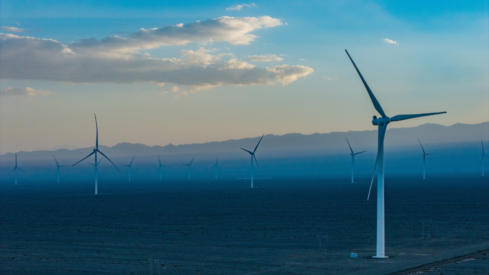
Pet food manufacturers are investing in long-term energy strategies as they pursue price stability and reliable renewables.
After peaking in 2022, and declining slightly in more recent years, higher electricity prices are once again at the center of the economic debate as geopolitical tensions have knock-on effects on global gas and energy costs. Many companies are finding alternatives to traditional procurement methods.
Wholesale price volatility
Average wholesale electricity prices in many markets in the world rose in 2025 compared to the previous year. This was partly due to higher natural gas prices translating into higher costs for gas-fired electricity generation, according to data from the International Energy Agency (IEA).
Greater generation of energy, including renewables, adds more supply to the grids, helping wholesale prices to go down. According to the IEA, some regions in Australia even registered negative electricity prices last year, largely due to increases in generated wind energy.
Rising retail energy costs
Whereas wholesale electricity prices are highly volatile, with frequent ups and downs, the costs for consumers – from households to commerce and industry – have steadily increased in the past few years. “While energy- related price components have fallen from crisis highs, they remain above 2019 levels, and non-energy charges such as networks, taxes and fees continue to take up a large share of bills,” the agency reports.
To protect themselves from both constant annual growth and price shocks caused by external events, companies are turning to alternatives such as Power Purchase Agreements (PPAs) or Virtual Power Purchase Agreements (VPPAs) with renewable energy suppliers, or are installing renewable energy systems in their facilities.
This approach reflects a move from short-term price exposure to long-term procurement strategies that combine cost predictability with decarbonization commitments. VPPAs act as a financial price-lock contract instead of delivering physical energy to the factories, allowing companies to hedge against volatile market rates.
Wind farm investments
Companies active in the pet sector have been increasingly investing in wind energy. In 2022, for example, Nestlé Australia entered into a 10-year deal with a wind turbine operator.
And in 2024, animal health company Zoetis signed a virtual 12-year PPA contract with Colorado-based renewable energy operator Scout Clean Energy, for a 50-megawatt (MW) portion of Scout’s Heart of Texas Wind Farm.
At the beginning of 2025, Snellman Group, the parent company of Nordic producer Snellman Petfood, entered into a 10-year power agreement with a wind farm in Finland.
“It’s a structured PPA set-up, ensuring price stability and access to renewable energy. This allows us to reduce our carbon footprint, while securing a reliable and predictable energy supply for our production,” Magnus Pettersson, CEO of Snellman Petfood, tells PETS International.
In its 2025 Sustainability Report, the Snellman Group detailed its company’s total electricity consumption at 66,617 MWh, 94% of which was renewable energy. It has also implemented several energy efficiency measures across the group, renewing the ventilation system and making automation changes in its refrigeration unit.
Large corporate PPAs
Since September 2025, Mars has partnered with energy provider Enel North America in a transaction involving the full output of three solar plants in Texas.
“The agreements represent Enel’s largest corporate PPA transaction worldwide. Combined, they represent 851 MWAC (megawatt alternating current) and are expected to yield 1.8 terawatt-hours (TWh) of electricity each year,” the company says.
This is one of several long-term electricity contracts Mars is implementing. In February, it secured 70% of annual production from the Kölvallen Wind Farm in Sweden.
The agreement will provide approximately 670 gigawatt-hours (GWh) of clean electricity each year, supporting both the company’s direct operations and value chain partners.
Additionally, in April, Mars closed another deal in Lithuania, signing a long-term VPPA with European Energy for most of the output from the planned Skuodas Wind Farm. This is expected to generate around 490 GWh of renewable electricity annually.
The energy should be available by 2028, and will provide a long-term electricity source for its pet food manufacturing facility in the Baltic state. By helping to kickstart the project through a long-term financial commitment, Mars is building on its use of corporate PPAs as a mechanism to support new wind capacity development.
Local renewables
Carry Pet Food is a European private label manufacturer, specializing in high-quality chew treats for dogs. It became part of the VAFO Group in 2020. In August, it took a major step toward greater energy independence when it joined the Poland-based Jawory Energy Cooperative.
By combining the solar power it generates itself with energy supplied by local renewable sources, the company now covers nearly 90% of its electricity demand with green energy. This significantly reduces the plant’s dependence on fluctuations in the external electricity market, while increasing production stability and energy security.
For VAFO, investing in locally generated renewable energy contributes to the company’s environmental, social and governance commitments, while strengthening the resilience and competitiveness of its manufacturing operations.
Geopolitical events and data centers
Data shows the impact of the geopolitical events of recent years on the energy sector. For instance, US price increases in 2022 – when the war between Russia and Ukraine began – were 11.4% year on year (YoY), much higher than the second-highest annual increase of 5.3% recorded in 2025. In the EU, this spiked at 52% for households and almost doubled (+91.8%) for non-household consumers when comparing the second halves of 2022 and 2021.
Both wholesale and retail electricity prices are also affected by the increasing adoption of AI and its energy-intensive data centers. This effect is driven by the rapid growth in demand due to intensive computing workloads and cooling needs, which increases peak pressure on power grids.
“Today, electricity consumption from data centers is estimated at around 415 TWh – about 1.5% of global electricity consumption in 2024. It has grown 12% annually over the last five years,” says the IEA in its Energy and AI report, published in April 2025. The agency estimates that global electricity consumption for data centers will double by 2030, representing just under 3% of total global electricity demand in that year.
Future grid connection issues
According to the IEA’s mid-year update, which was published in July, global electricity demand is forecast to grow by 3.6% in 2026 and 3.8% in 2027. That is driven by rising consumption from industry, appliances, cooling, data centers and wider electrification.
This rising demand will put additional pressure on electricity grids. The IEA estimates that annual grid investment will need to increase from today’s approximately $400 billion (€350B) by around 50% by 2030 in order to meet demand growth, while more than 2,500 GW of planned renewable, storage and large-load projects wait in grid connection queues worldwide.
Renewable generation, grid expansion, storage and greater system flexibility will all play a part in meeting this demand. But the scale of projects waiting for grid connections highlights the infrastructure bottleneck facing electricity systems, as demand from electrification and data centers continues to grow.
Share this story:
One click prioritizes GlobalPETS in your search results and AI answers.