Sustainability quickens demand for pulses
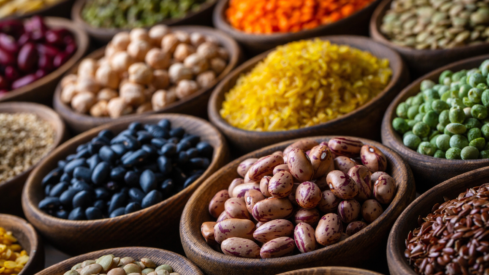
Following a surge in relevance for grain-free formulations, legumes are now gaining extra momentum as environmentally friendly premium ingredients.
With sustainable alternative ingredients gaining importance in the pet food market, pulses stand out as a viable option to meet the growing demand. Eyeing this potential, pet industry players are investing to expand production capacity.
Finger on the pulse
Pulses first started to gain ground in the pet food sector some years ago thanks to the rise of grain-free options. They are now once more attracting attention due to the increased demand for sustainability in the industry, as they have been associated with foods with a smaller carbon footprint.
The advantages are not only related to sustainability, according to representatives of national industry association Pulse Canada. “From a nutritional standpoint, pulses contribute high-quality plant protein, complex carbohydrates, and both soluble and insoluble fiber, supporting digestive health and satiety,” Pulse Canada’s Vice President, Market Innovation, Julianne Curran, and Pet Consultant Alex Rankovic tell PETS International. They also highlight how the starch in pulses plays a role in “promoting a more gradual and steady blood glucose and insulin response for dogs and cats”.
Pea protein use has doubled
Spurred on by these benefits, the use of pea protein in pet food has doubled in just eight years, Pulse Canada’s experts explain. And peas in all their forms have become the pet food industry’s most dominant legume ingredient.
For instance, pet food giant Nestlé Purina uses pea protein powder for grain-free formulations, pea starch as an alternative source of carbohydrates and pea hulls as a fiber source. Meanwhile, Hill’s Pet Nutrition incorporates pea protein in its formulations, as well as beans, peas and pea fiber as carbohydrate sources.
The market also has a strong appetite for other legume types, such as chickpeas – which are the second most used pulse in pet food globally – and lentils, which are currently more niche but off er potential. “While lentil use in the US pet food market has been limited, we anticipate more growth for lentils in premium pet food products in regions such as the European Union, Asia and North America,” say Pulse Canada’s representatives.
Growing markets for Canadian pulses
For now, the US remains Canada’s biggest export destination for peas and pea protein, and that market continues to grow. “Between 2020 and 2024, peas appeared in 18% of all new pet food launches in the US. About 7% of all new pet food launches in that period included pea protein,” state the two experts.
Recognizing the growth potential for peas and other pulses in pet food, Pulse Canada has recently hired a dedicated pet food innovation specialist to engage in conversations and develop agreements with other markets.
Due to market familiarity with pulses, existing trade agreements between the countries and the projected growth of the pet food industry in each region, the initial focus is on Mexico, South America and the Indo-Pacific representatives, the association explains.
Exploring export opportunities
Mexico, for example, has increased its imports of dried legumes in the past 15 years. And last September, international purchases reached $44,900 (€38,300), according to government data.
Pet food is also on the rise in the country. Analysis by the National Council of Balanced Food Manufacturers and Animal Nutrition showed that 2024 was a “year with significant growth in exports and imports of over 20%”. Pet food imports were forecast to grow from 116.8 thousand tonnes in 2024 to 134.3 thousand tonnes in 2025.
Pulse Canada partnered with the Canadian Food Inspection Agency (CFIA) to support the negotiations of a new phytosanitary agreement for Canadian faba beans entering Mexico, which has opened up an export opportunity for the crop in that country.
Meanwhile, in the Indo-Pacific region, Pulse Canada is working with local animal nutrition consultants to conduct feed trials. Data from Euromonitor International shows that Asia-Pacific’s pet market was forecast to hit an all-time high in 2025, surging nearly 5%.
Demand creates investment
The outlook looks positive for pulse-based pet food in Europe, too. In a factsheet published in 2025, the European Pet Food Industry Federation (FEDIAF) says that grain-free options have “become a popular feeding choice among owners”, leading to increased usage of pulses as ingredients. Additionally, the European Commission’s EU Agricultural Outlook for 2025-2035 states that pulses will “benefit from higher demand”, which will boost the total cultivated area in the bloc.
One of the European companies investing in pulses is ingredients manufacturer Beneo. The aim is to tap into the growing demand for “plant-based, sustainable and clean-label pet food”, according to Maygane Ronsmans, Beneo’s, Product Manager of Animal Nutrition. In April 2025, the company inaugurated its first pulse-processing plant south of Cologne, in Germany’s Rhineland-Palatinate region, after investing around €50 million ($57.5M).
“We have now extended our existing portfolio of plant-based proteins from wheat and rice with an alternative that is suitable for no-grain pet food applications,” Ronsmans states. The investment is also intended to tackle uncertainty in the availability of conventional ingredients and price volatility, which became an “additional challenge”, she says.
“From an industry perspective, the coming three to five years will require significant creativity. With global food security concerns rising, many raw materials traditionally used in pet food may be redirected to human diets. Ultimately, the pet food sector is evolving into a more resource-efficient, innovative and resilient industry,” she adds.
Faba beans: ‘natural’ and ‘sustainable’
Instead of peas or chickpeas, Beneo is producing faba beans. When the company conducted consumer research among 2,500 pet owners in the US, UK, Germany, Brazil and China, it found that “49% of pet owners strongly associate faba beans with being natural and 45% with being sustainable”.
Beneo produces protein concentrate and starch-rich flour for dry food and uses faba bean hulls for pet food recipe formulations. According to Ronsmans, recent trials have pointed to the successful use of the protein concentrate as “an alternative to spray-dried animal blood plasma (ABP) in wet pet food”.
Without providing specific figures, she indicates that the company’s faba bean ingredient portfolio has been generating interest among producers, particularly in the EU.
Pulse processing innovation
In June 2025, Swiss plant equipment manufacturer Bühler opened a puffing application center for grains and pulses in Uzwil, about 50km west of Zurich in Switzerland. Puffing is a hydrothermal process that uses heat and pressure to significantly expand the volume of raw materials.
The new center is equipped to produce snacks, kibbles and treats. “With this center, we are ready to support customers worldwide – not only in food, but also in pet food and feed, where demand for crispy, nutritious products is on the rise,” says Christoph Vogel, Head of Business Unit for Human Nutrition at Bühler.
The company offers various processing solutions to pet food companies, from raw ingredient intake to packaging for dog and cat food and feed for ornamental fish. Pulses are used mainly in premium and functional formulations within the company, according to Carsten Petry, Bühler Group’s Head of Market Segment Pet Food.
Aligning with wider trends
Petry explains that Bühler perceived the increasing demand from customer meetings, trials and enquiries at its application centers, and feedback loops from key accounts and industry workshops. “Interest is especially strong in Europe and North America, where premium, sustainable and plant-based pet food is a priority,” he says.
“This aligns with the ‘humanization’ trend, where pet food mirrors human nutrition preferences for cleanlabel and high-protein options,” he says. However, he adds the caveat that the “usage of higher amounts of pulse proteins is not recommended for cat food”.
Strong interest set to continue
Petry notes that the initial feedback has been positive, as manufacturers are able to “test recipes without investing in full-scale equipment” and are “particularly interested in puffed inclusions for kibble and treats”. Several trials have already been scheduled for 2026, which highlights “strong interest in energy-efficient processes and sustainability credentials”, he adds.
Thanks to increased investment across the value chain – from crop producers’ associations to pet food manufacturers and machine builders – pulses look set to meet the rising demand for premium, sustainable and nutritional pet food in the future.
Share this story:
One click prioritizes GlobalPETS in your search results and AI answers.