Tackling the exotic pet trend
Inconsistent legislation across borders leaves buyers, sellers and authorities navigating a confusing system, while wildlife pays the price.
Encouraged by social media trends, people are increasingly seeking wild animals as companions. What can governments and businesses do to take on illegal trade and other associated issues such as animal welfare, wildlife conservation and habitat disturbance, as well as human health and safety?
Must-have accessories
Otters wearing leads like dogs, talking African grey parrots, and snarling serval and savannah cats are becoming regular fixtures on social media feeds. Influencers have been touting them almost as must-have accessories to their audiences of millions, fueling their popularity.
Meanwhile, some hobbyists and collectors are on the hunt for rare and unusual finds – be they newly discovered, highly endangered or endemic species.
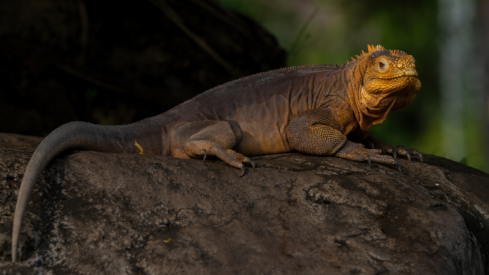
For example, Galápagos iguanas – found nowhere else on Earth other than the isolated islands that form the Galápagos archipelago in Ecuador – have become highly sought-after pets.
Legal loopholes
Clamping down on the exotic pet trade was a priority when world leaders gathered at the end of 2025 for the Convention on International Trade in Endangered Species of Wild Fauna and Flora (CITES).
Species such as the Galápagos iguanas were granted the highest level of protection, prohibiting international trade. Despite Ecuador’s strict laws banning the export of iguanas for trade, the species has been found for sale in online marketplaces.
Even when these animals are sold as captive-bred, they descend from animals that were taken from their natural habitat or illegally exported in the first place, so international protection is a welcome step forward. The system has, however, numerous legal loopholes, both at national and international level.
For example, the European Union is one of the world’s biggest importers of wildlife. Yet many wild species imported and traded in the EU are protected under domestic legislation in the countries of origin. Only a small proportion of species traded are covered by international and/or EU legislation.
On the case of wildlife crime
This inconsistency creates a web of confusion, where buyers, sellers and even enforcement authorities find it difficult to spot the difference between what’s legal and what’s not. As a result, well-intentioned but ill-informed animal lovers can easily and unknowingly purchase animals linked to wildlife crime.
To rise to these challenges, enforcement authorities need to develop the skills, knowledge and tools required to detect and prosecute online wildlife crime. It’s essential that they keep pace with evolving trends and the sophisticated methods traffickers use to evade detection.
That’s why the International Fund for Animal Welfare (IFAW) continues to work with governments, communities, partners and the public to shift attitudes, tighten enforcement and bring real change for animals.
Risking lives for profit
After all, wildlife smugglers are willing to risk animal lives in pursuit of profit, with little regard for welfare. Every year, thousands of animals are cruelly crammed into containers, often tied tightly to prevent them moving and being detected by border officials.
There have even been cases of some animals, especially insects and arachnids, being shipped to consumers’ letterboxes using regular courier services. One thing is for certain: more creatures die than survive. Some estimates even suggest that nine in 10 animals will die in transit, whether due to suffocation, starvation or stress.
Lure of online marketplaces
The internet is facilitating trade in exotic species, and there has been a surge in online posts offering such wildlife for sale. Anyone can easily buy wild animals – such as snakes, spiders and songbirds – through online marketplaces with the click of a button.
Once purchased – regardless of whether legally or illegally, and whether the animals are captive-bred or wild-caught – there’s a very slim chance of a happy ending upon arrival in their new homes.
Being adapted to a life in the wild, such animals have complex and highly specialized needs in terms of diet, environmental conditions, social structures and space requirements. These needs are difficult, if not impossible, to meet in a domestic setting.
The fate of unwanted animals
When they require more care than owners have anticipated, or they become too large or dangerous to keep, the animals may end up being unwanted. Some of them are released in the wild – a decision that almost always seals their fate.
Unable to adapt to unfamiliar habitats or climates, these animals struggle to find food, establish territory or defend themselves against predators. Illness, injury and stress follow, and most perish in silence.
If they do survive, they can establish populations, posing serious ecological risks as invasive species that can threaten native wildlife and disrupt local ecosystems.
Time to reframe the industry
The booming ‘exotic’ pet industry is something that urgently needs reframing. Clear regulatory frameworks are needed to make laws crystal clear, leaving no room for ambiguity. Every listing, regulation and loophole closed has real-world consequences for the world’s precious wildlife.
Share this story:
One click prioritizes GlobalPETS in your search results and AI answers.