Turkey: Cat-centric pet economy presents opportunities

As the nation’s owners embrace omnichannel and wellness trends, Turkey’s pet care market is coming of age – quietly, steadily and with a distinctly local rhythm.
In a country with a population of around 86 million and ranking in the top 20 world economies, three key trends are shaping Turkey’s pet market in 2026. Firstly, pet ownership is stable, with cats the dominant segment. Secondly, pet care is shifting toward boosting health through preventive strategies at home. And finally, although online is now the leading channel for pet food purchases, supermarkets and veterinary clinics are maintaining trust.
A stable ownership base
Turkey’s pet culture stands out for its consistency. Most households have a single pet, although multi-pet ownership is slowly gaining ground. In 2024, 64% of owners reported having one pet; in 2026, that figure has dropped to 59%, while multi-pet ownership has risen modestly from 36% to 40%.
That sits alongside a consistently deep sense of emotional attachment in everyday life. Today, 39% of Turkish pet owners describe their pet as a “family member” and 42% say they are a “companion” – the highest level recorded across the 2024-2026 period.
Similarly, the number of owners who perceive their pet as a “baby/child” has climbed to 25% from 21% in 2024. But this is not a story of accelerating pet humanization. Instead, Turkey reflects a market where humanization has plateaued at a high level. Pets are not becoming family – they already are.
Cats consolidate popularity
If one characteristic unequivocally defines Turkey’s pet economy, it is being a cat-first market. While cats were already the most owned pet in 2024, present in 55% of single-pet households and 66% of multi-pet households, their dominance has intensified. In 2026, cats feature in 70% of single-pet households and 78% of multi-pet households.
Dogs remain in second place, but the sizable gap is further widening. At the same time, multi-pet households are becoming more diverse. Fish remain the third most common pet, present in 23% of multi-pet households in 2026. In other words, while cats remain the household anchor, secondary pets are increasingly being added.
For brands, the implication is clear: strategies designed primarily around dogs may not fully translate. Turkey’s most compelling growth opportunities lie in feline nutrition, hygiene, grooming and enrichment.
Prioritizing preventive care
Pet health remains essential in the market. As of 2026, regular veterinary visits were the most widely used wellness service in the past 12 months, with 54% of owners reporting ongoing care.
The more notable shift, however, is happening at home. Rather than relying solely on professional services when issues arise, Turkish pet parents – and especially cat owners – are increasingly investing in grooming and hygiene products, as well as supplements.
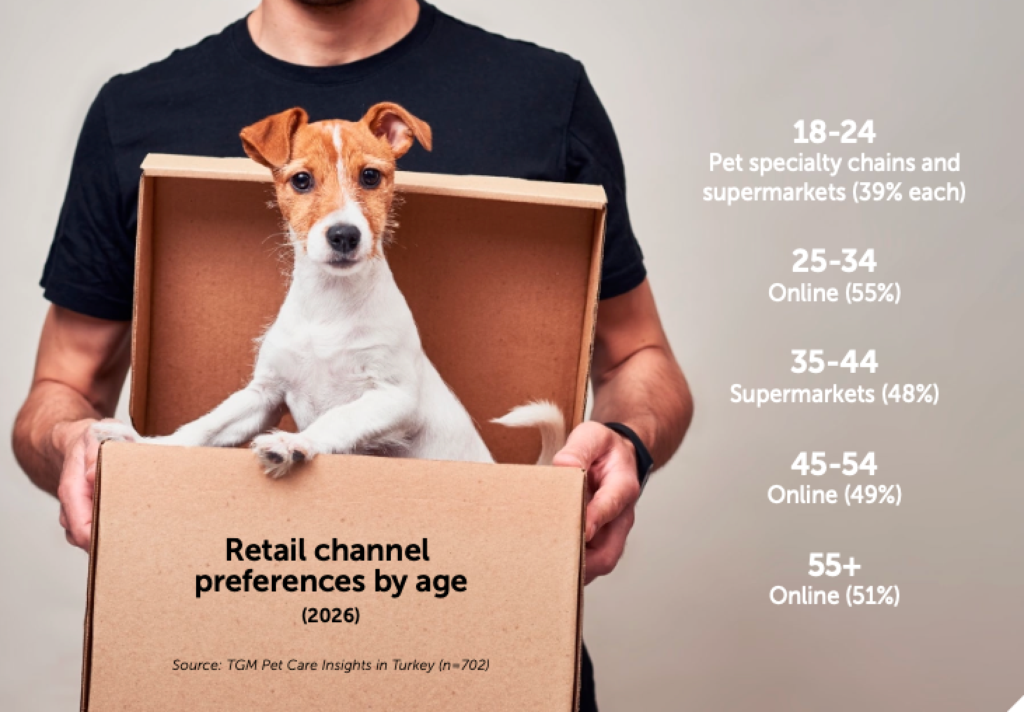
The trend towards a more preventive care mindset is strongest among 25- to 34-year-olds, who are comfortable with handling routine care themselves and show a growing interest in targeted, specialized wellness solutions.
As a result of these everyday habits around grooming, supplementation and maintenance, preventive care – once a secondary activity – is becoming mainstream.
Spending expectations
Spending continues to rise, and expectations of future growth are widespread. Most owners now report monthly pet care spending in the $21-$40 (€18-€34) range, with a growing share comfortably spending $41-$60 (€35-€51) or even $61-$80 (€52-€68).
More telling than current spend is sentiment. As of 2026, over 60% of Turkish pet parents say their pet care costs increased over the past year and that they expect spending to rise further over the next three years.
This reflects more than inflationary pressure – it signals a reprioritization. As pets remain emotionally central, owners are increasingly willing to invest in better nutrition, preventive health, skin and coat care, and enrichment. Turkey’s pet care market is not just expanding, it is upgrading on the back of elevated expectations.
Online becomes channel leader
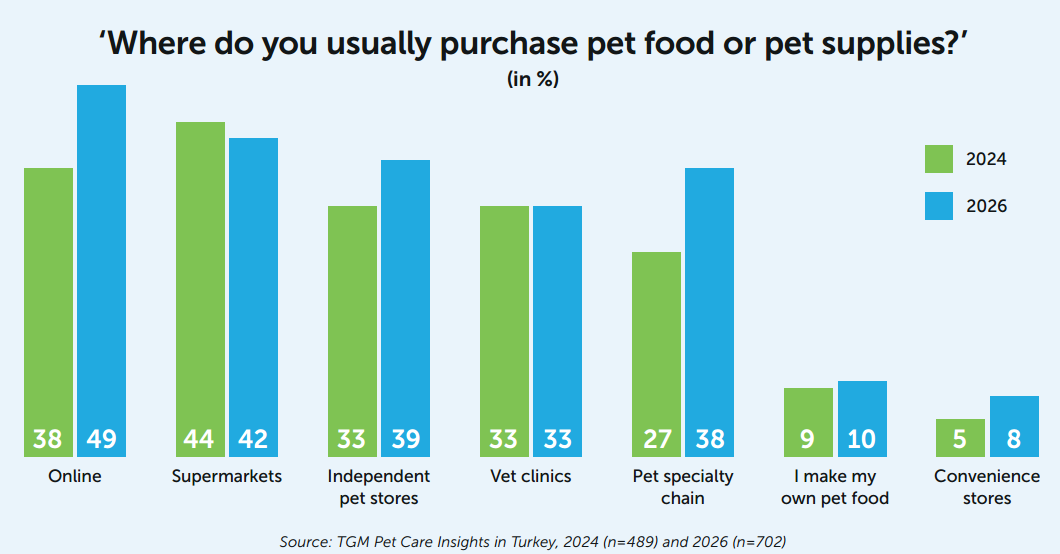
Where Turkish consumers buy pet products is evolving almost as quickly as what they buy. Between 2024 and 2026, online pet food purchasing has risen from 38% to 49%, making e-commerce the leading channel.
Supermarkets remain highly relevant, though their share has dipped slightly from 44% to 42%. Meanwhile, veterinary clinics hold steady at 33%, underlining their role as trusted authorities, particularly for health-related purchases.
For brands, this creates a new reality. Turkey is becoming decisively digital, yet trust remains distributed across familiar, physical touchpoints. Winning strategies will not be ‘online-only’ or ‘offline- first’. They will be omnichannel by design, using digital platforms to offer pet owners opportunities for discovery and convenience, while reinforcing their credibility through clinics, supermarkets and specialty pet retailers.
Share this story: