Analysis: EU–Mercosur deal opens door to pet food trade
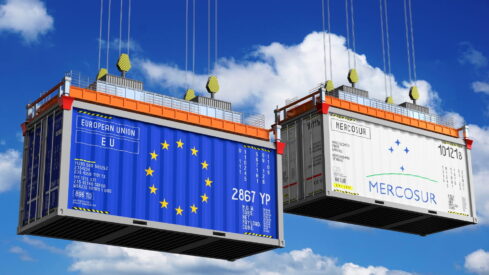
The new treaty will facilitate trade between the EU and Argentina, Brazil, Paraguay and Uruguay by removing or reducing tariffs.
One year after reaching a political deal, European and South American leaders approve a reduction in tariffs on several products between the blocs.
The European Union and 4 countries of the Southern Common Market, known as Mercosur, signed a Partnership Agreement (EMPA) and an Interim Trade Agreement (iTA) on 17 January in Paraguay.
The new agreement will facilitate trade between EU and Mercosur members by removing or decreasing tariffs on exports of goods, including pet products, but also agri-food, cars, chemicals and pharmaceuticals. The tariff reductions will happen gradually over the next 15 years.
Effect on the pet industry
Among the sectors affected by the measure, the pet industry is expected to see direct impacts on both trade flows and regulatory requirements.
For instance, pet food, ingredients and supplies are among the list of products that will undergo either tariff exclusions or reductions, depending on their composition.
The text addresses “dog or cat food put up for retail sale” as well as ingredients used in animal feeding, such as grape marc, acorns and horse-chestnuts, maize stalks and leaves, vegetable materials, waste, residues and by-products.
Beyond pet food, it also covers “saddlery and harness for any animal, including traces, leads, knee pads, muzzles, saddle cloths, saddlebags, dog coats and the like.”
Business opportunities
From an industry perspective, the Mercosur agreement is seen as an opportunity for imports and exports on both sides.
In Argentina, for example, Sebastian Dates, General Manager of the Argentine Chamber of Animal Nutrition Companies (CAENA), states that the country has raw materials in quantities exceeding domestic market demand, which facilitates supply to partners in Europe.
“It will also allow the import of ingredients or additives from the EU that are not produced in the country at a lower cost, thus improving the competitiveness of our products,” Dates tells GlobalPETS.
Animal health and safety
The agreement also foresees cooperation between countries on animal welfare standards, biotechnology and food safety.
To ensure food security, it establishes sanitary and phytosanitary (SPS) standards for products traded between the blocs. Additionally, the European Commission and Brazil have committed to establishing a “high-level dialogue on SPS issues” alongside a joint SPS Committee formed by the EU and Mercosur, the Commission says.
On the European side, the bloc plans to increase audits within the EU borders and in third countries by creating a program to train national authorities, with a dedicated task force on import controls scheduled to be launched in late January.
Competitiveness
The authorities also require compliance with animal welfare standards for egg production, slaughter, and the transport of live animals, as well as with sustainable farming practices.
According to industry analysts, these regulatory demands are expected to boost competitiveness.
For Bernardo Otero, leader of Latin American operations at the consulting firm Nexus Animal Health, “higher sanitary standards, stronger demand for prevention and traceability and increased pressure on inefficient players will reshape competitive dynamics across the region.”
In his view, these requirements will increase demand for innovative, veterinary-backed products and push South American companies towards “stronger biosecurity protocols, improved disease surveillance, preventive vaccination strategies, responsible antimicrobial use and digital traceability systems.”
20 years of negotiation
After 2 decades of negotiations, EU and Mercosur leaders reached a political agreement for the first time in December 2024.
The deal faced resistance from several countries, particularly France, Poland, Hungary and Ireland, which viewed it as a potential source of competitive disadvantage for European farmers.
According to the EU, however, the measure is expected to open access for European food producers to the South American market, as it reduces tariffs on products such as wine, spirits, dairy products and olive oil, and protects 344 EU Geographical Indications for “high-value traditional food and drink products.”
In response to these concerns, the bloc introduced safeguard measures to protect domestic producers. One example is the creation of the Unity Safety Fund, expected to reach €6.3 billion ($7.4B) net by 2028, “as an additional layer of protection for our farmers in case of market disturbances.”
Commercial opportunities
The European Commission also states that “the agreement will deliver substantial new commercial opportunities for companies across the EU, driving an estimated 39% increase in annual exports to Mercosur (a value of approximately €49 billion/$57.4 billion), while supporting hundreds of thousands of EU jobs.”
After the historic deal, tariff reductions and cooperation between the EU and Mercosur are expected to develop gradually over the coming years. For the pet industry, this means clearer trade rules, new trade opportunities and advancements in safety and health requirements.
Share this story: