Belgium: More than 60% of households own a pet in 2026

New data shows that specialized retail remains the leading channel, but online purchases are gaining ground.
According to new figures released by the Belgian Association of Pet Food Manufacturers (BEPEFA), pet ownership remains widespread in Belgium, with 61% of households reporting having at least one pet.
The share of pet-owning households has remained relatively stable since 2022, at 57% that year, 59% in 2023 and 58% in both 2024 and 2025. The latest result is also significantly higher than the 52% recorded in 2021.
The findings are based on a survey of 1,500 respondents carried out in April 2026.
Types of pets
Nearly 3 out of 10 (27%) Belgian households own 1 pet, up 2 percentage points (p.p.) compared to 2022–2025 levels. The share of households with 2 pets also rose by 2 p.p. to 14%, while ownership of 3 to 5 pets remained unchanged at 11%, and the proportion of households with more than 5 pets fell by 1 p.p. to 10%.
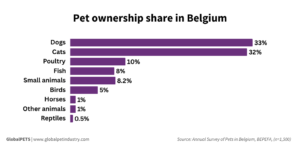
In 2026, 33% of Belgian households owned a dog and 32% owned a cat. Compared to 2021, cat ownership remained largely stable, increasing slightly from 31%, while dog ownership rose significantly from 24%.
Other pets owned include poultry (10%); fish (8%); small animals such as rabbits, rodents and ferrets (8.2%); birds (5%); horses (1%); other animals, including goats, alpacas, frogs and insects (1%); and reptiles (0.5%).
‘New pet’ profiles
Over the past year, 1 in 6 Belgian households welcomed a new pet (17%), while 9% said they had lost at least 1 cat or dog.
Of the new adopters, 7% became pet owners for the first time, while 10% added another pet. Pet acquisition was most common among Belgians under 35 years old (24%), followed by those aged 35-54 (22%) and those aged 55 and older (10%).
Cats and dogs accounted for around two-thirds of newly acquired pets, with kittens (68%) and puppies (65%) making up the majority of new cats and dogs, respectively. Adult cats and dogs represented 28% and 27% of new additions, respectively, while senior animals accounted for just 6% and 8%.
Newly acquired pets also included small animals (20%), poultry (10%), fish (8%), birds (6%), other animals (5%), reptiles (1%) and horses (0.7%).
Purchasing habits
Pet shops remain the most used retail channel for pet food purchases in Belgium, with 72% of respondents buying from them at least once a year. Supermarkets (68%), online retailers (58%) and veterinarians (40%) follow.
BEPEFA’s data also show that online purchases increased by 6 p.p. in 2025.
When buying food tailored to a dog’s breed and size, Belgian consumers most often turn to pet specialty stores (76%) and online retailers (65%). Cat owners, meanwhile, are more likely to shop at supermarkets (79%) and less likely to buy online (57%).
Overall, pet owners prioritize food their pets enjoy eating (94%), followed by products tailored to their pet’s life stage (87%) and size (87%). Nearly half (46%) decide which brand to buy before entering a store.
Spending
Belgian pet owners spend an average of €123 ($144) per month on pet care. Just over half (51%) of respondents spend between €25 ($29) and €200 ($234) on their pets each month.
The survey also shows that some 65% of Belgian pet owners said they would not change how they care for their pets and are prepared to absorb higher expenses if necessary.
In addition, 45% said they would be willing to pay more for sustainable or environmentally friendly pet food. Among younger pet owners, this rises to 56%.
Challenges and barriers
Coping with a pet’s illness or loss emerged as the most commonly cited challenge among pet owners, with 46% of respondents identifying it as a concern. Feelings of guilt associated with leaving pets home alone ranked second, mentioned by 33% of those surveyed.
Travel restrictions also remain a notable challenge, with 29% of respondents saying their pets limit their ability to travel. Meanwhile, one-quarter (25%) expressed concerns about unexpected pet-related expenses. Among non-pet owners, spending too much time away from home was the leading reason cited for not owning a pet.
The BEPEFA survey also found that only 15% of dog and cat owners are permitted to bring their pets to work, while 11% said they actually do so.
The data also reveal that around three-quarters (76%) of working dog and cat owners in Belgium say they are not allowed to bring their pet to the office.
Share this story:
One click prioritizes GlobalPETS in your search results and AI answers.