Confidence rises among Australian firms trading in China, with pet opportunities emerging
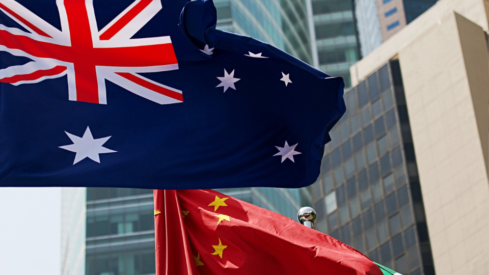
Despite geopolitical tensions and rising competition from domestic brands, Aussie companies continue to invest in the Asian giant.
Business sentiment among Australian companies trading with China strengthened in late 2025, with 80% of firms reporting greater confidence than earlier in the year.
Optimism appears to be supported by continued resilience in China’s domestic economy. More than 3 in 5 respondents (65%) cite strong consumer demand as a key driver of their outlook, while 67% say they have maintained steady investment interest in the country despite ongoing tariff pressures.
These findings come from a report by the China-Australia Chamber of Commerce (AustCham China), which surveyed 730 senior executives and decision-makers at the end of 2025 across companies active in the Australia–China corridor. The survey included firms engaged in trade, investment, joint ventures and operational activities.
Sentiment is improving
For AustCham China Chair Vaughn Barber, the shift reflects a clear improvement in sentiment across the corridor, with business confidence having “strengthened markedly” despite a more complex global trading environment.
Barber points in particular to the additional tariffs imposed by the United States on China last year, noting that companies have continued to demonstrate resilience and maintain confidence in the bilateral business relationship.
China is Australia’s biggest trading partner. In 2025, Australia exported AU$188.7 billion ($133.1bn/€114.9bn) worth of goods and services to the country.
Uneven effects
The additional tariffs added a layer of uncertainty for companies operating in the country. As many as 7 out of 10 were at least mildly affected by them.
For instance, while 18.5% of respondents say they faced major negative impacts from US–China tariffs, 30.5% experienced moderate effects and 23% reported minor disruptions.
On the other hand, 23% say they were not impacted at all, and 5% report positive effects.
Since April 2025, when the tariffs were imposed, 16% of businesses reported higher input costs, and 22% reported sales declines. Although most cite tariffs as one of the top 3 causes of this scenario, they also mention changes in global and domestic demand, exchange rate movements, regulatory changes in China and pricing strategies.
Prominent sectors
Despite these challenges, investment remains relatively stable, with 38% of foreign respondents saying they plan to maintain their investment in their China business over the next 12 months. Meanwhile, 22% plan to increase investment moderately, and 4% expect a significant increase.
Over the next 5 years, business owners expect the iron ore, coal and mineral extraction sector to have the greatest growth potential in terms of export revenue among Australian export sectors to China.
This sector is followed by agribusiness and food products (51%), education services (26%), biopharmaceuticals and medical devices (25%), and liquefied natural gas (LNG) (17%).
Pet industry expansion
Agribusiness is also the main focus of Australian exports to China, followed by non-critical minerals, in a scenario marked by “investments in advanced manufacturing and resource efficiency technology,” the report says.
Pet food is part of this sector, and a prominent area within it. “Pet food is often discussed alongside other premium food categories in China, particularly in relation to evolving consumer expectations around quality, safety, nutrition and brand trust. These are themes that continue to shape market behavior,” Barber tells GlobalPETS.
A successful example of an Australian pet company operating in China is Talentail, a pet food producer supported by state-owned trade agency Global Victoria.
Talentail uses natural formulations, including fresh meat, low-fat recipes and Australian native superfoods such as Kakadu plum, which is “packed with 50 times more vitamin C than oranges,” according to the Australian government.
The use of this fruit, native to the Australian tropical woodlands, helps the company to differentiate itself in the Asian market.
“For Chinese consumers, Kakadu plum represents something authentic, uniquely Australian and functionally meaningful. It helps Talentail stand out in a crowded market, where many brands rely on generic or imported concepts without a clear origin story,” Leigh Howard, Victoria’s Commissioner to Greater China, tells GlobalPETS.
Talentail became the first Australian pet food company to introduce baked kibble to the Chinese market. In 2024, it also became the first independent Victorian pet food brand in 5 to 7 years to secure an export permit to the country.
Raising the bar
According to Howard, Chinese pet owners place greater importance on ingredient transparency, rely heavily on online research and expert validation, and are more willing to invest in premium products once trust is established, compared with Australian consumers.
“By comparison, Australian consumers are engaged but display a broader spectrum of purchasing behaviors, from value-driven to premium-focused,” he says. “In China, brands face a higher bar for transparency and scientific credibility, with consumers being particularly analytical and discerning.”
Future-proofing products in China remains a major challenge, as companies must navigate an increasingly competitive landscape that includes both other Australian brands and global premium players seeking to capture growth in the market.
At the same time, they face strong competition from well-established Chinese brands, which benefit from deep market knowledge, efficient production capabilities and rapid distribution networks, all while targeting the same premium consumer segment.
Share this story:
One click prioritizes GlobalPETS in your search results and AI answers.
